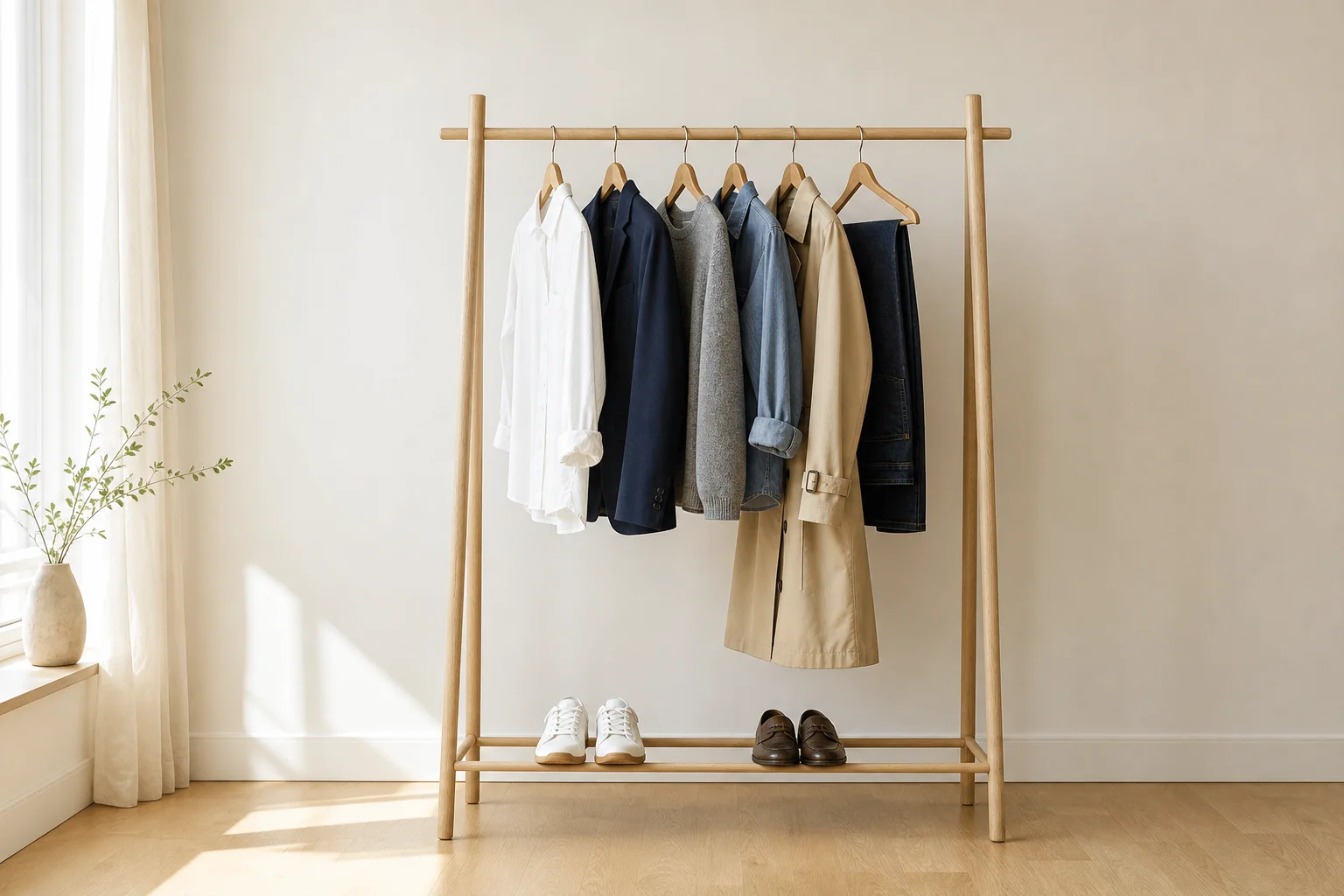
Most people wear roughly 20% of what hangs in their closet, yet still stand in front of it every morning feeling like they have nothing to wear. A capsule wardrobe solves that paradox by replacing volume with intention: fewer pieces, all of which fit, flatter and work together. This guide walks through the exact process stylists and professional organizers use, with piece counts, a comparison table and the mistakes that cause most capsules to fail within a month.
What is a capsule wardrobe? A capsule wardrobe is a small, curated collection of versatile clothing, typically 25 to 40 pieces including shoes and outerwear, in a coordinated color palette where nearly every top pairs with every bottom. You build one by auditing what you own, defining your real lifestyle needs, choosing a palette, and filling only the gaps with quality basics.
- A practical capsule holds 25 to 40 items per season; the exact number matters less than the rule that every piece pairs with at least three others.
- Build around a palette of 2 to 3 neutrals plus 1 to 2 accent colors so outfits combine automatically.
- Shop your own closet first. Most people already own 60 to 80% of their capsule.
- Judge purchases by cost per wear, not price tag: a $150 coat worn 100 times costs $1.50 per wear.
- Review the capsule every season and use a 30-day “maybe” box before discarding anything you are unsure about.
Why a Capsule Wardrobe Works
The concept was coined in the 1970s by London boutique owner Susie Faux and popularized in 1985 by designer Donna Karan’s “Seven Easy Pieces” collection. The modern version was revived by projects like Courtney Carver’s Project 333 (33 items for three months), which proved that most people barely notice when their wardrobe shrinks dramatically.
The benefits are practical, not just aesthetic:
- Less decision fatigue. With a coordinated palette, getting dressed takes minutes because almost everything matches.
- Lower spending. Planned gap-filling replaces impulse buys and duplicate black t-shirts.
- Better quality. Money saved on quantity goes toward durable fabrics and good tailoring.
- Smaller footprint. Buying fewer, longer-lasting clothes reduces textile waste, a significant issue given how much clothing ends up in landfills each year.
- Easier travel and laundry. A capsule mindset makes carry-on packing simple.
The main drawbacks are worth stating honestly: the initial audit takes several hours, quality basics carry higher upfront costs, and people who enjoy fashion as a creative hobby may find strict limits stifling. The fix for the last point is flexibility, which we cover below.
How to Build a Capsule Wardrobe in 7 Steps
Step 1: Empty and Audit Your Closet
Pull everything out, including items stored under the bed or in other rooms. Seeing the full volume is the reality check most people need. Sort each item into four piles:
- Love and wear: fits now, worn in the last six months.
- Maybe: uncertain items go into a sealed box dated 30 days out. If you do not retrieve anything, donate the box unopened.
- Seasonal: good pieces for a different climate season; store them separately.
- Let go: damaged, ill-fitting, or kept out of guilt. Donate, resell, or recycle textiles.
A useful test from professional organizers: if you saw this item in a store today at its full price, would you buy it again? If not, it rarely earns a place.
Step 2: Map Your Actual Lifestyle
The most common capsule failure is building for an imagined life. Estimate how you spend a typical week in percentages, for example 50% office, 25% home and errands, 15% exercise, 10% evenings out. Your wardrobe should reflect those ratios. A remote worker needs far more elevated loungewear than blazers; a parent of toddlers needs washable, durable fabrics more than silk.
Step 3: Choose a Color Palette
Look at your “love and wear” pile; your natural palette is usually already visible. Select:
- 2 to 3 base neutrals for big pieces (coats, trousers, shoes): navy, black, charcoal, camel, olive, or denim.
- 1 to 2 light neutrals for tops: white, cream, light gray.
- 1 to 2 accent colors for personality: rust, emerald, burgundy, cobalt, or a favorite print.
A tip many stylists use: choose either black or navy/brown as your primary dark base rather than both. This keeps shoes, belts and bags interchangeable and can cut your accessory needs in half.
Step 4: Define Your Piece Count
Pick a number that feels like a challenge but not a punishment. For most adults, 30 to 37 items per season works well. Underwear, sleepwear, workout gear and jewelry are usually excluded from the count. A balanced split looks like this:
- 9 to 12 tops
- 5 to 7 bottoms (including skirts)
- 2 to 4 dresses or one-piece outfits (optional)
- 3 to 4 layers (cardigan, blazer, overshirt)
- 2 to 3 outerwear pieces
- 4 to 5 pairs of shoes
Step 5: Identify the Gaps
Lay out your keeper pieces by category and try combining them. Write down only what is genuinely missing, such as “one pair of trousers that work with both sneakers and loafers” rather than “new pants.” Specific gap lists stop you from buying another version of something you already own.
Step 6: Shop Slowly and Strategically
Buy the highest-wear items first, typically shoes, jeans and outerwear, because their cost per wear drops fastest. Check fabric labels: natural fibers like merino wool, cotton, linen and good-quality denim tend to age better than thin synthetic blends. Look at seams, buttonholes and whether patterns line up at the seams. Secondhand platforms and consignment shops are excellent for premium outerwear at a fraction of retail price.
Step 7: Test, Track and Rotate
Live with the capsule for one full season. Keep a simple note on your phone of what you reach for and what you skip. At the end of the season, retire unworn pieces, swap in stored seasonal items, and adjust your gap list. This review loop is what turns a one-time decluttering project into a lasting system.
Capsule Wardrobe Approaches Compared
There is no single correct format. The table below compares the most popular methods so you can pick a starting point that matches your temperament and climate.
| Method | Item Count | Rotation | Best For | Main Drawback |
|---|---|---|---|---|
| Project 333 | 33 items incl. shoes, accessories | Every 3 months | Beginners who want a clear rule | Accessories in the count can feel restrictive |
| Seasonal 37-piece capsule | 37 items, excl. accessories | 4 times per year | Climates with distinct seasons | Requires storage for off-season pieces |
| 10×10 challenge | 10 items for 10 days | Short experiment | Testing whether minimalism suits you | Not a long-term system |
| Year-round capsule | 40 to 50 items | Minor annual updates | Mild climates and layering fans | Larger and less streamlined |
| Work capsule | 15 to 20 items | Twice per year | Professionals with a dress code | Covers only part of your week |
| Travel capsule | 10 to 15 items | Per trip | Carry-on-only travelers | Needs quick-dry, wrinkle-resistant fabrics |
A Sample 33-Piece Capsule for Spring and Fall
Use this as a template, not a prescription. Swap pieces to match your lifestyle map from Step 2.
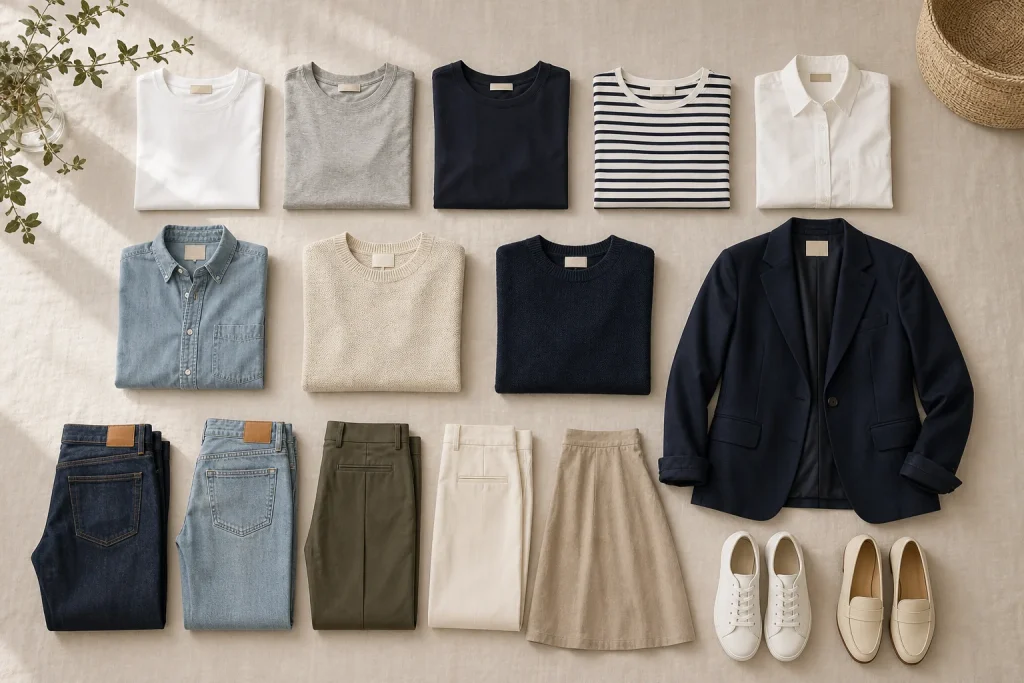
- Tops (10): 3 plain tees (white, gray, navy), 1 striped Breton top, 2 button-down shirts (white, chambray), 1 silk or satin blouse, 2 fine-knit sweaters, 1 accent-color top
- Bottoms (6): dark straight jeans, light or black jeans, tailored trousers, wide-leg or chino trousers, a midi skirt or shorts, one relaxed weekend pant
- Dresses (2): one versatile day dress, one dressier option
- Layers (4): navy blazer, cardigan, overshirt or denim jacket, lightweight vest
- Outerwear (2): trench coat, wool coat or quilted jacket
- Shoes (5): white leather sneakers, loafers or flats, ankle boots, a dressy heel or oxford, sandals or weatherproof boots depending on climate
- Accessories (4): leather tote, crossbody bag, belt, scarf
With 10 tops, 6 bottoms and 4 layers, you can create well over 200 distinct combinations before even counting shoes and accessories.
Cost Per Wear: The Math Behind Smart Buying
Cost per wear is the purchase price divided by the number of times you wear an item. It reframes spending in a way that consistently favors quality basics.
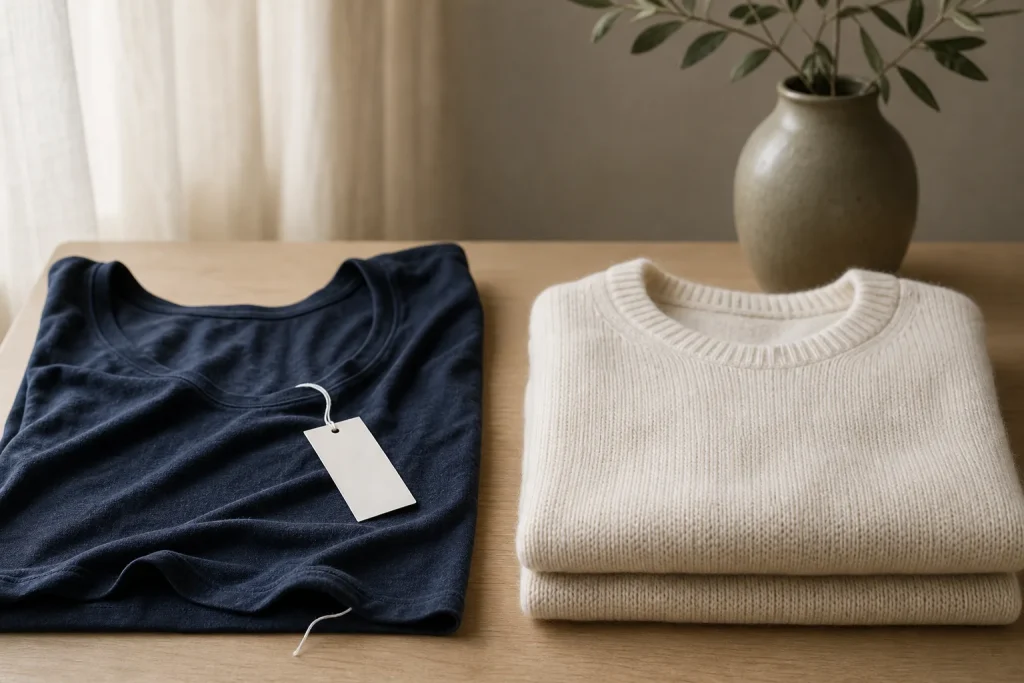
A $40 trend top worn 4 times costs $10 per wear. A $120 merino sweater worn 60 times over three winters costs $2 per wear.
Apply it before buying: estimate realistically how often you will wear the piece each month, multiply by how many seasons it will last, and divide the price by that number. If the per-wear cost is high and the item only pairs with one thing you own, skip it. Factor in care costs too; dry-clean-only pieces add up quickly.
Common Mistakes That Derail a Capsule
- Buying a whole new wardrobe at once. This defeats the purpose and often leads to regret purchases. Shop your closet first.
- Going too minimal too fast. A 15-piece capsule might look great online but fails if you do laundry once a week.
- Ignoring fit. A $20 tailoring adjustment on trousers or a blazer often makes a mid-priced item look premium.
- Choosing all-beige because it is trendy. If you love color, build a colorful capsule. Cohesion comes from coordination, not from neutrals alone.
- Forgetting comfort. Shoes that pinch and scratchy fabrics will be skipped no matter how good they look.
- Treating the count as sacred. The number is a tool. If 41 pieces genuinely serve you, that is a successful capsule.
Caring for Your Capsule So It Lasts
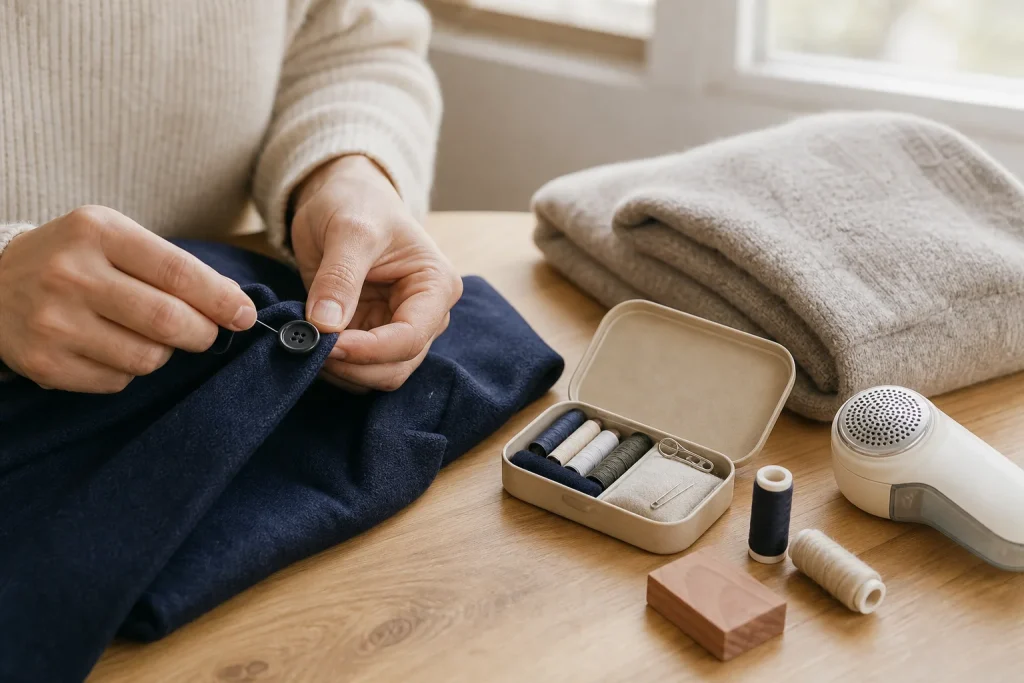
Because each piece works harder, care matters more. Wash clothes less often and in cold water, air-dry knits flat, use a fabric shaver on pilling sweaters, and store wool with cedar to deter moths. Rotate shoes so leather has a day to dry between wears, and get soles replaced by a cobbler before they wear through. Keep a small mending kit for loose buttons and fallen hems; a five-minute fix can add years to a garment.
Frequently Asked Questions / FAQs
How many items should a capsule wardrobe have?
Most capsules contain 25 to 40 items per season, excluding underwear, sleepwear and workout clothes. Beginners often start with 33 pieces using the Project 333 framework, then adjust based on laundry habits and lifestyle.
Do I have to throw away clothes that are not in my capsule?
No. Store off-season items, and place uncertain pieces in a dated “maybe” box for 30 days. Only donate or resell items you clearly no longer want, which reduces regret and waste.
Can a capsule wardrobe work for men or for kids?
Yes. Men’s capsules often run smaller, around 25 to 30 pieces, because menswear basics are highly interchangeable. For children, a capsule of 15 to 20 washable items per size reduces laundry chaos and spending as they grow.
How much does it cost to build a capsule wardrobe?
It can cost almost nothing if you build from existing clothes. Filling gaps typically means 5 to 10 purchases per season. Prioritizing secondhand outerwear and investing in high-wear items like shoes and jeans keeps costs manageable.
Final Thoughts
A capsule wardrobe is less about owning the fewest clothes and more about owning the right ones. Start with an honest audit, build around your real week, choose a palette you love, and fill gaps slowly. After one season of tracking what you actually wear, the system tends to refine itself, leaving you with a closet that is smaller, calmer and far more useful.