Most people treat sleep as whatever is left over after work, chores, and scrolling. Then they wonder why they wake up groggy, lean on a third coffee by noon, and lie awake at 2 a.m. replaying emails. The fix usually is not a supplement or a gadget. It is a set of daily behaviors and bedroom conditions known as sleep hygiene, and small changes to them can produce noticeable results within one to two weeks.
Sleep hygiene is the collection of daily habits and environmental conditions that support consistent, high-quality sleep. The most effective habits are keeping a fixed wake-up time, getting morning daylight, cutting caffeine at least six hours before bed, keeping the bedroom cool, dark, and quiet, and reserving the bed for sleep. Adults should aim for at least seven hours per night.
- A consistent wake-up time, seven days a week, is the single most powerful anchor for your body clock.
- Caffeine taken six hours before bed can still cut total sleep by roughly an hour, according to a 2013 study in the Journal of Clinical Sleep Medicine.
- A bedroom temperature around 60 to 67°F (15.5 to 19.5°C) helps your core body temperature drop, which signals sleep onset.
- If you cannot fall asleep within about 20 minutes, get out of bed and do something calm in dim light rather than forcing it.
- Persistent insomnia (three or more nights a week for three months) warrants a doctor visit; cognitive behavioral therapy for insomnia (CBT-I) is the recommended first-line treatment.
What Sleep Hygiene Actually Means
The term comes from sleep medicine, where clinicians use it to describe the behaviors that either protect or sabotage sleep. It covers three overlapping areas: timing (when you sleep and wake), environment (light, temperature, noise, comfort), and behavior (what you eat, drink, do, and think about in the hours before bed).
Two biological systems drive your sleep. The first is your circadian rhythm, a roughly 24-hour internal clock set mainly by light exposure. The second is sleep pressure, driven by a chemical called adenosine that builds up the longer you are awake. Good sleep hygiene works by aligning those two systems so that, at bedtime, your clock says “night” and your sleep pressure is high. Most bad sleep habits disrupt one or both: late-night screens push the clock later, long afternoon naps release sleep pressure, and caffeine blocks adenosine receptors so you do not feel the pressure that is actually there.
How much sleep do you need?
The American Academy of Sleep Medicine and the Sleep Research Society recommend that adults get seven or more hours per night on a regular basis. Teenagers need eight to ten, and school-age children nine to twelve. Individual needs vary, but a useful self-test is simple: if you need an alarm to wake up every day and you crash on weekends, you are probably running a sleep debt.
9 Science-Backed Sleep Hygiene Habits
You do not need to adopt all nine at once. Start with the first three, which deliver the biggest return, then add others over the following weeks.
1. Fix your wake-up time, even on weekends
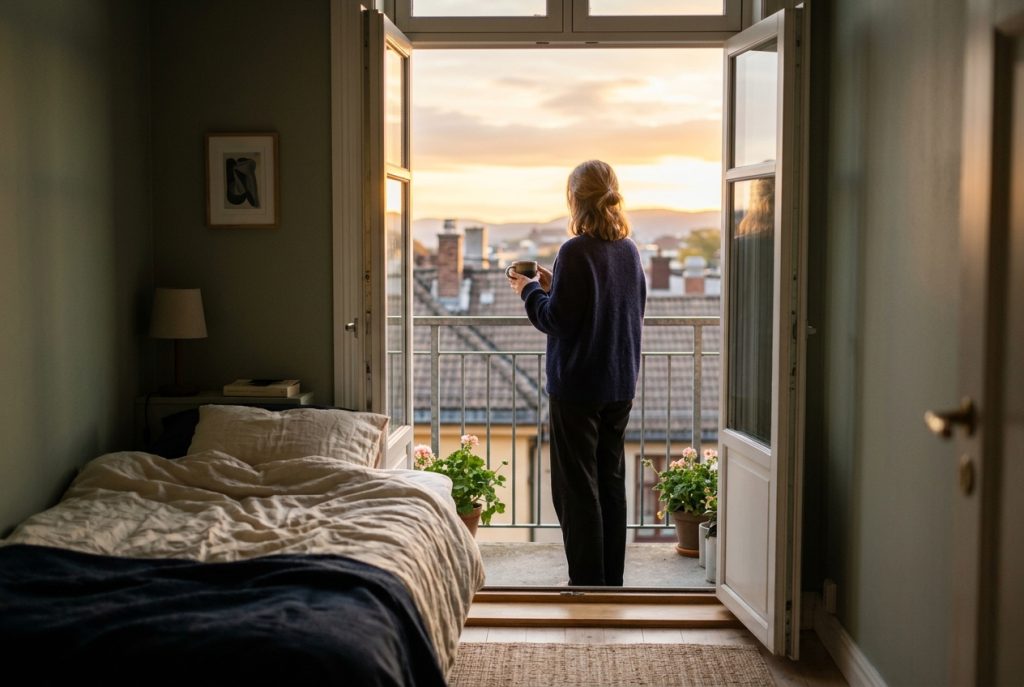
People often focus on bedtime, but your wake time is the real anchor. Waking at the same time daily stabilizes your circadian rhythm and builds predictable sleep pressure by evening. Sleeping in by two or three hours on Saturday creates what researchers call “social jet lag,” leaving you wired on Sunday night and exhausted on Monday. If you need recovery sleep, limit the weekend lie-in to about an hour.
2. Get bright light within an hour of waking
Morning daylight is the strongest signal that resets your body clock. Spend 10 to 30 minutes outside soon after waking; even on an overcast day, outdoor light is far brighter than typical indoor lighting. A walk, coffee on the balcony, or a walking commute all count. This one habit often helps night owls fall asleep earlier within a week or two.
3. Set a caffeine cutoff
Caffeine has a half-life of roughly five hours in most adults, meaning half of your 3 p.m. latte is still circulating at 8 p.m. In a well-known 2013 study, taking 400 mg of caffeine six hours before bed reduced total sleep by more than an hour, even though participants did not always notice the difference. A practical rule: no caffeine after noon or at least eight hours before bedtime, and remember that tea, cola, energy drinks, pre-workout powders, and dark chocolate count.
4. Keep your bedroom cool, dark, and quiet
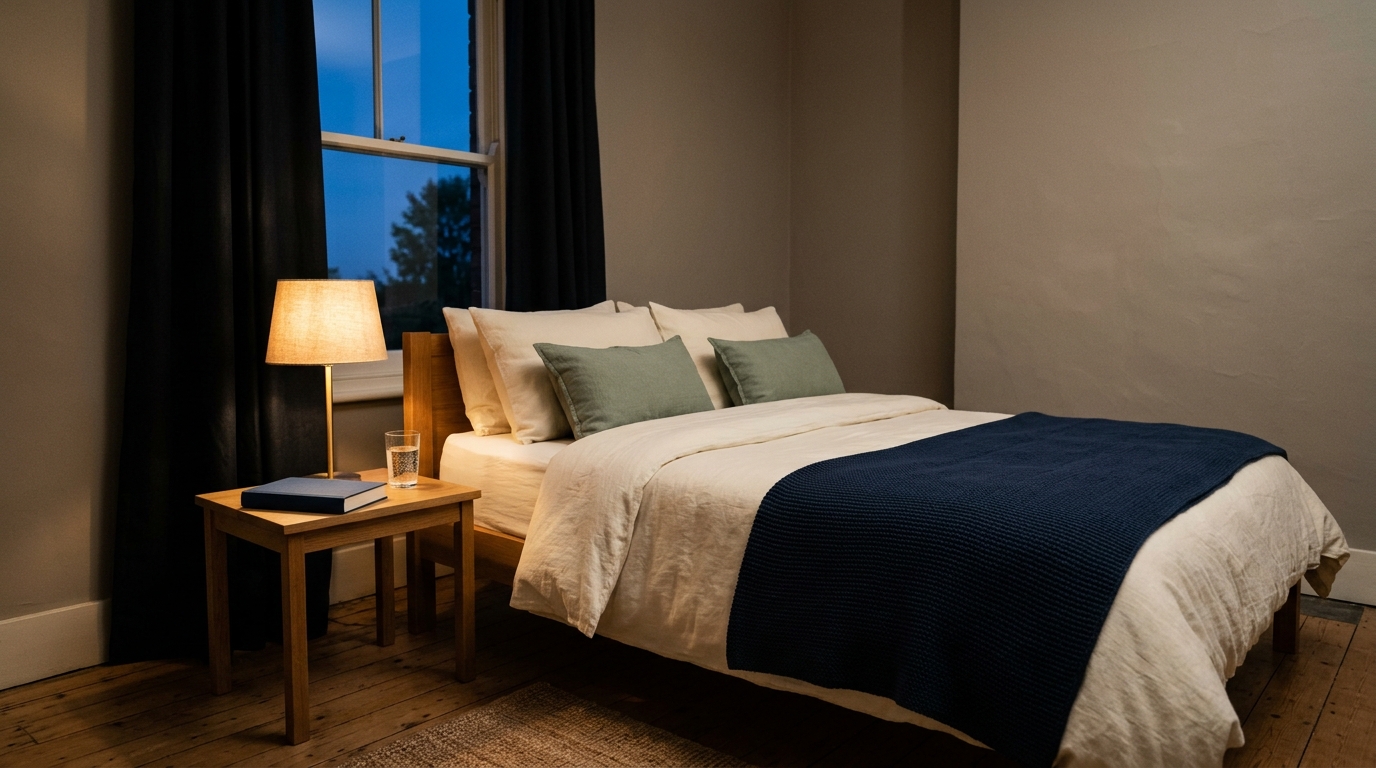
Your core temperature naturally falls as you drift off. A cool room around 60 to 67°F (15.5 to 19.5°C) supports that drop. Blackout curtains or an eye mask block streetlights and early sunrise, and earplugs or a white noise machine mask traffic and noisy neighbors. Cover or remove LED lights from chargers and electronics.
5. Build a 30- to 60-minute wind-down routine
Your brain needs a buffer between a busy day and sleep. Dim the lights, change into sleepwear, and choose low-stimulation activities: reading a paper book, light stretching, a warm shower, or writing tomorrow’s to-do list so it is not looping in your head. Repeating the same sequence nightly trains your brain to associate it with sleep.
6. Manage screens and evening light
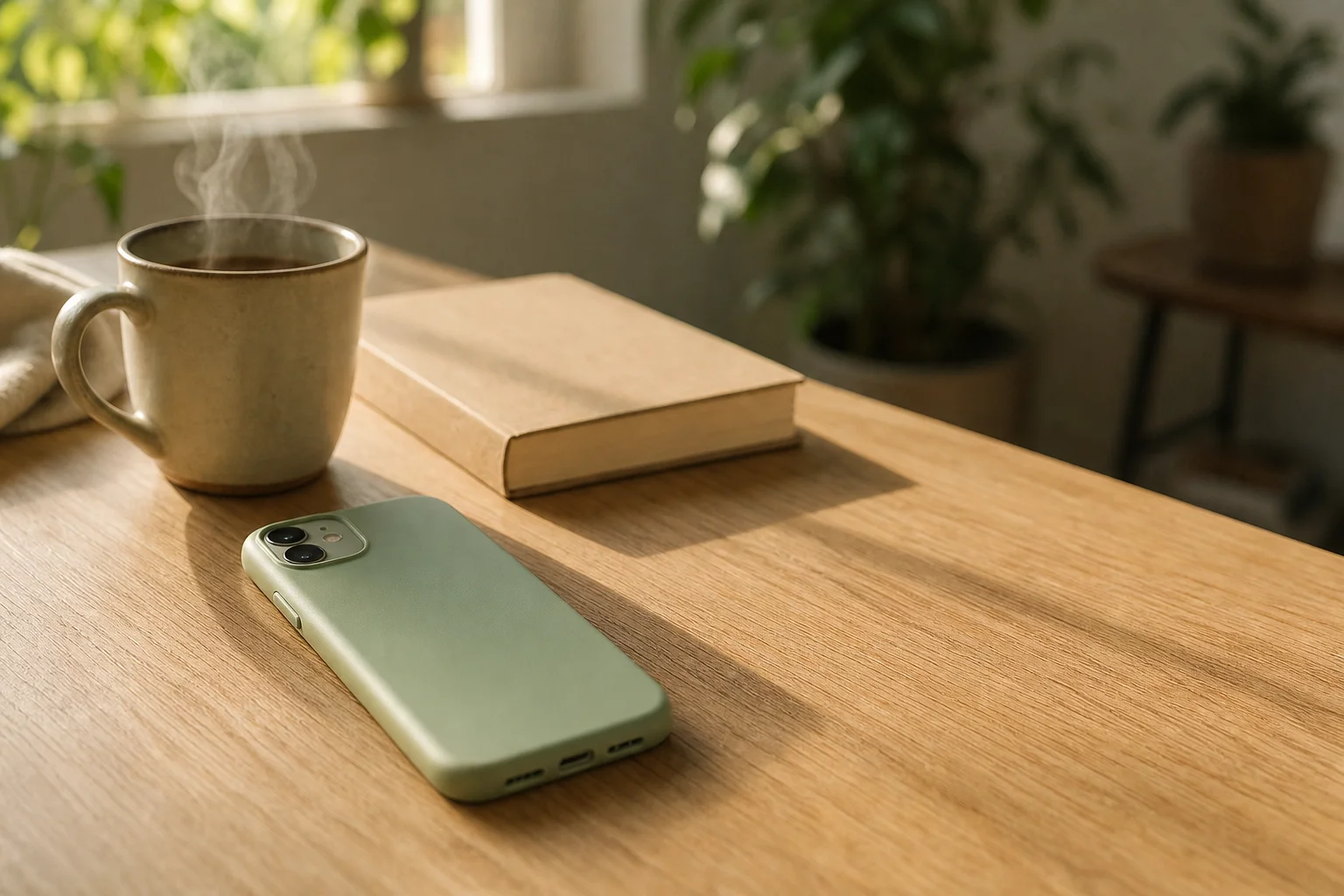
Bright light in the evening, especially blue-enriched light from screens and LED bulbs, suppresses melatonin and delays your clock. Content matters too: an intense work email or a heated social media thread raises arousal more than the light does. Turn on night mode, lower brightness, and aim to put devices away at least 30 minutes before bed. Charging your phone outside the bedroom removes the temptation entirely.
7. Watch alcohol and late, heavy meals
Alcohol may help you fall asleep faster, but it fragments sleep in the second half of the night and suppresses REM sleep, the stage linked to memory and emotional processing. Try to finish drinking at least three hours before bed. Similarly, large, spicy, or fatty meals close to bedtime can trigger reflux and discomfort; aim to finish dinner two to three hours before lights out.
8. Use the bed only for sleep and intimacy
If you work, scroll, or watch shows in bed, your brain learns to associate the bed with wakefulness. This is the foundation of stimulus control, a core component of CBT-I. If you are awake for roughly 20 minutes, get up, go to another dim room, and do something boring until you feel sleepy, then return. It feels counterintuitive, but it rebuilds the bed-equals-sleep connection.
9. Move during the day, nap strategically
Regular physical activity improves sleep quality and helps you fall asleep faster. Most people can exercise in the evening without issues, but if vigorous workouts leave you wired, finish them one to two hours before bed. If you nap, keep it to 20 to 30 minutes and before about 3 p.m., so you do not drain the sleep pressure you need at night.
Good vs. Poor Sleep Hygiene: A Side-by-Side Comparison
The table below shows common habits that undermine sleep alongside simple swaps that support it.
| Area | Poor Habit | Better Swap | Why It Works |
|---|---|---|---|
| Schedule | Sleeping in 2-3 hours on weekends | Same wake time daily, within 1 hour | Stabilizes circadian rhythm and prevents social jet lag |
| Light | Indoors all morning, bright screens at night | Outdoor light after waking, dim lights after sunset | Morning light advances the body clock; dim evenings allow melatonin release |
| Caffeine | Coffee or energy drinks after 2 p.m. | Cutoff by noon or 8 hours before bed | Allows adenosine to signal sleepiness on time |
| Alcohol | Nightcap right before bed | Finish drinks 3+ hours before sleep | Reduces mid-night awakenings and REM suppression |
| Environment | Warm room, streetlight, phone notifications | 60-67°F, blackout curtains, phone outside bedroom | Supports core temperature drop and uninterrupted sleep |
| Naps | 90-minute nap at 5 p.m. | 20-30 minute nap before 3 p.m. | Restores alertness without stealing nighttime sleep pressure |
| Bed use | Working, scrolling, and lying awake for hours | Bed for sleep only; get up after ~20 minutes awake | Strengthens the mental link between bed and sleep |
A Sample Evening Routine You Can Copy
Here is a realistic template for someone aiming to sleep at 10:30 p.m. and wake at 6:30 a.m. Shift the times to match your own schedule.
- 12:00 p.m. Last caffeinated drink of the day.
- 6:30-7:30 p.m. Finish dinner and any vigorous exercise.
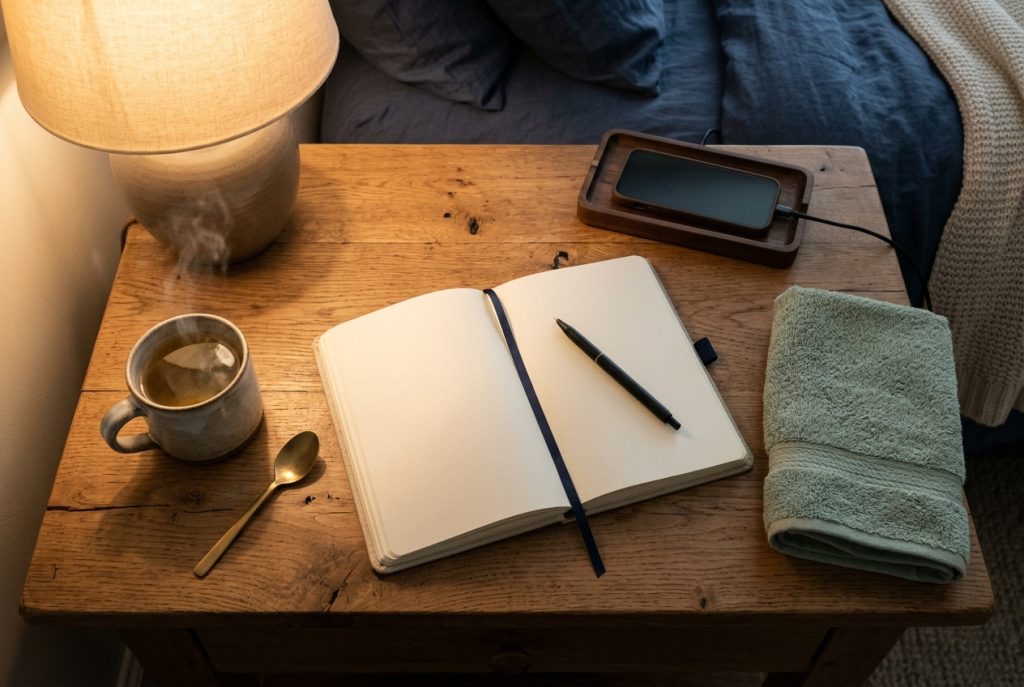
- 8:30 p.m. Switch to lamps and warm bulbs; turn on night mode on devices.
- 9:30 p.m. Write a brief “brain dump” of tomorrow’s tasks and lingering worries.
- 9:45 p.m. Warm shower or bath; the post-bath cooldown helps trigger sleepiness.
- 10:00 p.m. Phone goes to its charger outside the bedroom. Read a paper book or stretch.
- 10:30 p.m. Lights out. If awake after about 20 minutes, get up and read in dim light.
- 6:30 a.m. Wake at the same time, open the curtains, and get outside within an hour.
In practice, most people find that the routine feels forced for the first few nights, then becomes automatic. Track your sleep in a simple notebook for two weeks: bedtime, estimated time to fall asleep, awakenings, wake time, and how rested you feel. Patterns become obvious quickly, such as poor nights after late drinks or great nights after morning walks.
Common Sleep Hygiene Myths
- “I can catch up on sleep every weekend.” Extra weekend sleep partially offsets debt but shifts your clock, making Monday harder. Consistency beats compensation.
- “Alcohol helps me sleep.” It shortens time to fall asleep but degrades sleep quality later in the night.
- “Lying in bed resting is almost as good as sleeping.” Long stretches awake in bed teach your brain that bed is a place to be awake, which can worsen insomnia.
- “More melatonin works better.” Melatonin is a timing signal, not a sedative. Lower doses (roughly 0.5 to 3 mg) taken a few hours before bed are often as effective as large doses, and in the United States melatonin is sold as a supplement, so product content can vary. Check with a clinician before using it regularly.
- “Older adults just need less sleep.” Sleep becomes lighter with age, but the recommended amount for adults stays at seven or more hours.
When Sleep Hygiene Is Not Enough
Sleep hygiene is a foundation, not a cure-all. If you have trouble falling or staying asleep at least three nights a week for three months or longer, and it affects your daytime functioning, you may have chronic insomnia. The American College of Physicians recommends cognitive behavioral therapy for insomnia (CBT-I) as the first-line treatment, ahead of sleeping pills. CBT-I combines stimulus control, sleep restriction, and techniques for quieting racing thoughts, and it is available through sleep specialists and validated digital programs.

See a doctor promptly if you notice loud snoring, gasping or pauses in breathing during sleep (possible sleep apnea), an irresistible urge to move your legs at night (restless legs syndrome), or falling asleep unintentionally during the day, especially while driving. These conditions need medical evaluation, and no amount of herbal tea will resolve them.
Frequently Asked Questions (FAQs)
How long does it take for sleep hygiene changes to work?
Many people notice improvements within one to two weeks of consistent changes, particularly from a fixed wake time and morning light. Shifting a significantly delayed body clock can take two to four weeks. Consistency matters more than perfection.
What is the best bedroom temperature for sleep?
Most sleep experts recommend roughly 60 to 67°F (15.5 to 19.5°C). Individual comfort varies, so adjust bedding and sleepwear, but err on the cooler side, since a warm room is a common cause of restless sleep.
Is it bad to use my phone in bed?
It is one of the most common sleep disruptors. Screen light can delay melatonin, and engaging content keeps your brain alert. Stop using devices at least 30 minutes before bed and, ideally, charge your phone outside the bedroom with a basic alarm clock instead.
What should I do if I wake up at 3 a.m. and cannot fall back asleep?
Avoid checking the clock or your phone. If you are still awake after about 20 minutes, get up, go to a dimly lit room, and do something calm like reading until you feel sleepy, then return to bed. If this happens several nights a week for months, talk to a doctor about CBT-I.
The Bottom Line
Better sleep rarely comes from one dramatic change. It comes from a handful of boring, repeatable habits: the same wake time every day, morning daylight, an early caffeine cutoff, a cool and dark bedroom, and a bed reserved for sleep. Pick three habits from this guide, practice them for two weeks, and track how you feel. Once those stick, layer in the rest. Your energy, mood, and focus will reflect the investment.