Clutter rarely appears overnight. It builds slowly: a stack of mail here, a drawer of tangled cables there, a closet full of clothes you have not worn since three apartments ago. Eventually the stuff starts managing you. The good news is that clearing it out is a skill, not a personality trait, and it follows a repeatable process.
To declutter your home, work one small area at a time, starting with the easiest space (often the entryway or bathroom). Remove everything, sort items into Keep, Donate/Sell, Recycle, and Trash, then return only what you use or love to a defined home. Finish each session by removing outgoing items immediately so they do not drift back.
- Start with low-emotion spaces like the bathroom or entryway to build momentum before tackling sentimental items.
- Use a four-category sort (Keep, Donate/Sell, Recycle, Trash) and make decisions quickly, ideally within a few seconds per item.
- Short, focused sessions of 15 to 30 minutes outperform marathon weekends for most people.
- Every kept item needs a specific home; containers come after decluttering, not before.
- Prevent relapse with simple rules such as one-in, one-out and a permanent donation bin.
Why Decluttering Matters More Than You Think
Decluttering is not only about aesthetics. Researchers at UCLA’s Center on Everyday Lives of Families observed that mothers living in highly cluttered homes showed elevated levels of cortisol, the body’s primary stress hormone. Separate work from Princeton University’s neuroscience institute found that visual clutter competes for attention in the brain, reducing your ability to focus. In practical terms, a crowded counter or overflowing closet quietly taxes your concentration every time you see it.
There are financial benefits too. When you know exactly what you own, you stop buying duplicates of batteries, scissors, phone chargers, and pantry staples. Many people discover they have been paying for storage, whether a rented unit or a larger home, mainly to house things they never use.
Signs Your Home Needs a Reset
- You regularly spend more than a few minutes searching for keys, documents, or chargers.
- Flat surfaces (tables, counters, chairs) function as storage.
- You avoid inviting people over because of the mess.
- Closets and drawers are difficult to close.
- You buy items you already own because you cannot find them.
Before You Start: Set Up for Success
Preparation determines whether a decluttering project finishes or stalls halfway with piles across the floor. Spend ten minutes setting up before touching a single drawer.
Gather Your Supplies
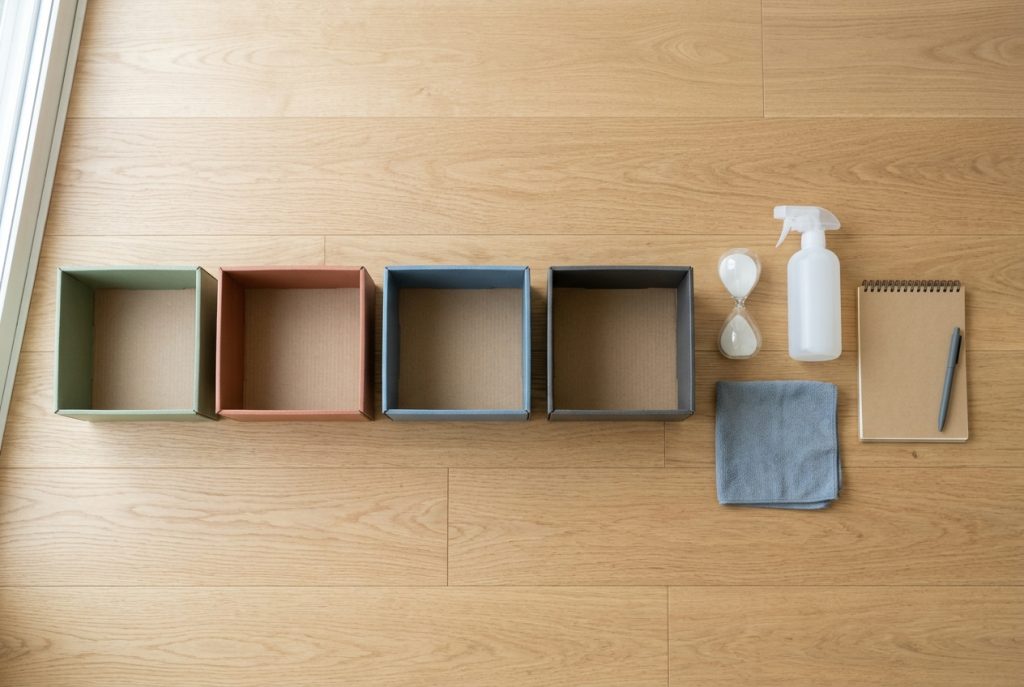
- Four boxes or bags labeled Keep, Donate/Sell, Recycle, and Trash.
- A timer to keep sessions short and focused.
- Cleaning basics so you can wipe shelves while they are empty.
- A notepad or phone list for items needing repair, return, or a specific destination.
Choose Your Method
Several well-known approaches exist, and the right one depends on your temperament and schedule. The table below compares the most popular options.
| Method | How It Works | Best For | Drawback |
|---|---|---|---|
| KonMari (Marie Kondo) | Sort by category, not room: clothes, books, papers, miscellaneous, then sentimental. Keep what sparks joy. | People who want a one-time, transformational reset | Time-intensive; requires gathering all items in a category at once |
| Room-by-Room | Complete one room fully before moving to the next. | Busy households that need visible progress | Duplicates across rooms can be missed |
| 15-Minute Daily | Declutter for 15 minutes every day, one zone at a time. | Beginners and those prone to overwhelm | Slower overall results |
| Swedish Death Cleaning | Gradually reduce possessions so loved ones are not burdened later. | Downsizing, life transitions, older adults | Can feel emotionally heavy |
| Minimalism Game | Remove 1 item on day 1, 2 on day 2, and so on for 30 days (465 items total). | People motivated by challenges | Volume can become hard in the final week |
For most households, a hybrid works best: use the room-by-room structure for overall planning, but apply KonMari-style category thinking inside each room. For example, while doing the bedroom, gather every piece of clothing from the closet, dresser, and laundry chair before deciding.
The Room-by-Room Decluttering Plan
Order matters. Starting with low-stakes spaces builds your decision-making muscle before you face harder choices like family photos or inherited items.
1. Entryway
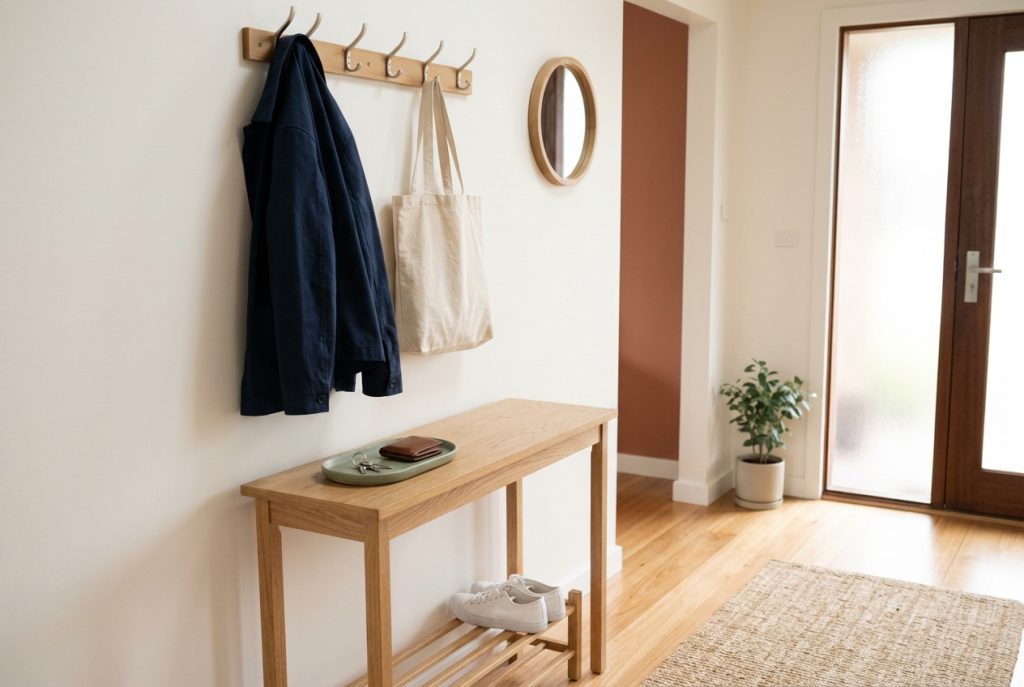
The entryway sets the tone for the whole home. Remove shoes and coats that are out of season or unworn, clear old receipts and flyers, and establish a single landing spot for keys, wallet, and bags. A wall hook and a small tray solve most entryway chaos.
2. Bathroom
Bathrooms are ideal for beginners because decisions are objective. Check expiration dates on medications, sunscreen, and cosmetics. Most mascara should be replaced roughly every three months, and sunscreen loses effectiveness after its expiry date. Toss nearly empty bottles, hotel toiletries you never use, and frayed towels (animal shelters often accept old towels).
3. Kitchen
Pull everything from one cabinet at a time. Look for duplicates: most households need one good can opener, not three. Remove single-use gadgets you have touched once, mismatched food storage containers without lids, and expired pantry goods. Keep counters reserved for items used daily, such as a coffee maker or knife block.
4. Living Room
Focus on surfaces first: coffee tables, side tables, shelves, and media consoles. Recycle old magazines, coil and label necessary cables, and remove decorative objects that no longer suit your taste. Aim for clear zones: a reading spot, an entertainment area, a place for kids’ toys if relevant.
5. Bedroom and Closet
Clothing is where most people hold the most excess. Try the hanger trick: turn all hangers backward, and after you wear an item, return it facing the normal way. After six months, anything still on a backward hanger is a strong donation candidate. Ask direct questions: Does it fit now? Have I worn it in the past year? Would I buy it again today?
6. Home Office and Paperwork
Paper multiplies quietly. Shred old bank statements you can access online, recycle manuals (most are available digitally), and keep tax records according to official guidance; in the US, the IRS generally recommends keeping records for three years, though some situations require longer. Set up a simple system: Action, File, and Shred.
7. Garage, Basement, and Storage Areas
These spaces hold the forgotten items: broken equipment awaiting repair, gifts you never opened, and boxes untouched since your last move. If a box has been sealed for over a year and you cannot name its contents, consider donating it largely unopened, checking only for important documents or heirlooms.
8. Sentimental Items Last
Save photos, letters, and inherited belongings for the end, once your decision-making confidence is high. You do not need to keep every item to honor a memory. Photograph objects before letting them go, keep a single representative piece from a collection, or create a dedicated memory box with a fixed size limit.
Decision Rules That Make Sorting Faster
Decision fatigue is the main reason people stall. Pre-set rules remove the need to deliberate over every object.

- The 90/90 Rule: Popularized by The Minimalists. If you have not used it in the past 90 days and will not use it in the next 90, let it go.
- The 20/20 Rule: If you could replace an item for under $20 in under 20 minutes, you do not need to store it just in case.
- The Container Concept: A shelf or bin defines the limit. If books overflow the bookshelf, the shelf decides how many stay.
- The Would-I-Buy-It-Today Test: If you would not purchase it again now, its value to you has likely expired.
- The Maybe Box: Place uncertain items in a dated box. If you have not retrieved anything after three to six months, donate it without reopening.
Practical experience from professional organizers is consistent: people rarely regret what they release, but they often regret how long they waited to start.
Where to Send What You Remove
Responsible disposal keeps usable items out of landfills and makes letting go easier emotionally.
- Donate: Thrift stores, shelters, libraries (books), and schools (craft supplies). Call ahead, since many organizations restrict mattresses, car seats, or electronics.
- Sell: Facebook Marketplace, eBay, Poshmark, or a local consignment shop work well for furniture, branded clothing, and electronics. Set a deadline; unsold items go to donation after two weeks.
- Recycle: Many electronics retailers accept old devices and batteries. Textile recycling programs take worn-out clothing unfit for donation.
- Give Away: Buy Nothing groups and neighborhood apps connect you with people who will collect items directly from your door.
How to Keep Your Home Clutter-Free Long Term
Decluttering is a reset; maintenance is a habit. Without systems, clutter typically returns within months.

Build Simple Maintenance Habits
- One-in, one-out: When a new shirt, mug, or book arrives, an old one leaves.
- A permanent donation bin: Keep a bag in a closet. When it fills, drop it off.
- A 10-minute nightly reset: Return items to their homes before bed, so each morning starts clear.
- Mail triage at the door: Recycle junk mail immediately rather than setting it down.
- Seasonal reviews: Twice a year, when changing wardrobes, do a quick pass through each room.
Shop With Intention
Clutter prevention begins at checkout. Wait 48 hours before non-essential purchases, unsubscribe from promotional emails, and ask where an item will live before buying it. If you cannot answer, skip it.
Involve the Whole Household
Decluttering stalls when one person carries the load. Give each family member responsibility for their own spaces, use labeled bins for children so tidying becomes a game, and agree on shared-space rules together. Never discard another adult’s belongings without permission; it erodes trust and often triggers more hoarding behavior.
Common Decluttering Mistakes to Avoid
- Buying organizers first: Containers hide clutter instead of solving it. Declutter, then measure, then buy storage.
- Tackling the whole house in one weekend: This leads to burnout and half-finished piles in every room.
- Moving clutter instead of removing it: Shifting boxes to the garage is relocation, not decluttering.
- Keeping items out of guilt: Unwanted gifts have already served their purpose; the giver wants you happy, not burdened.
- Leaving donation bags in the car for weeks: Schedule drop-off immediately after each session.
Frequently Asked Questions / FAQs
How long does it take to declutter a whole house?
For an average three-bedroom home, expect anywhere from a few weeks to several months, depending on volume and the time you commit. Working 30 minutes daily, most people finish main living areas within four to six weeks, with garages and sentimental items taking longer.
What room should I declutter first?
Start with a small, low-emotion space such as the bathroom, entryway, or a single kitchen drawer. Quick wins build confidence and momentum for harder areas like closets and storage rooms.
How do I declutter when I feel overwhelmed?
Shrink the task. Set a timer for 15 minutes and focus on one shelf or drawer only. Remove obvious trash first, which requires no difficult decisions, and stop when the timer ends to avoid burnout.
Should I declutter before or after a move?
Before. Moving companies typically charge by weight or volume, so every item you remove beforehand saves money, packing time, and unpacking effort in your new home.
Final Thoughts
Learning how to declutter your home comes down to a simple sequence: start small, sort decisively, give every kept item a home, and remove outgoing items immediately. Pair that process with maintenance habits like one-in, one-out and a nightly reset, and your space will stay functional long after the initial effort. Pick one drawer today, set a 15-minute timer, and begin.