Most people don’t fail at eating well because they lack willpower. They fail at 7 p.m. on a Tuesday, when they’re tired, hungry, and the fridge holds nothing ready to eat. Meal prep removes that moment from the equation. Done right, it saves money, cuts food waste, and makes healthy eating the default rather than a daily decision.
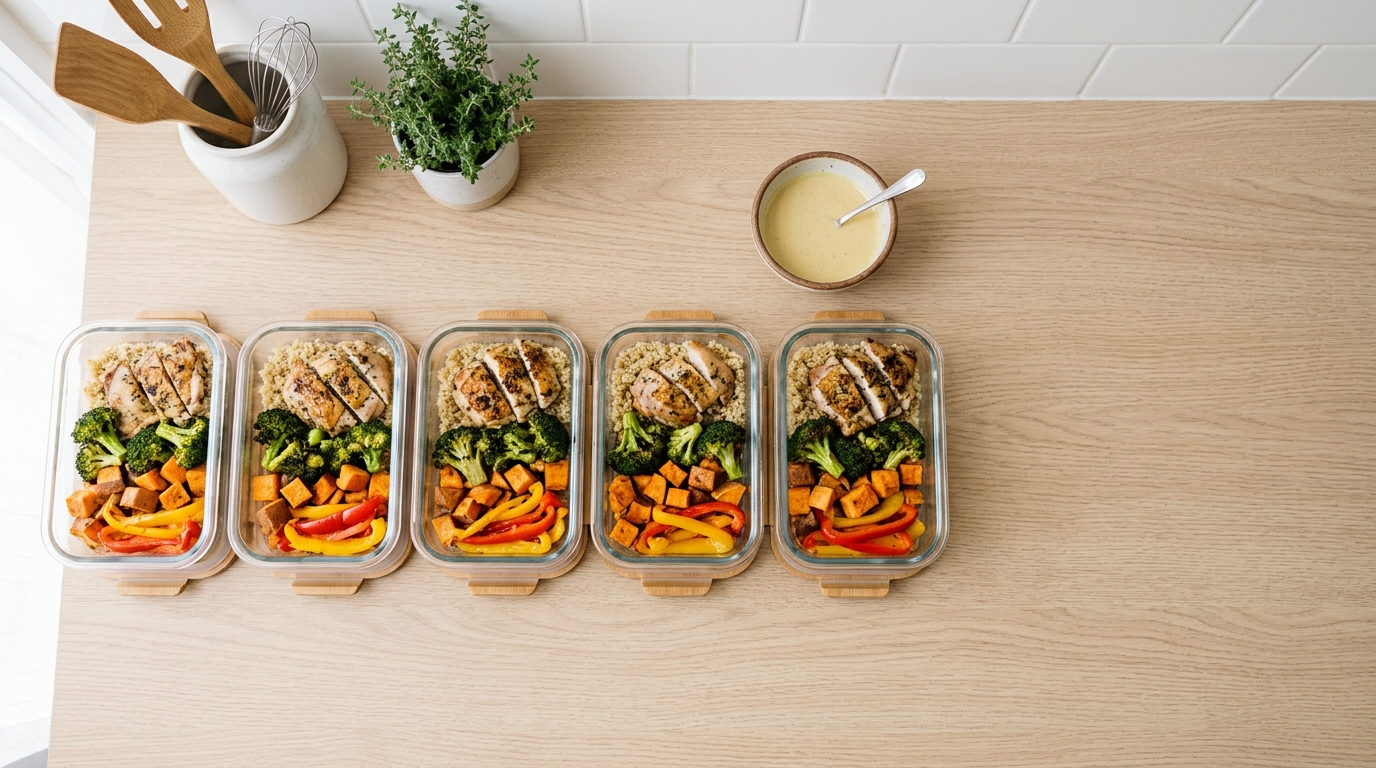
Meal prep for beginners means cooking or preparing some or all of your week’s meals in one or two focused sessions, then storing them in portioned containers. Start small: plan 3 to 5 meals, choose one protein, two vegetables, and one grain, cook them in about two hours on Sunday, and refrigerate cooked food for no more than 3 to 4 days.
- Start with lunches only (or 3 to 5 meals), not all 21 meals of the week.
- Use a simple formula: 1 protein + 2 vegetables + 1 grain + 1 sauce.
- Cooked leftovers are safe in the fridge for 3 to 4 days; freeze anything you’ll eat later than that.
- Refrigerate cooked food within 2 hours and reheat to 165°F (74°C).
- Glass, leak-proof containers in a few standard sizes make the system much easier to maintain.
What Meal Prep Actually Is (and the Four Styles to Choose From)
“Meal prep” covers more than the identical-boxes-of-chicken-and-rice image that dominates social media. There are four main styles, and beginners usually do best by combining two of them.
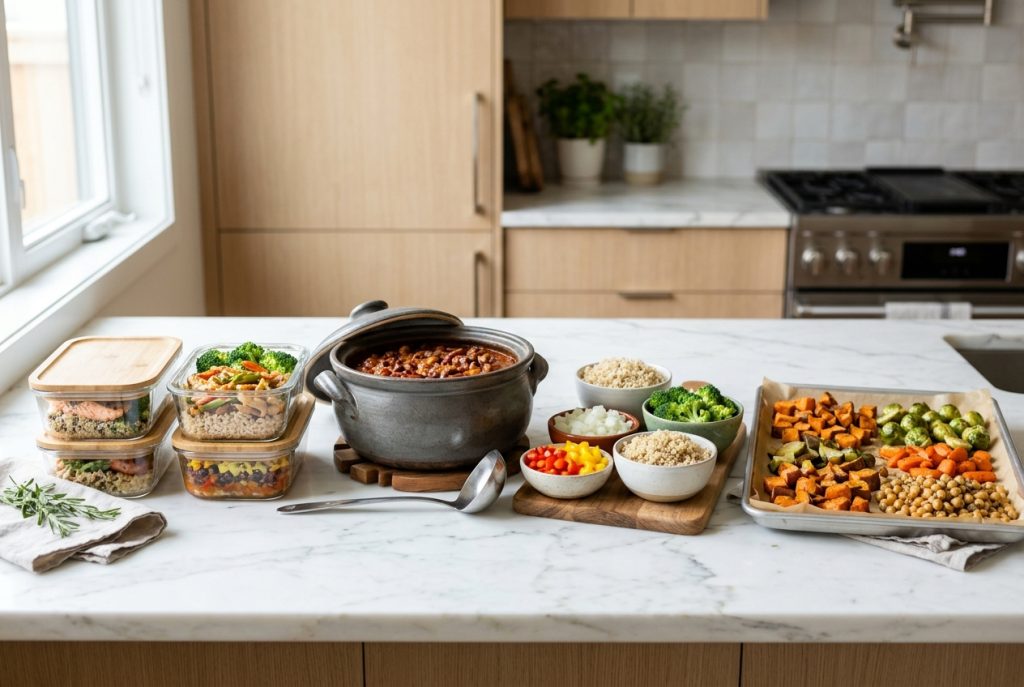
- Full make-ahead meals: Complete meals cooked and portioned into individual containers. Ideal for workday lunches.
- Batch cooking: Large quantities of one recipe (chili, soup, curry) stored in bulk and portioned when needed. Freezes well.
- Ingredient prep: Washing, chopping, and cooking components (grains, roasted vegetables, proteins) separately, then assembling different meals during the week. Best for people who get bored easily.
- Freezer packs: Raw ingredients pre-chopped and bagged, ready to dump into a slow cooker or sheet pan.
| Prep Style | Time Needed | Variety | Best For | Fridge Life |
|---|---|---|---|---|
| Full make-ahead meals | 2–3 hours | Low | Busy professionals, packed lunches | 3–4 days |
| Batch cooking | 1–2 hours | Low–Medium | Families, freezer stocking | 3–4 days (months frozen) |
| Ingredient prep | 1.5–2 hours | High | People who dislike repetition | 3–5 days depending on item |
| Freezer packs | 45–90 minutes | Medium | Slow cooker users, weeknight dinners | Frozen until cooked |
If you’re unsure where to start, choose ingredient prep for dinners and full make-ahead meals for lunches. That combination gives structure without the monotony that makes most people quit after week two.
The 7-Step Weekly Meal Prep System
This framework works whether you’re cooking for one or for a family of four. The first few weeks will take longer; by week four, most people finish in under two hours.
Step 1: Decide How Many Meals to Prep
Count the meals where you actually struggle. For most beginners, that’s weekday lunches (five meals) and two or three dinners. Breakfast is often simple enough to skip at first, or to cover with one easy item like overnight oats or egg muffins. Prepping too much is the most common first-week mistake; it leads to wasted food and burnout.
Step 2: Plan With the Component Formula
Instead of hunting for seven different recipes, build your week around components:
- 1 protein: chicken thighs, ground turkey, tofu, lentils, salmon, or hard-boiled eggs
- 2 vegetables: one roasted (broccoli, peppers, sweet potato) and one raw or quick-cooked (spinach, cucumbers, green beans)
- 1 grain or starch: rice, quinoa, farro, potatoes, or whole-wheat pasta
- 1–2 sauces: pesto, tahini dressing, salsa, teriyaki, or yogurt-herb sauce
Sauces are the secret weapon. The same chicken and rice tastes completely different with peanut sauce on Monday and salsa verde on Wednesday.
Step 3: Shop From a List Organized by Store Section
Write your list grouped by produce, proteins, dairy, pantry, and frozen. This cuts shopping time and stops impulse buys. Check what you already own first; using up pantry staples is one of the fastest ways meal prep saves money.
Step 4: Gather the Right Containers
You don’t need fancy gear, but you do need consistency. A set of 10 to 15 leak-proof containers in two or three sizes is enough. Glass containers reheat evenly, don’t stain, and last for years; BPA-free plastic is lighter for commuting. Add a few small dressing cups so sauces don’t make food soggy.
Step 5: Cook in a Smart Order
Efficiency comes from sequencing, not speed. A typical two-hour session looks like this:
- Preheat the oven and start the grain (rice cooker or stovetop).
- Chop all vegetables at once.
- Get sheet pans of vegetables and protein into the oven together.
- While they roast, make sauces and boil eggs.
- Wash dishes during downtime so cleanup isn’t waiting at the end.
Step 6: Cool, Portion, and Label
Let food cool briefly, then portion and refrigerate. The USDA advises getting cooked food into the fridge within two hours (one hour if the room is above 90°F/32°C). Spreading hot food into shallow containers helps it cool faster. Label each container with the contents and date using masking tape and a marker.
Step 7: Review and Adjust
At the end of the week, note what you ate, what got thrown out, and what you got tired of. This five-minute review is what turns meal prep from a one-time experiment into a lasting habit.
Food Safety: How Long Meal Prep Lasts
Food safety is where beginners most often get it wrong. Prepping on Sunday and eating the last portion on Saturday stretches past what’s recommended for most cooked foods.
| Food | Refrigerator (40°F / 4°C or below) | Freezer (0°F / -18°C) |
|---|---|---|
| Cooked chicken, beef, pork | 3–4 days | 2–6 months for best quality |
| Cooked fish | 3–4 days | 2–3 months for best quality |
| Cooked rice and grains | 3–4 days (cool quickly) | 1–2 months |
| Soups, stews, chili | 3–4 days | 2–3 months |
| Hard-boiled eggs (in shell) | Up to 1 week | Not recommended |
| Chopped raw vegetables | 3–5 days (varies by vegetable) | Blanch first for best results |
Food kept frozen at 0°F stays safe indefinitely; the times above refer to taste and texture. When reheating, bring leftovers to an internal temperature of 165°F (74°C), and stir halfway through microwaving to remove cold spots.
Practical rule: Prep on Sunday, eat Monday through Wednesday from the fridge, and move Thursday and Friday portions straight to the freezer. Transfer them to the fridge the night before to thaw.
A Beginner’s Starter Menu and Shopping List
Here’s a realistic first week covering five lunches and three dinners for one person, built on two proteins so you don’t burn out on a single flavor.
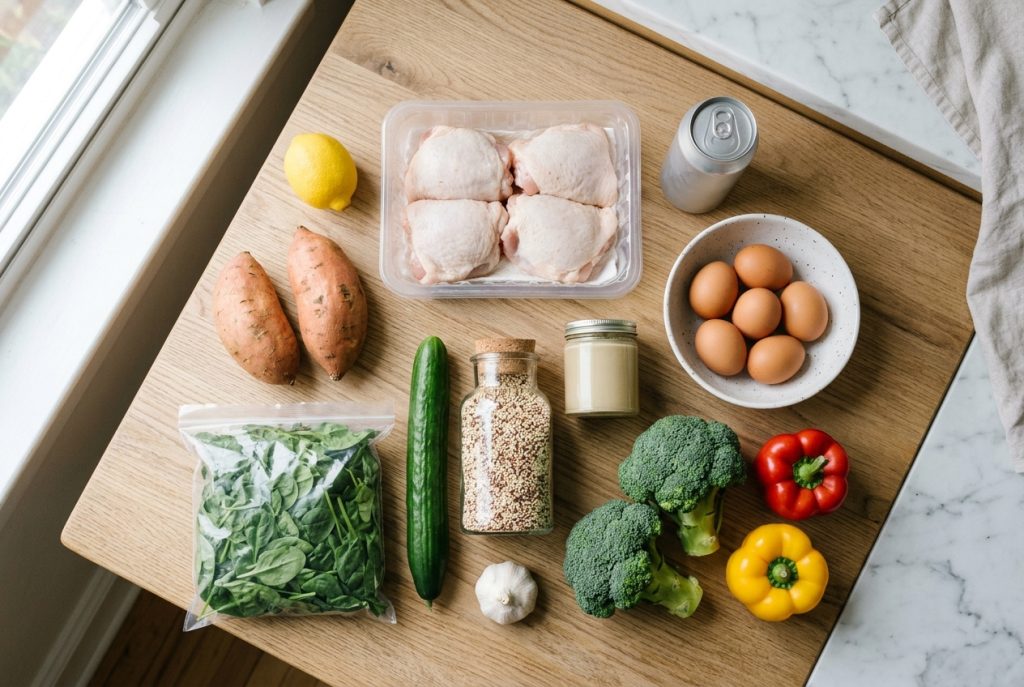
The Components
- Proteins: 2 lbs chicken thighs, 1 can chickpeas, 6 eggs
- Vegetables: 2 heads broccoli, 2 bell peppers, 2 sweet potatoes, 1 bag spinach, 1 cucumber
- Grains: 2 cups dry quinoa or rice
- Sauces: store-bought pesto, plus a homemade lemon-tahini dressing (tahini, lemon juice, garlic, water, salt)
- Pantry: olive oil, salt, pepper, smoked paprika, cumin, garlic powder
How It Becomes Different Meals
- Lunch A (Mon–Tue): Paprika chicken, quinoa, roasted broccoli, pesto
- Lunch B (Wed–Fri): Roasted chickpea and sweet potato bowl with spinach and lemon-tahini
- Dinners: Chicken and pepper wraps, quinoa salad with cucumber and eggs, a quick stir-fry using leftover vegetables
- Snacks: Hard-boiled eggs and cucumber slices
Depending on where you live, this list typically costs less than two or three takeout meals, while covering eight meals plus snacks.
Common Beginner Mistakes (and How to Fix Them)
Making Every Meal Identical
Eating the same box five days running is why most people quit. Use two proteins and at least two sauces per week, or switch to ingredient prep so you can assemble meals differently.
Choosing Foods That Don’t Reheat Well
Fried foods turn soggy, pasta can go mushy, and delicate fish dries out. Foods that hold up best include braised or roasted meats, grain bowls, soups, curries, roasted root vegetables, and beans. Keep crunchy toppings, avocado, and leafy greens separate until you eat.
Skipping the Plan
Walking into the store without a plan leads to overbuying and waste. A 15-minute planning session on Saturday prevents most problems.
Ignoring Your Schedule
If you have dinner out on Thursday, don’t prep a Thursday dinner. Look at your calendar before you plan.
Going Too Big, Too Fast
Prepping 21 meals in week one feels productive until you’re exhausted by hour four. Build up gradually; consistency matters more than volume.
The Real Benefits: Time, Money, and Healthier Choices
The case for meal prep goes beyond convenience. Research on home cooking has repeatedly linked preparing meals at home with better diet quality, including more fruits and vegetables and fewer calories from ultra-processed foods. Planning ahead also reduces food waste, since you buy only what you’ll use.
The time math works in your favor too. Cooking every night can take 30 to 60 minutes per meal, plus cleanup. A two-hour Sunday session that covers eight meals often cuts weekly cooking time considerably, because you only wash the cutting board, pans, and oven trays once.
There’s also a mental benefit that’s harder to measure: removing the nightly “what’s for dinner?” decision. Fewer daily decisions mean less temptation to order delivery out of fatigue.
Pros and Cons at a Glance
- Pros: Saves money, reduces waste, supports nutrition goals, frees up weeknights, makes portion control easy.
- Cons: Requires an upfront time block, can feel repetitive, needs fridge and freezer space, and some foods lose texture after storage.
Frequently Asked Questions / FAQs
How long does meal prep last in the fridge?
Most cooked meals last 3 to 4 days when stored at 40°F (4°C) or below. For a full week of meals, freeze the portions you’ll eat on days 4 through 7 and thaw them in the fridge the night before.
What are the best foods for meal prep for beginners?
Start with forgiving foods that reheat well: chicken thighs, ground turkey, beans, lentils, rice, quinoa, roasted root vegetables, broccoli, soups, and chili. Chicken thighs stay juicier than breasts after reheating, which makes them especially beginner-friendly.
Is meal prepping actually cheaper than buying lunch?
In most cases, yes. Buying ingredients in larger quantities and cooking at home usually costs a fraction of a restaurant or café lunch per portion. The savings grow when you build meals around affordable staples like eggs, beans, rice, and seasonal vegetables.
Can I meal prep without eating the same thing every day?
Absolutely. Use ingredient prep: cook proteins, grains, and vegetables separately, then combine them with different sauces and seasonings throughout the week. One batch of chicken can become a grain bowl, a wrap, and a salad.
Start This Week
You don’t need a perfect plan, matching containers, or a free Sunday afternoon to begin. Pick five lunches, one protein, two vegetables, one grain, and two sauces. Block out two hours, follow the cooking order above, and label everything with a date. After a week, review what worked. Within a month, meal prep stops being a project and becomes simply how your week runs.