Most first-time plant owners do not kill their plants through neglect. They kill them with kindness, usually in the form of too much water and too little light. The good news is that a handful of species tolerate both mistakes surprisingly well, which makes them ideal houseplants for beginners who want greenery without the guilt.
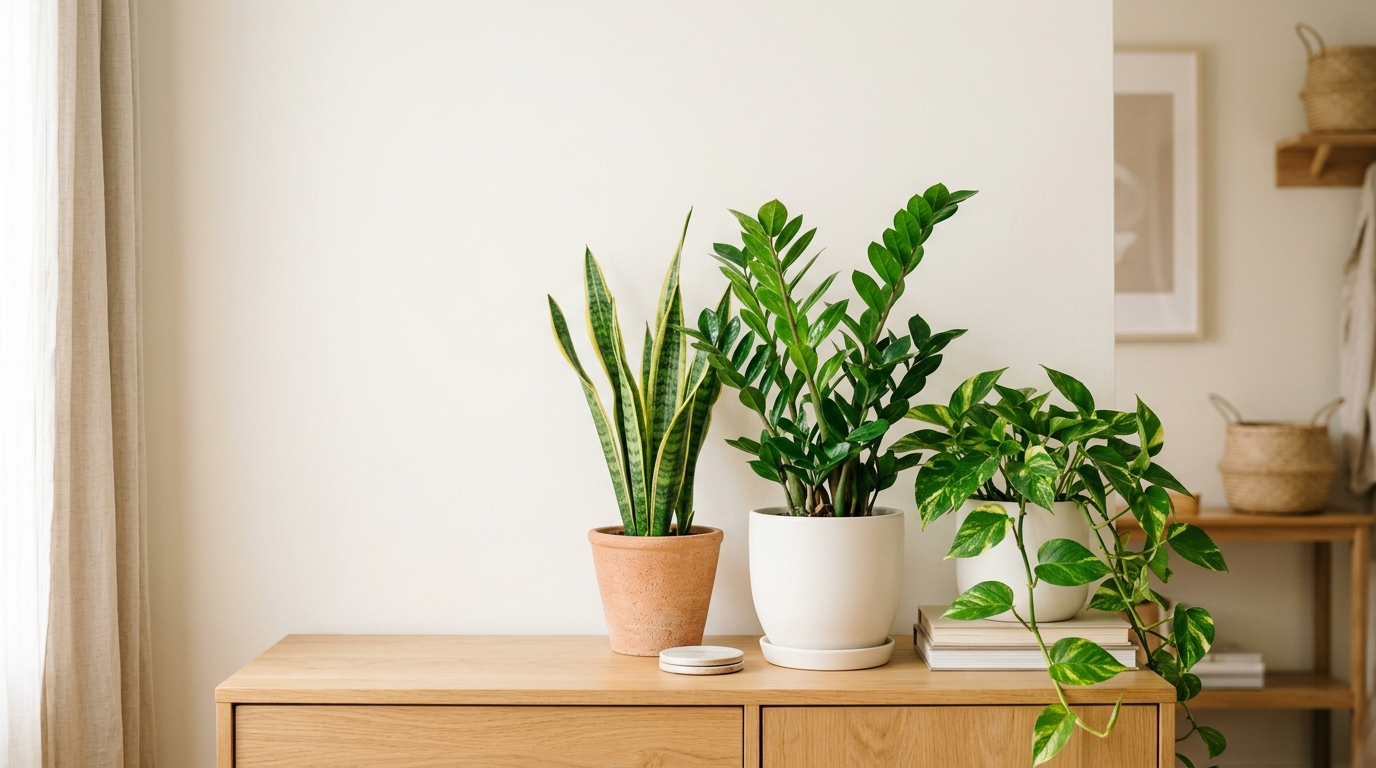
The best houseplants for beginners are snake plants, pothos, ZZ plants, spider plants, peace lilies, cast iron plants, and Chinese evergreens. These species tolerate low to medium light, irregular watering, and dry indoor air. To keep them alive, match each plant to your available light, water only when the top few centimeters of soil are dry, and always use pots with drainage holes.
- Overwatering, not underwatering, is the most common reason beginner plants die; check soil moisture before every watering.
- Light is the single biggest factor in plant health; identify your window direction before buying.
- Snake plants, ZZ plants, and pothos survive weeks of neglect and low light, making them the safest starter choices.
- Spider plants and cast iron plants are non-toxic to cats and dogs according to the ASPCA, while pothos, peace lilies, and ZZ plants are not.
- A pot with drainage holes and a well-draining potting mix prevents most root rot problems.
Why Some Houseplants Are Easier Than Others
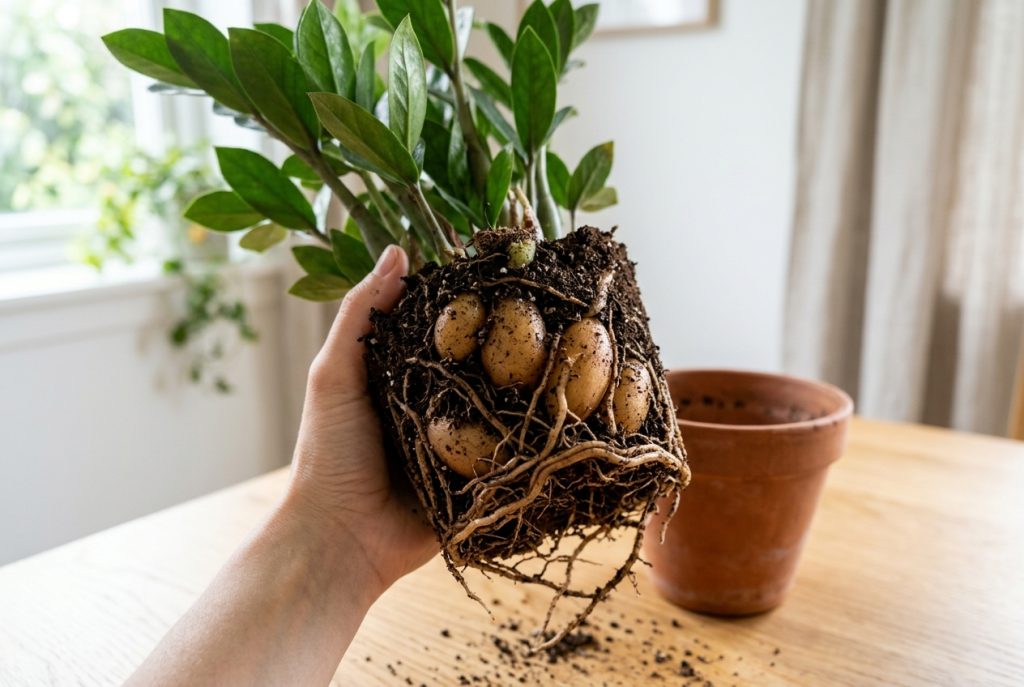
Easy-care houseplants share a few biological traits. Many evolved in environments with unpredictable rainfall or deep forest shade, so they store water in thick leaves, stems, or underground rhizomes and photosynthesize efficiently in dim conditions. The ZZ plant, for example, comes from drought-prone regions of East Africa and stores water in potato-like rhizomes. The snake plant uses a water-conserving form of photosynthesis called CAM, opening its pores mainly at night to reduce moisture loss.
By contrast, popular “Instagram plants” such as fiddle-leaf figs, calatheas, and maidenhair ferns demand stable humidity, consistent light, and precise watering. They punish small mistakes with dropped or crispy leaves. Starting with forgiving species builds your confidence and teaches you to read plant signals before you graduate to fussier varieties.
The Three Things Every Plant Needs
- Light: The energy source for growth. No amount of fertilizer or attention compensates for a plant placed in the wrong light.
- Water: Roots need moisture and oxygen. Constantly soggy soil suffocates roots and invites rot.
- Drainage and soil: A loose mix lets excess water escape so roots can breathe.
Temperature matters too, but most common houseplants are tropical and thrive in the same 18–27°C (65–80°F) range that humans find comfortable.
7 Hard-to-Kill Houseplants for Beginners
Each plant below has been chosen for tolerance of imperfect care, wide availability at garden centers and supermarkets, and reasonable price. The care notes reflect what works in typical homes and apartments, not ideal greenhouse conditions.
1. Snake Plant (Dracaena trifasciata)
Formerly classified as Sansevieria, the snake plant is the default recommendation for good reason. Its stiff, upright leaves handle low light, though growth slows considerably in dim corners. Water every two to four weeks in spring and summer, and as little as once a month in winter. The fastest way to kill one is frequent watering, which causes mushy, collapsing leaves at the base.
2. Golden Pothos (Epipremnum aureum)
Pothos is a fast-growing trailing vine that looks great on shelves or in hanging baskets. It communicates clearly: leaves droop when thirsty and perk up within hours of watering. In very low light, variegated leaves may turn solid green and vines grow leggy. Cuttings root easily in a glass of water, making it the perfect plant for learning propagation.
3. ZZ Plant (Zamioculcas zamiifolia)
With waxy, glossy leaves that look almost artificial, the ZZ plant tolerates fluorescent office lighting and can go three to four weeks without water. Its rhizomes store moisture, so overwatering is the main risk. Yellowing leaves usually signal soggy soil.
4. Spider Plant (Chlorophytum comosum)
Spider plants produce arching striped leaves and dangling baby plantlets you can pot up for free new plants. They prefer bright, indirect light and evenly moist (not wet) soil. Brown leaf tips are common and often linked to fluoride or salts in tap water; using filtered or rainwater helps. Spider plants are listed as non-toxic to cats and dogs by the ASPCA.
5. Peace Lily (Spathiphyllum spp.)
The peace lily is one of the few easy plants that flowers reliably indoors, producing white spathes in medium light. It wilts dramatically when dry, which takes the guesswork out of watering, then recovers quickly. Note that it contains calcium oxalate crystals and is toxic to pets if chewed.
6. Cast Iron Plant (Aspidistra elatior)
Named for its toughness, the cast iron plant handles deep shade, cool rooms, and irregular watering. It grows slowly, so buy a size you are happy with. It is non-toxic to pets, making it a strong choice for dim hallways in homes with animals.
7. Chinese Evergreen (Aglaonema spp.)
Aglaonema offers patterned leaves in silver, green, pink, and red. Darker green varieties tolerate low light best, while colorful cultivars need medium light to maintain their hues. Keep it away from cold drafts, as temperatures below about 15°C (60°F) can damage leaves.
Beginner Houseplant Comparison Table
Use this table to match a plant to your space, schedule, and household.
| Plant | Light Tolerance | Watering Frequency (Growing Season) | Pet-Safe (ASPCA) | Growth Speed | Best For |
|---|---|---|---|---|---|
| Snake Plant | Low to bright indirect | Every 2–4 weeks | No | Slow | Bedrooms, frequent travelers |
| Golden Pothos | Low to bright indirect | Every 1–2 weeks | No | Fast | Shelves, hanging baskets |
| ZZ Plant | Low to bright indirect | Every 3–4 weeks | No | Slow to moderate | Offices, dim corners |
| Spider Plant | Medium to bright indirect | Weekly | Yes | Fast | Pet owners, propagation |
| Peace Lily | Low to medium | Weekly, or when drooping | No | Moderate | Indoor flowers |
| Cast Iron Plant | Very low to medium | Every 2–3 weeks | Yes | Very slow | Hallways, north-facing rooms |
| Chinese Evergreen | Low to medium | Every 1–2 weeks | No | Slow | Colorful foliage in low light |
Watering intervals are starting points. Always check the soil, because pot size, room temperature, and season change how fast soil dries.
How to Read the Light in Your Home
Plant labels saying “bright indirect light” confuse many beginners. Here is a practical way to interpret them, based on window direction in the Northern Hemisphere (reverse north and south if you live in the Southern Hemisphere):
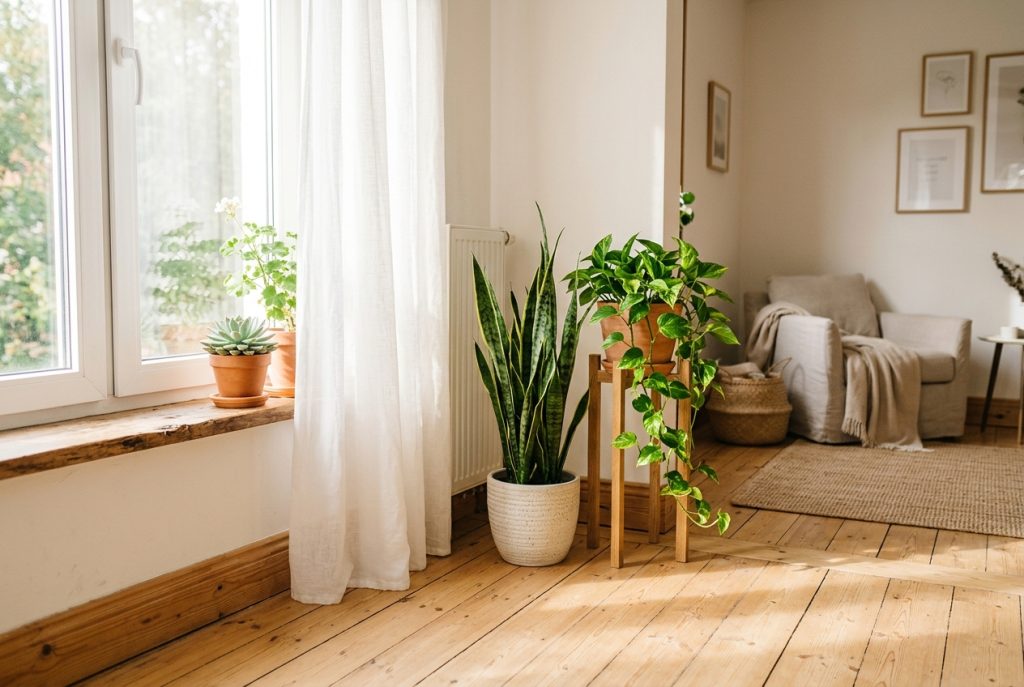
- South-facing windows: The strongest, longest light. Place plants a meter or two back or behind a sheer curtain to avoid scorching shade-lovers.
- East-facing windows: Gentle morning sun, ideal for nearly every plant on this list.
- West-facing windows: Hot afternoon sun; good for snake plants, but diffuse it for peace lilies and Aglaonema.
- North-facing windows: Soft, consistent low light. Choose ZZ plants, cast iron plants, and snake plants.
A quick test: hold your hand about 30 cm above where the plant will sit at midday. A sharp, defined shadow means bright light; a fuzzy shadow means medium light; a barely visible shadow means low light. Free light meter apps on smartphones can give a rough lux reading if you want more precision. Remember that “low-light tolerant” means a plant will survive, not that it will grow vigorously.
Watering, Soil, and Pots: Getting the Basics Right
Water Based on Soil, Not the Calendar
Push your finger about 3–5 cm into the soil. If it feels dry at that depth, water thoroughly until it runs out of the drainage holes, then empty the saucer after 15 minutes. For succulent-like plants such as snake and ZZ plants, wait until the soil is dry most of the way down. Lifting the pot is another reliable method: dry soil makes a pot noticeably lighter.
Choose Pots with Drainage Holes
Decorative pots without holes trap water at the bottom, where roots rot unseen. If you love a cachepot without drainage, keep the plant in a plastic nursery pot inside it and remove it to water. Terracotta is forgiving for overwaterers because it wicks moisture away; glazed ceramic and plastic retain moisture longer.
Use the Right Potting Mix
Never use garden soil indoors; it compacts and may harbor pests. A standard indoor potting mix suits pothos, spider plants, peace lilies, and Aglaonema. For snake and ZZ plants, blend in perlite or use a cactus mix to improve drainage.
Fertilize Lightly
Feed with a balanced liquid houseplant fertilizer diluted to half strength once a month during spring and summer. Skip fertilizer in winter when growth slows. Over-fertilizing causes salt buildup and burnt leaf edges.
Common Beginner Mistakes and How to Fix Them
| Symptom | Likely Cause | Fix |
|---|---|---|
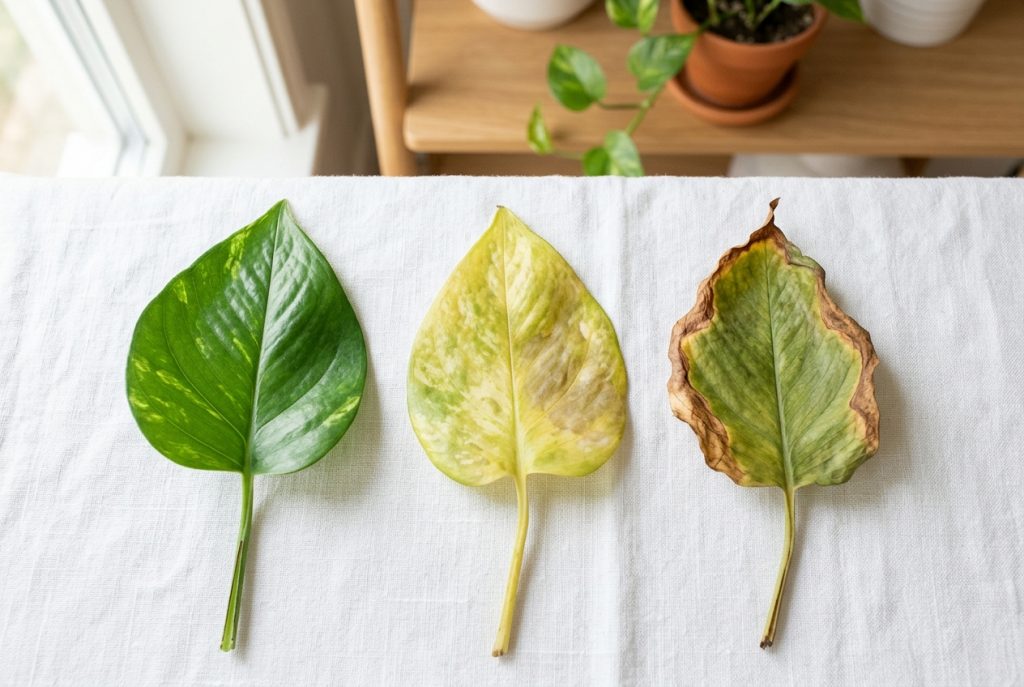
| Yellow, mushy lower leaves | Overwatering or poor drainage | Let soil dry out; repot into fresh mix if roots smell sour |
| Crispy brown leaf edges | Underwatering, low humidity, or salt buildup | Water more consistently; flush soil with water every few months |
| Leggy stems with small leaves | Insufficient light | Move closer to a window or add a full-spectrum grow light |
| Pale, bleached patches | Sunburn from direct sun | Move back from the window or use a sheer curtain |
| Tiny flies around soil | Fungus gnats from constantly damp soil | Allow top layer to dry; use yellow sticky traps |
A useful habit is a weekly five-minute “plant check” on the same day each week. Look at leaves (top and underside) for pests like spider mites or mealybugs, test soil moisture, and rotate pots a quarter turn so growth stays even.
Do Houseplants Really Purify the Air?
Many articles cite the 1989 NASA Clean Air Study as proof that houseplants clean indoor air. That study tested plants in small, sealed chambers. A 2019 review by Drexel University researchers Bryan Cummings and Michael Waring, published in the Journal of Exposure Science & Environmental Epidemiology, concluded that you would need roughly 10 to 1,000 plants per square meter to match the air-cleaning effect of normal building ventilation. In other words, opening a window does far more for air quality than a few pots.
That does not make houseplants pointless. Research on indoor greenery has linked plants with improved mood and reduced perceived stress, and caring for living things provides structure and satisfaction. Buy plants because you enjoy them, not as an air purifier substitute.
Practical takeaway: Choose houseplants for the joy, beauty, and routine they bring, and rely on ventilation or a HEPA purifier for genuine air-quality improvements.
Your First-Month Plant Plan
- Week 1: Assess your light by window direction and the shadow test. Buy one or two plants from the list that match.
- Week 2: Leave plants in their nursery pots to acclimate. Avoid repotting immediately, as moving is already stressful.
- Week 3: Start your weekly check routine. Water only when the soil test says so.
- Week 4: If a plant is root-bound (roots circling or poking from holes), repot into a container just 2–5 cm wider. Try propagating a pothos or spider plant cutting.
Once a plant has thrived for three to six months, you are ready to add another. Building a collection slowly helps you learn each plant’s rhythm instead of guessing across a dozen at once.
Frequently Asked Questions (FAQs)
What is the easiest houseplant to keep alive?
The ZZ plant and snake plant are widely considered the easiest. Both tolerate low light and can go three to four weeks without water, so they survive vacations and forgetful owners.
How often should I water houseplants for beginners?
There is no universal schedule. Check the soil with your finger and water when the top 3–5 cm are dry. For most plants on this list, that works out to every one to four weeks, with less frequent watering in winter.
Which beginner houseplants are safe for cats and dogs?
Spider plants and cast iron plants are listed as non-toxic to cats and dogs by the ASPCA. Pothos, peace lilies, ZZ plants, snake plants, and Chinese evergreens can cause mouth irritation, drooling, or vomiting if chewed, so place them out of reach.
Can houseplants survive in a room with no windows?
Not with overhead room lighting alone in most cases. A windowless room needs a full-spectrum LED grow light running roughly 10–12 hours a day. With that setup, ZZ plants, pothos, and snake plants can do well.