Few things change a household faster than a new puppy. The first year brings fast physical growth, a short window for socialization, a vaccine series that has to be timed correctly, and paperwork that many new owners forget. This guide covers every stage. It runs from prenatal development through the eight-month mark, and it also explains how to choose the right breed type and register your dog.
Quick answer: A puppy is a dog under about one year old. It moves through predictable stages: newborn dependence (0–2 weeks), early socialization (3–12 weeks), juvenile growth (3–6 months) and adolescence (6–12+ months). Most puppies go home at 8 weeks. They need core vaccines every 3–4 weeks from 6–8 weeks until about 16 weeks, then a booster at 6 months.
- Dog pregnancy lasts roughly 63 days, and puppies are born blind, deaf and fully dependent on their mother.
- The weeks between about 3 and 14 are the most important period for socialization. Gentle exposure to people, sounds and surfaces should start before vaccines are complete, with sensible precautions.
- UC Davis veterinary guidelines call for core vaccines every 3–4 weeks starting at 6–8 weeks, a dose at 6 months, and boosters every 3 years after that.
- Choose a breed type based on energy, size, grooming needs and adult temperament, not only on how cute the puppy is.
- Registration means three separate tasks: breed registry (if purebred), microchip enrollment and a local dog license.
Why Puppies Are Trending Right Now (October 2026)
Puppy stories are dominating US feeds this autumn. Recent viral headlines include a Golden Retriever and Husky mix described as a real-life teddy bear, an “unwanted” shelter puppy filmed holding a person’s hands just before adoption, and local “Furry Friend Friday” adoption features such as one introducing a puppy named Percy. These stories are popular partly because more Americans than ever live with dogs.
According to the American Pet Products Association (APPA) 2026 Dog Report, as reported by Pet Age, 71 million US households owned a dog in 2025. That is 53% of households and a 4% increase on the year before. APPA’s 2026 State of the Industry Report calls this the highest figure in its 15-year look back (2010–2025). The American Veterinary Medical Association (AVMA) 2025 Pet Ownership and Demographics Sourcebook puts the number of pet dogs at about 87.3 million, with an average of 1.6 dogs per dog-owning home.
Younger owners are a big part of this growth. APPA’s 2025 State of the Industry release reported that Gen Z pet-owning households rose 43.5% from 2023 to 2024, and Gen Z is the generation most likely to own more than one pet. Spending is rising too. APPA figures cited by Forbes Advisor show Americans spent $158 billion on pets in 2025, up 3.7% from 2024, and APPA projects $165 billion in 2026.
What is confirmed versus speculative: the ownership and spending figures above come from APPA and AVMA surveys. Viral videos, however, do not prove anything about a specific mix’s temperament. A Golden-Husky cross can inherit traits from either parent, so you cannot reliably predict its coat, energy or behavior from one adorable clip.
Puppy Development: From Prenatal Growth to 8 Months
Knowing what is normal at each age helps you train at the right moment and spot health problems early. Timelines vary by breed. Toy breeds mature faster, while giant breeds can keep growing until 18–24 months.
Prenatal Development
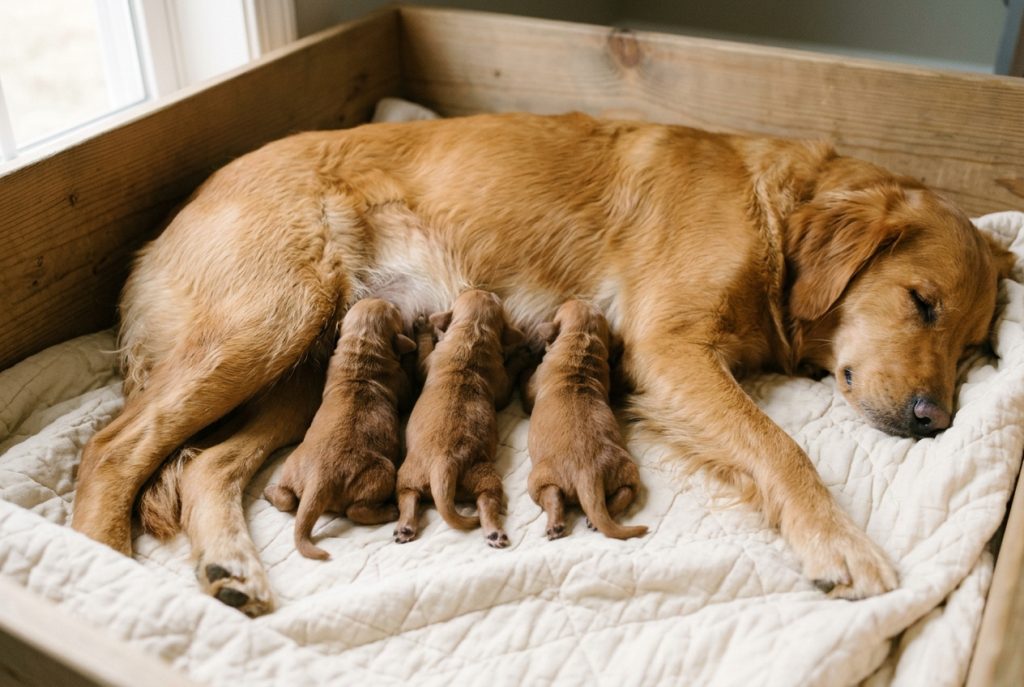
Canine gestation averages about 63 days, measured from ovulation. In the first few weeks, fertilized embryos travel to the uterus and implant. By around day 25–30, a veterinarian can usually confirm pregnancy with ultrasound. Organs, limbs and facial features form through the middle third of pregnancy. Skeletons become visible on X-ray in the final weeks, which is how vets count the litter before birth. A healthy prenatal period depends on the mother’s nutrition, parasite control and vaccination status. This is one reason responsible breeders keep detailed health records for the dam.
Birth to 8 Weeks: The Foundation Stage
- Neonatal (0–2 weeks): Eyes and ear canals are closed. Puppies cannot regulate body temperature and spend most of their time sleeping and nursing.
- Transitional (2–3 weeks): Eyes and ears open, first wobbly steps appear, and baby teeth begin to emerge.
- Early socialization (3–8 weeks): Puppies learn bite inhibition and dog body language from their littermates. Weaning onto solid food usually happens during this period.
Removing a puppy from its litter too early often leads to mouthiness and poor dog-to-dog manners. That is why many states and reputable breeders set 8 weeks as the minimum age for going home.
2 Months Old
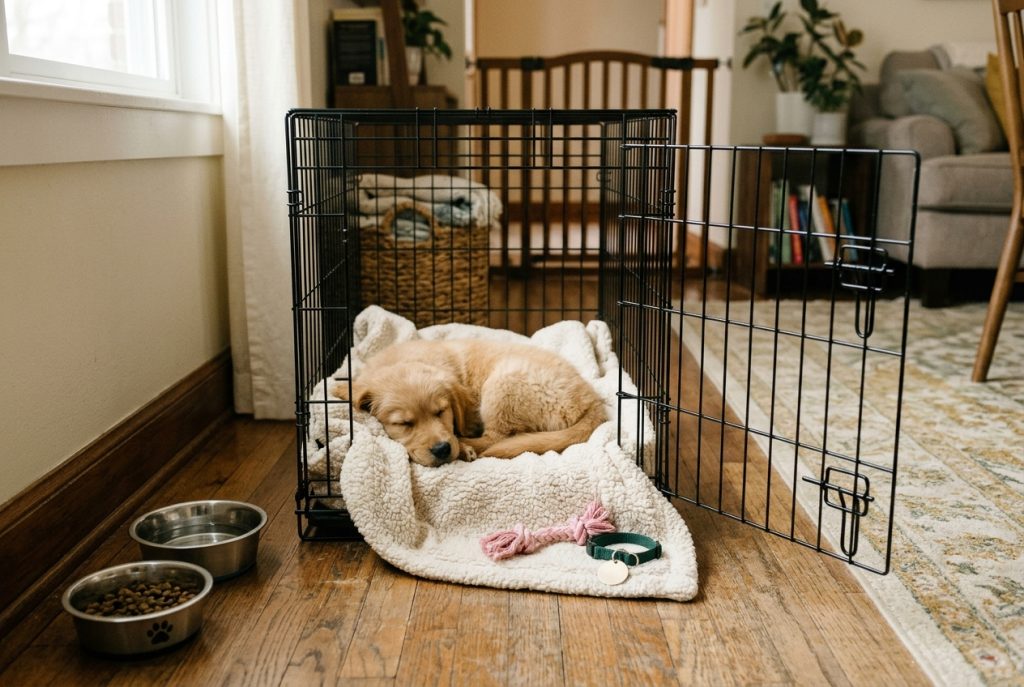
At 8–9 weeks, most puppies move to their new homes. They need to go outside for a potty break every 1–2 hours, right after naps, and within 15 minutes of meals. Expect 18–20 hours of sleep per day. This is the best age to introduce a crate, the sound of a vacuum, being handled at the paws and ears, and short car rides. Keep every experience positive and brief. Many puppies also go through a fear period around 8–10 weeks, so avoid overwhelming outings.
4 Months Old
By 16 weeks, the core vaccine series is usually wrapping up, and adult teeth are starting to push out baby teeth. Chewing becomes intense at this stage. APPA’s 2026 Dog Report found 65% of dog owners bought chews in 2025, up 5% year over year, and teething puppies are a major reason. This is a good time to enroll in a group puppy class, practice loose-leash walking, and lengthen time alone in the crate gradually.
6 Months Old
Six months marks the start of adolescence. Most adult teeth are in, and medium breeds may be at roughly two-thirds of adult weight. Hormonal changes begin, so talk with your vet about the timing of spay or neuter, since recommendations vary by breed and size. Many owners notice “selective hearing” at this age. Your puppy may ignore cues it knew perfectly well a month ago. Keep training sessions short and consistent rather than assuming the puppy has forgotten everything.
8 Months Old
At eight months, many dogs look nearly grown but still behave like teenagers. Energy peaks, boundary testing is common, and a second fear period can appear. Increase structured exercise and mental work such as sniff walks, puzzle feeders and trick training. Large and giant breeds should still avoid repetitive high-impact activities like long-distance running until their growth plates close. Your vet can advise when that is safe.
| Age | Key Development | Owner Priorities |
|---|---|---|
| 0–2 weeks | Eyes/ears closed, nursing, cannot regulate temperature | Breeder’s job: warmth, monitoring weight gain |
| 3–8 weeks | Senses open, weaning, litter play | Breeder’s job: early handling, sound exposure |
| 2 months | Goes home, frequent sleep, small bladder | Crate training, potty schedule, first vet visit |
| 4 months | Teething, core vaccines ending | Puppy class, chew management, leash skills |
| 6 months | Adolescence begins, hormonal changes | Spay/neuter discussion, 6-month booster |
| 8 months | Peak energy, boundary testing | Structured exercise, consistent rules |
The Puppy Vaccine Schedule, Explained
Vaccines matter most in the first year because the immunity a puppy gets from its mother fades unpredictably. That is why vets give a series of shots rather than one. According to the UC Davis Veterinary Medical Teaching Hospital guidelines, puppies 16 weeks or younger should receive a modified-live vaccine against parvovirus, distemper and adenovirus-2 every 3–4 weeks, starting at 6–8 weeks of age.
| Age | Recommended Step (per UC Davis VMTH) |
|---|---|
| 6–8 weeks | First core dose (parvovirus, distemper, adenovirus-2) |
| Every 3–4 weeks after | Repeat core doses |
| 16–18 weeks | Final dose of the puppy series |
| 6 months | Additional core dose |
| Every 3 years | Core boosters for adult dogs |
| First vaccinated after 16 weeks | Two doses given 3–4 weeks apart |
Rabies vaccination is required by law in most US jurisdictions, and the required age is set by state and local rules. Non-core vaccines, such as leptospirosis, Bordetella (kennel cough) and Lyme disease, depend on your region and lifestyle. Ask your vet which ones fit your puppy, especially if you plan to use daycare, boarding or hiking trails.
Practical tip: Until the series is finished, avoid dog parks and high-traffic pet store floors where parvovirus can survive in the soil. You can still socialize your puppy safely. Carry it through busy places, host vaccinated adult dogs at home, and choose puppy classes that require proof of vaccination.
Choosing a Breed Type That Fits Your Life
The most common reason dogs end up in shelters is a mismatch between the dog’s needs and the owner’s lifestyle. Before you fall for a face, compare these practical factors.

| Breed Type | Typical Energy | Grooming | Predictability | Best For |
|---|---|---|---|---|
| Sporting (e.g., Labrador, Golden Retriever) | High | Moderate, seasonal shedding | High if purebred | Active families, first-time owners willing to exercise daily |
| Herding (e.g., Border Collie, Australian Shepherd) | Very high | Moderate to high | High | Experienced owners, dog sports |
| Toy (e.g., Cavalier, Shih Tzu) | Low to moderate | Often high | High | Apartments, less-active households |
| Working/Northern (e.g., Husky, Malamute) | Very high | Heavy shedding | High | Cold climates, very active owners, secure fencing |
| Designer mixes (e.g., Golden-Husky, Doodles) | Varies | Varies widely | Low | Owners comfortable with uncertainty |
| Shelter mixed breeds | Varies | Varies | Moderate (staff observations help) | Adopters seeking value and a rescue story |
Grooming deserves a realistic budget of both time and money. According to the APPA 2026 Dog Report, 51% of dog owners groomed their dogs at home in 2025, while spending on salon grooming, mobile grooming and boarding fell as owners looked for savings. If you pick a double-coated or curly-coated breed, plan to buy brushes and learn the routine early. Puppies who get used to grooming young tolerate it far better as adults.
Breeder, Rescue or Shelter?
- Reputable breeder: Offers health testing of parents, a predictable adult size and temperament, and lifetime support. Expect a waitlist. Visit in person and meet the mother.
- Shelter or rescue: Lower adoption fees, often includes first vaccines and a microchip, and saves a life. Foster-based rescues can describe how a puppy behaves in a real home.
- Red flags: Sellers who won’t show the mother, offer to meet in a parking lot, have multiple breeds always available, or send puppies home before 8 weeks.
How to Register Your Puppy
“Registering” a puppy can mean three different things. Most owners need at least two of them.
- Breed registry (purebreds only): If the breeder registered the litter with a registry such as the American Kennel Club (AKC), you will receive an individual registration application. Complete it using the litter number, choose your dog’s registered name, and submit it online. Registration records parentage. It does not guarantee health or quality.
- Microchip enrollment: A microchip only works if it is linked to your current contact details. Ask for the chip number at pickup, register it with the chip manufacturer’s database, and update it every time you move or change phone numbers.
- Local dog license: Many US cities and counties require a license once a dog is old enough for rabies vaccination. Fees are often lower for spayed or neutered dogs. Licensing also helps animal control return lost pets quickly.
Common Puppy Mistakes to Avoid
- Waiting too long to socialize: Keeping a puppy home until all vaccines are done can mean missing the sensitive socialization window, and the result can be lasting fearfulness.
- Too much freedom too soon: Free run of the house leads to accidents and chewed furniture. Use a crate, baby gates or a playpen.
- Punishing accidents: Scolding teaches a puppy to hide when it relieves itself, not to go outside. Clean with an enzymatic cleaner and supervise more closely.
- Over-exercising large breeds: Long forced runs can stress growing joints. Free play on soft ground is better.
- Skipping a financial plan: Emergency vet visits are expensive. Compare pet insurance or set aside a dedicated savings fund before you need it.
First-Week Puppy Checklist
- Book a vet exam within the first few days and bring all breeder or shelter records.
- Puppy-proof by removing cords, toxic plants, medications and small swallowable objects.
- Set up a crate in a quiet area near where the family spends time.
- Keep the same food the puppy was eating, and switch gradually over 7–10 days if you want to change it.
- Create a written potty and feeding schedule so every family member follows the same routine.
- Register the microchip and order an ID tag with your phone number.
- Plan five new, positive experiences per day, such as new people, new surfaces or new sounds.
Câu hỏi thường gặp / FAQs
What age is best to bring a puppy home?
Eight weeks is the standard minimum. At that age a puppy has learned key dog social skills from its littermates and can begin bonding with people. Some toy breeds do better staying with the litter until 10–12 weeks.
When can my puppy go to the dog park?
Wait until your vet confirms the core vaccine series is complete, which is typically after the 16–18-week dose described in UC Davis guidelines. Until then, socialize your puppy in controlled settings with healthy, vaccinated dogs.
How long is a dog considered a puppy?
Most dogs are considered puppies until about 12 months. Large and giant breeds often stay physically and mentally immature until 18–24 months, so their feeding and exercise plans should reflect that.
Are designer mixes like Golden-Husky crosses healthier than purebreds?
Not automatically. A mix can inherit health issues from either parent breed. What matters most is health testing of both parents and responsible breeding, not the label.
Raising a puppy is demanding, but it is easier when you know what to expect at each stage. Match your training to your puppy’s age, keep the vaccine schedule on track, pick a breed type that suits your real lifestyle, and finish the registration steps in the first week. Do those things and the 71 million dog households APPA counted will have one more confident, well-adjusted member.