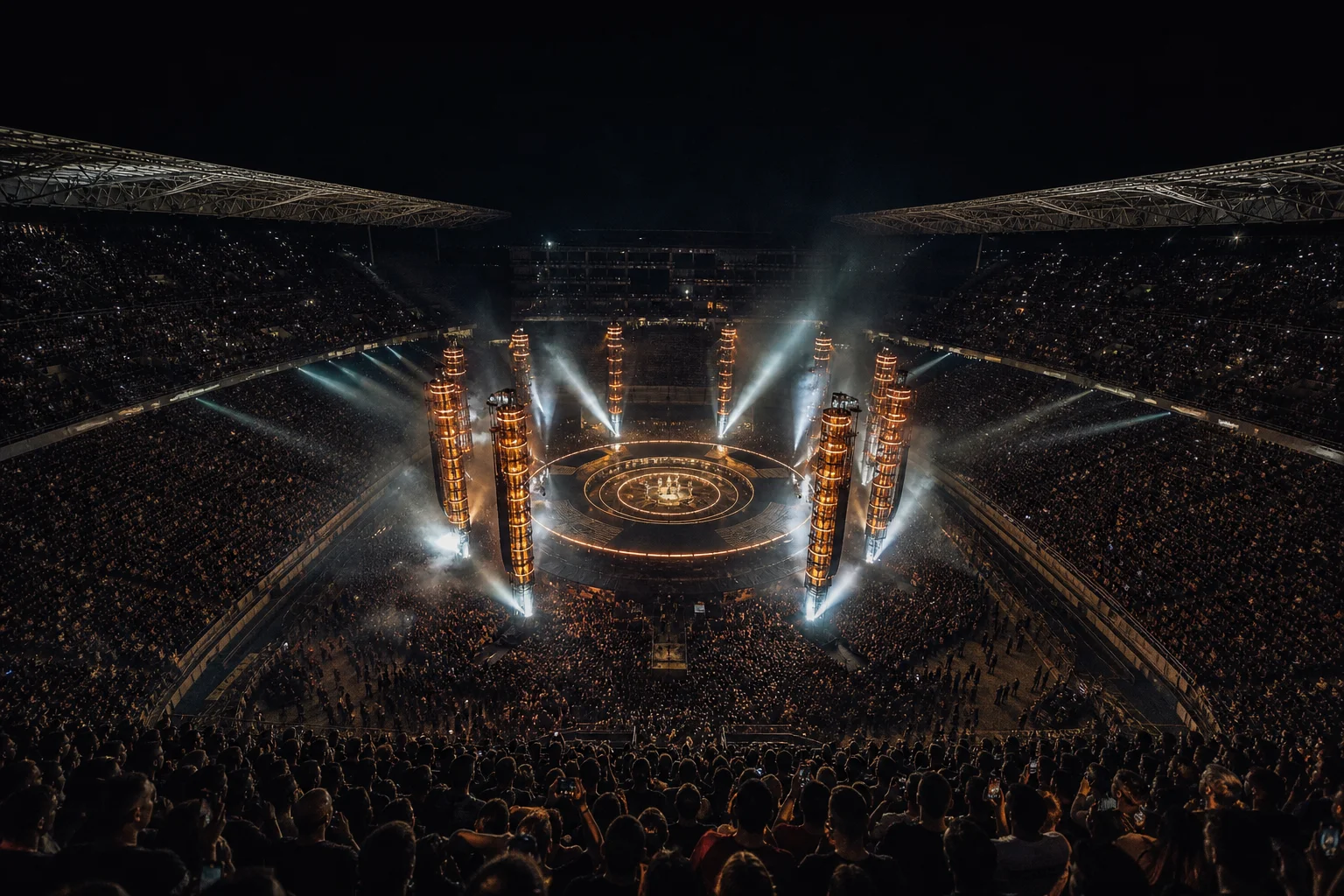
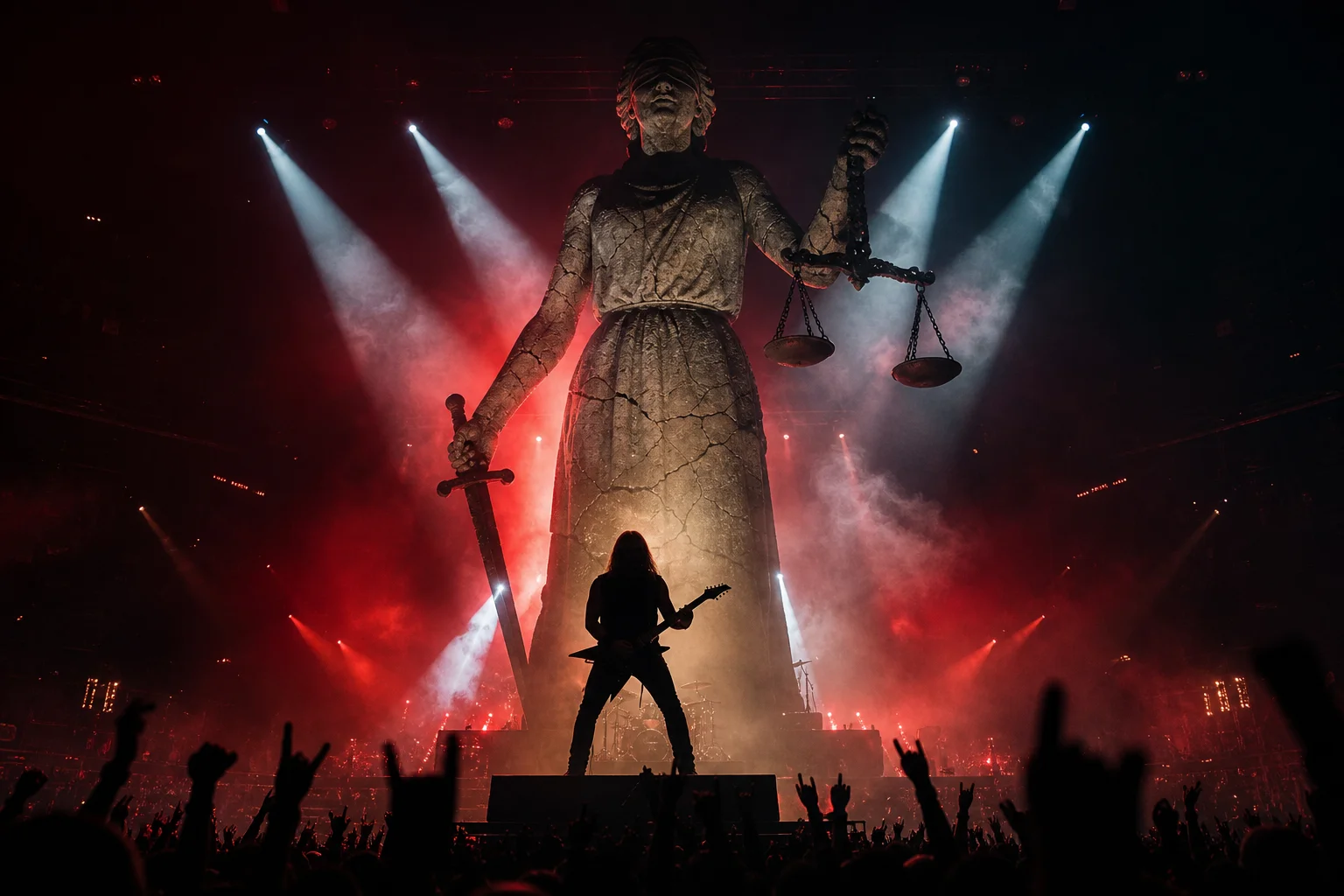
Few albums split a band’s history into a clean before and after. Metallica’s self-titled 1991 record, universally called the Black Album, did exactly that. It took a thrash band known for nine-minute epics and turned it into the biggest rock act on the planet, and more than three decades later it still sells, streams, and sparks arguments among fans.
The Metallica Black Album is the band’s fifth studio album, released on August 12, 1991, and produced by Bob Rock with James Hetfield and Lars Ulrich. It debuted at No. 1 on the Billboard 200, spawned five singles including “Enter Sandman” and “Nothing Else Matters,” and has been certified 16x Platinum by the RIAA, making it one of the best-selling albums in U.S. history.
- Released August 12, 1991, the Black Album traded long, complex thrash arrangements for tighter, groove-driven songs built for impact.
- Producer Bob Rock pushed the band toward a massive, layered sound, and the sessions at One on One Studios in Los Angeles ran roughly eight months.
- Five singles reached radio and MTV, turning Metallica into a mainstream act without abandoning heavy music.
- The album is RIAA-certified 16x Platinum and has been tracked by Nielsen as one of the best-selling albums of the SoundScan era.
- A 2021 remaster and the tribute project The Metallica Blacklist renewed interest for a new generation of listeners.
Fact 1: The Band Deliberately Rejected Its Own Formula
By 1989, Metallica had reached a creative ceiling with long, labyrinthine songs. Touring their previous record, the band noticed audiences fidgeting during extended progressive sections. Lars Ulrich has repeatedly said in interviews that they wanted songs that hit harder in fewer parts, closer to the directness of bands like AC/DC.
The practical result was a rule of thumb during writing: one great riff, a strong groove, and a chorus that lands. Most tracks on the Black Album sit in the four-to-six-minute range, and tempos drop from thrash speed into mid-tempo stomp. Songs like “Sad but True” were also tuned down a whole step to D, giving them a heavier low end than anything the band had released before.
What changed in the songwriting
- Fewer riffs per song: Earlier tracks could contain a dozen riff sections; Black Album songs typically rely on three or four.
- Groove over speed: Ulrich’s drumming shifted toward a heavier, swinging pocket.
- Melodic vocals: Hetfield began singing rather than barking, encouraged to explore range and harmony.
- Space in the mix: Arrangements left room for bass, ambience, and dynamic shifts.
Fact 2: Bob Rock Was a Controversial Choice That Paid Off
Bob Rock had built his reputation producing and engineering polished hard rock records, notably Mötley Crüe’s Dr. Feelgood. Metallica initially approached him only to mix the album, impressed by how big those records sounded. Rock insisted that the sound they wanted had to be captured at the recording stage, so he agreed to produce instead.
The relationship was famously tense. Rock challenged the band to record live as a unit for basic tracks, to rework parts, and to rethink lyrics. Hetfield in particular was pushed to write more personal words and to double and layer vocals. The documentary A Year and a Half in the Life of Metallica (1992) captures the grind: repeated takes, long nights, and arguments over details.
The friction produced results. Rock’s approach gave the album its signature feature: enormous, articulate drums, thick guitar walls, and a bass track that is actually audible, a direct response to complaints about the band’s previous mix.
Rock went on to produce every Metallica studio album through St. Anger (2003), a partnership that began with skepticism and lasted more than a decade.
Fact 3: The Sessions Were Long, Expensive, and Personally Turbulent
Recording ran from roughly October 1990 to June 1991 at One on One Studios in North Hollywood, with additional work at Little Mountain Sound in Vancouver. Widely cited accounts put the production cost at about $1 million, and the album was reportedly mixed three times before the band was satisfied.
The pressure was not only musical. During this period, Ulrich, Hammett, and bassist Jason Newsted’s bandmates were navigating personal upheaval, with several members going through divorces. Kirk Hammett later said that emotional weight spilled into the performances, especially on darker tracks like “The Unforgiven” and “The God That Failed,” the latter written by Hetfield about his mother’s death after her religious beliefs led her to refuse medical treatment.
Black Album production at a glance
| Detail | Information |
|---|---|
| Release date | August 12, 1991 |
| Label | Elektra Records |
| Producers | Bob Rock, James Hetfield, Lars Ulrich |
| Main studio | One on One Studios, North Hollywood |
| Recording period | Approx. October 1990 to June 1991 |
| Track count / length | 12 tracks, about 62 minutes |
| Lineup | Hetfield, Ulrich, Hammett, Newsted |
| Debut chart position | No. 1 Billboard 200 (U.S.) |
| RIAA certification | 16x Platinum (Diamond) |
Fact 4: Five Singles Turned Metallica Into a Radio Band
The Black Album’s single strategy was unusually deep for a metal record. Each release targeted a slightly different audience, from rock radio to MTV to listeners who had never bought a metal album.
| Single | Released | Approx. U.S. Hot 100 Peak | Why It Mattered |
|---|---|---|---|
| Enter Sandman | July 1991 | 16 | Riff-driven opener; became the band’s signature song and a stadium anthem |
| The Unforgiven | October 1991 | 35 | Reversed the usual structure: soft verses, heavy chorus |
| Nothing Else Matters | April 1992 | 34 | Power ballad with Michael Kamen orchestration; crossover hit worldwide |
| Wherever I May Roam | October 1992 | 82 | Road-life anthem with sitar-like intro texture |
| Sad but True | February 1993 | 98 | Downtuned groove that influenced 1990s heavy music |
The stories behind the biggest two
“Enter Sandman” started with a riff Kirk Hammett wrote late at night, reportedly inspired by listening to Soundgarden. Ulrich suggested repeating the opening section, which gave the song its hypnotic build. Hetfield’s original lyrics touched on crib death; Rock and the band steered them toward a broader nightmare theme.
“Nothing Else Matters” began as a private piece Hetfield wrote on the road while on the phone with his girlfriend. He did not initially intend it for Metallica. The band’s choice to release a tender ballad shocked some longtime fans but became one of the most covered songs in their catalog, recorded by artists ranging from classical ensembles to country singers.
Fact 5: The Sales Numbers Are Historic
The Black Album debuted at No. 1 on the Billboard 200 and held the top spot for four consecutive weeks. More significantly, it never really left. The album has logged hundreds of weeks on the Billboard 200 over the decades, a run few rock records of any era can match.
Nielsen SoundScan, which began tracking point-of-sale data in 1991, has reported the Black Album as the best-selling album in the U.S. during its tracking era, with sales passing 16 million. The RIAA certified it 16x Platinum, and global sales estimates commonly exceed 30 million copies. It also earned the band the 1992 Grammy Award for Best Metal Performance with Vocal.
Why it kept selling
- Gateway effect: For millions, it was the first metal album they owned, and it led them into the band’s back catalog.
- Sports and pop culture: “Enter Sandman” became a fixture at sporting events, most famously as entrance music for baseball closer Mariano Rivera.
- Generational handoff: Parents passed it to kids, and streaming platforms keep its singles in heavy rotation.
- Touring longevity: Multiple Black Album songs remain staples of every Metallica show.
Fact 6: The Backlash Was Real, and So Was the Influence
Not every fan celebrated. Some early followers accused Metallica of selling out, pointing to the ballads, the slower tempos, the music videos, and the slick production. The criticism intensified later in the decade as the band’s image and sound shifted further.
Yet the album’s impact on heavy music is hard to dispute. Its downtuned, mid-tempo heaviness and enormous production standard influenced 1990s metal and hard rock broadly, and it proved that a heavy band could dominate mainstream radio without diluting its volume. Producers for years afterward cited its drum sound as a benchmark.
Pros and cons, as fans still debate them
| Strengths | Common Criticisms |
|---|---|
| Massive, clear production with audible bass | Less technical complexity than earlier thrash records |
| Concise, memorable songwriting | Second half considered weaker by some listeners |
| Hetfield’s most expressive vocals to that point | Ballads seen as a commercial concession |
| Opened metal to a global mainstream audience | Marked the start of a polarizing creative direction |
Fact 7: The Album Keeps Getting Reborn
The Black Album’s afterlife has been unusually active. The band toured it relentlessly on the Wherever We May Roam and Nowhere Else to Roam tours, and in 2012 it played the album in full, in reverse track order, at select European festival dates.
For the 30th anniversary in September 2021, Metallica released a remastered edition alongside an expanded deluxe set packed with demos, rough mixes, and live recordings. In parallel came The Metallica Blacklist, a tribute featuring more than 50 artists covering songs from the record, with proceeds split between the band’s All Within My Hands Foundation and charities chosen by participants. The project pushed Black Album songs into pop, country, Latin, and indie spaces, and proved how adaptable the songwriting is.
Today, a typical Metallica concert still features several Black Album tracks, often closing with “Enter Sandman.” Whatever someone thinks of the band’s later work, this record remains the common language between casual listeners and lifelong fans.
How to Listen to the Black Album Today
- Start with the original sequence: Listen front to back once to hear the pacing Bob Rock and the band intended.
- Compare the remaster: The 2021 remaster offers improved clarity; play it on good headphones to catch the bass lines and layered guitars.
- Explore the demos: The deluxe material shows how songs evolved, such as early versions of “Enter Sandman” with different lyrics.
- Watch the documentary: A Year and a Half in the Life of Metallica adds context to every track.
- Branch into covers: Sampling The Metallica Blacklist reveals how the melodies hold up outside of metal.
Frequently Asked Questions (FAQs)
Why is it called the Black Album?
The record is officially self-titled, Metallica. Fans nicknamed it the Black Album because its cover is almost entirely black, with only a faint band logo and a coiled snake inspired by the Gadsden flag, also referenced in the track “Don’t Tread on Me.”
How many copies has the Metallica Black Album sold?
It is RIAA-certified 16x Platinum in the U.S., and Nielsen has reported U.S. sales above 16 million. Worldwide estimates commonly exceed 30 million copies, placing it among the best-selling albums ever.
Who played bass on the Black Album?
Jason Newsted played bass. Unlike the band’s previous record, his bass is clearly audible in the mix, largely thanks to Bob Rock’s production approach.
What is the best song on the Black Album for new listeners?
“Enter Sandman” is the natural entry point, but “Sad but True” shows the album’s heaviness and “The Unforgiven” shows its emotional range. Listening to all three gives a quick, accurate picture of the record.