Few records in heavy metal history spark as much debate as Metallica’s fourth studio album, …And Justice for All, released on August 25, 1988. It is a complex, furious, politically charged record with some of the band’s most ambitious songwriting, and also one of the most argued-over mixes ever released by a major label act. At the center of the argument is a single question: where did the bass go?
The short answer: The bass on …And Justice for All was recorded by Jason Newsted, but it was pushed so low in the final mix that it is barely audible, largely doubling James Hetfield’s rhythm guitar. Mix engineer Steve Thompson has said publicly that Lars Ulrich asked for the bass to be turned down, while the band has acknowledged the mix was a product of exhaustion, ears fatigued by long sessions, and the dynamics surrounding a new member following Cliff Burton’s death.
- …And Justice for All (1988) was Jason Newsted’s first full-length Metallica album after Cliff Burton died in September 1986.
- The album was mixed by Steve Thompson and Michael Barbiero, who have stated the low bass level reflected the band’s requests, particularly from Lars Ulrich.
- Despite the thin mix, the record peaked at No. 6 on the Billboard 200 and has been certified 8x Platinum in the United States.
- “One” became Metallica’s first music video and earned the band its first Grammy in 1990.
- The 2018 remastered deluxe edition kept the original mix, preserving the album’s controversial sound.
Fact 1: It Was a Band Still Grieving and Rebuilding
To understand the mix, you have to understand the moment. Cliff Burton was killed in a tour bus accident in Sweden on September 27, 1986, during the European leg of the band’s tour supporting their third album. Within weeks, Metallica auditioned dozens of bassists and chose Jason Newsted, then the bassist and principal songwriter of Phoenix thrash band Flotsam and Jetsam.
Newsted’s first recording with Metallica was The $5.98 E.P.: Garage Days Re-Revisited (1987), a covers EP recorded quickly in Lars Ulrich’s garage-turned-rehearsal space. On that release, his bass is clearly audible. That contrast is part of why fans became so fixated on what happened a year later.
Newsted has spoken in many interviews about being treated as the “new kid,” a mix of good-natured hazing and genuine unresolved grief from James Hetfield and Lars Ulrich. Many fans and critics have connected that emotional climate to the eventual mix, though band members have generally framed it as a sonic decision rather than a personal one.
Why the Context Matters
- Grief: The band was making its first album without a founding creative force.
- Control: Hetfield and Ulrich were firmly in charge of songwriting and production direction.
- Inexperience in the room: Newsted reportedly tracked his parts largely with an engineer, without the core members present to advocate for his sound.
Fact 2: Recording Was Long, Expensive, and Technically Obsessive
The album was recorded at One on One Recording in Los Angeles in early 1988. The band initially began working with producer Mike Clink, best known for Guns N’ Roses’ Appetite for Destruction, but the partnership did not work out and they brought back the Danish producer who had worked on their previous two records.
The songs themselves were the most intricate Metallica had ever written. Tracks shift through dozens of riffs, odd time signatures, and abrupt tempo changes. The title track runs nearly ten minutes, and the album’s total length of around 65 minutes meant the original vinyl release was spread across two LPs.
That complexity created a practical mixing challenge. With dense, heavily layered rhythm guitars, a dry and clicky kick drum, and fast palm-muted riffing, there was limited sonic space left. The bass, which largely followed the guitar riffs note for note, was the easiest element to sacrifice, intentionally or not.
Fact 3: The Mix Engineers Say the Bass Cut Was Requested
Steve Thompson and Michael Barbiero were hired to mix the album. In later interviews, Thompson has described being directed to bring the bass down, then down again, until it effectively disappeared beneath the guitars. He has said he was unhappy with the outcome and has accepted that it hurt the record’s low end.
Lars Ulrich, for his part, has offered a more nuanced explanation over the years: that he and Hetfield were mixing with ears worn down by long days, that they kept boosting the guitars and drums, and that the bass simply got buried in the process. James Hetfield has also suggested that the low end got lost as the band chased a particular tight, cutting guitar tone.
The most honest summary from all parties: nobody set out to erase Jason Newsted, but nobody in charge fought to keep him in the mix either.
Newsted himself has been notably gracious about it in later years, acknowledging the disappointment at the time while refusing to frame it as a grudge.
Fact 4: The Bass Is There, Just Hidden
A common myth is that there is “no bass” at all. That is not accurate. The bass was recorded and is present in the mix, but it sits so low and tracks the rhythm guitars so closely that most listeners cannot separate it. On good headphones or with an EQ boost around the low frequencies, you can hear Newsted following the riffs.
In 2008, a fan-made remix circulated online under the nickname …And Justice for Jason, boosting the bass to show what the album might have sounded like. It became one of the best-known examples of fans attempting to “fix” a commercial release, and it reignited the debate for a new generation.
| Release | Year | Bassist | Bass Audibility | Notable Detail |
|---|---|---|---|---|
| The $5.98 E.P.: Garage Days Re-Revisited | 1987 | Jason Newsted | Clear and prominent | Newsted’s first Metallica recording; raw covers EP |
| …And Justice for All (original) | 1988 | Jason Newsted | Barely audible | Mixed by Steve Thompson and Michael Barbiero |
| …And Justice for Jason (fan remix) | 2008 | Jason Newsted | Boosted, unofficial | Fan project, not an official release |
| …And Justice for All (2018 remaster) | 2018 | Jason Newsted | Largely unchanged | Band chose to preserve the original mix |
| Metallica (“Black Album”) | 1991 | Jason Newsted | Full and powerful | New production approach with a much heavier low end |
Fact 5: “One” Changed Metallica’s Relationship With MTV and the Grammys
Metallica had famously avoided making music videos through the mid-1980s. That changed with “One,” an anti-war song inspired by Dalton Trumbo’s novel Johnny Got His Gun. The black-and-white video, released in early 1989, intercut the band performing with footage from the 1971 film adaptation. To use that footage, the band bought the rights to the film.
The video became a staple on MTV and introduced Metallica to a massive new audience. “One” reached the Top 40 of the Billboard Hot 100, a major breakthrough for a band that had built its following almost entirely through touring and word of mouth.
The Grammy Story
- February 1989: At the first Grammy ceremony to include a hard rock/metal category, Metallica performed “One” live but lost to Jethro Tull’s Crest of a Knave, one of the most debated upsets in Grammy history.
- February 1990: “One” won the Grammy for Best Metal Performance, Metallica’s first Grammy win.
The band later joked about the Jethro Tull loss, and the episode is still cited whenever critics question how award bodies categorize heavy music.
Fact 6: The Album Was a Commercial Breakthrough Despite Its Sound
Mix controversy did not stop the record from selling. …And Justice for All peaked at No. 6 on the Billboard 200, the highest chart position Metallica had reached at that point, and was certified Platinum within weeks of release. It has since been certified 8x Platinum by the RIAA, meaning more than eight million units in the US alone.
That success is significant because the album is not radio-friendly. Its songs are long, abrasive, and lyrically heavy, tackling legal corruption (“…And Justice for All”), censorship (“Eye of the Beholder”), environmental destruction (“Blackened”), and war (“One”). It also includes “To Live Is to Die,” an instrumental built partly from riffs Cliff Burton had written, with a brief spoken passage drawn from Burton’s own notes.
Pros and Cons of the Original Mix
| Strengths | Weaknesses |
|---|---|
| Razor-sharp, surgical guitar clarity that showcases riff complexity | Thin low end that can sound brittle at high volume |
| Distinctive, instantly recognizable sound | Bass contributions from Jason Newsted almost entirely lost |
| Dry, clicky kick drum emphasizes precision double-bass work | Drums can sound clinical rather than powerful |
| Influenced later technical thrash and progressive metal production | Remains the band’s most criticized mix alongside St. Anger |
Fact 7: The Damaged Justice Tour and the Lasting Legacy
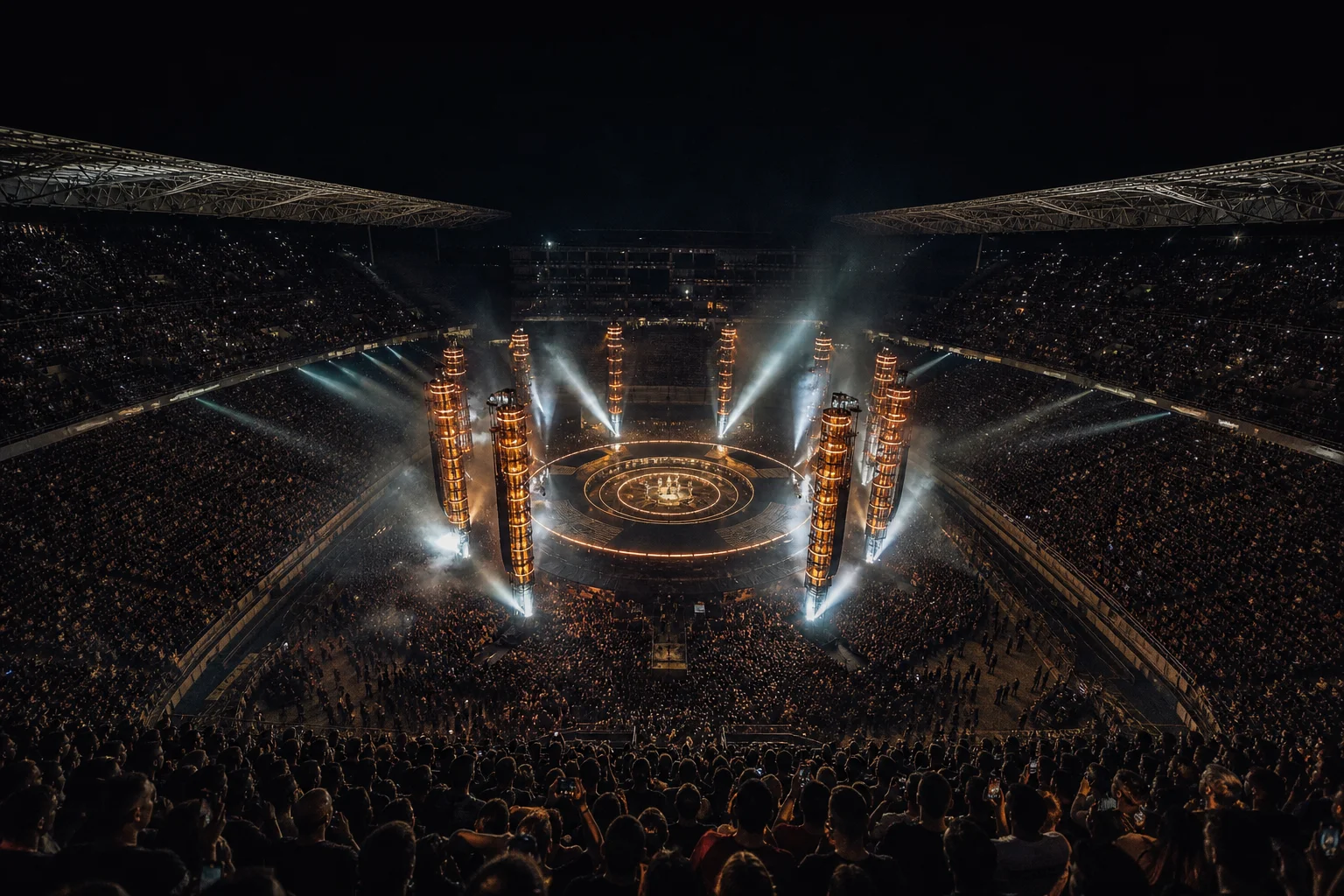
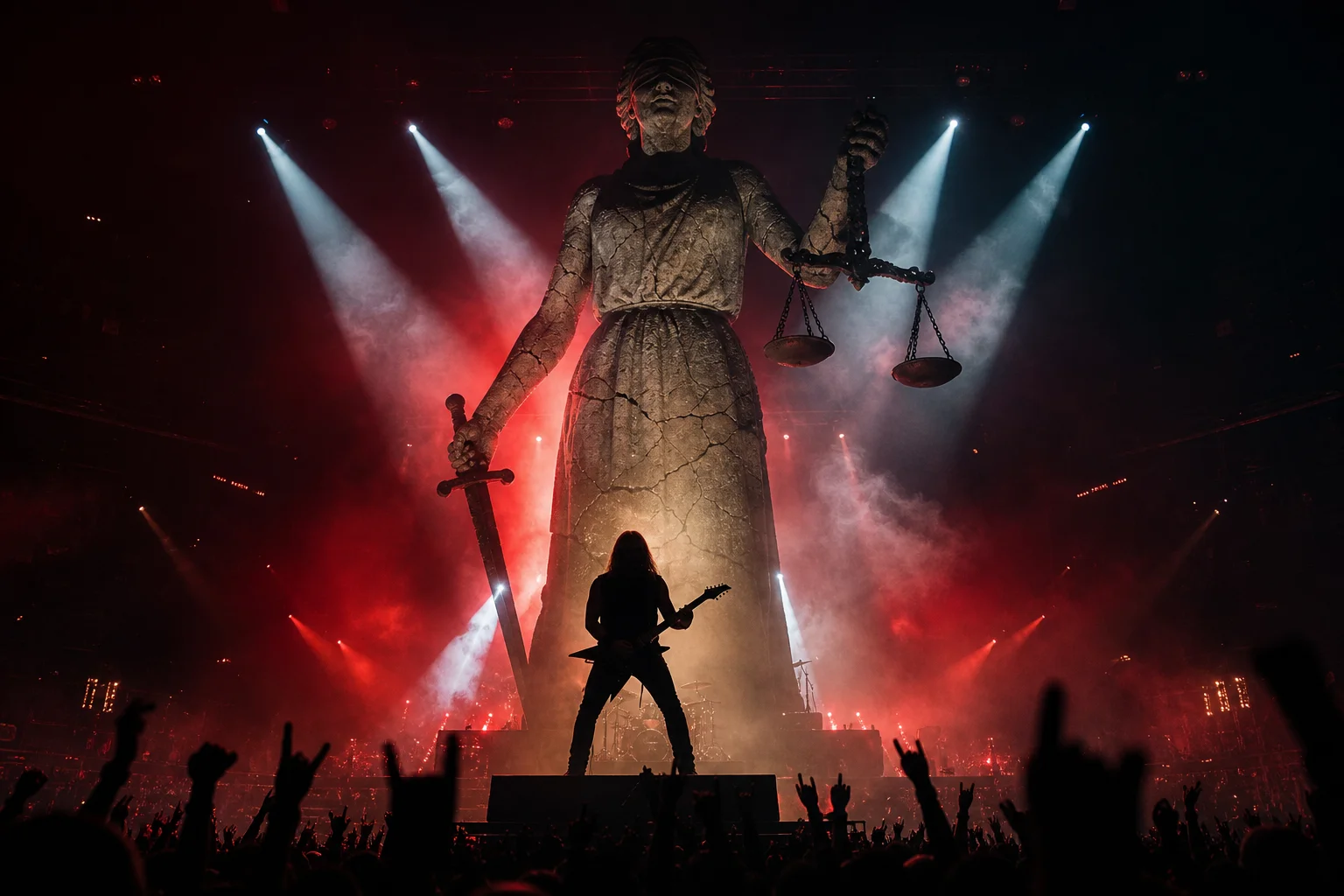
Metallica supported the album with the Damaged Justice Tour, running from late 1988 through 1989. The stage production featured a large Lady Justice statue that was designed to crack and collapse during the show, mirroring the album’s cover art of a bound, blindfolded Justice with money spilling from her scales.
Live, the bass problem largely vanished. Newsted was audible on stage, played with relentless energy, and won over many skeptical fans night after night. This is one reason many longtime listeners say the songs from this era hit harder in concert than on the studio record.
The album’s legacy can be seen in several ways:
- Production lessons: For the 1991 self-titled album, Metallica moved to producer Bob Rock and a much fuller low-end sound. The contrast is often cited as a direct reaction to Justice.
- Technical influence: The album’s long, riff-heavy compositions influenced progressive and technical metal bands throughout the 1990s and 2000s.
- Preserved history: When Metallica released the remastered deluxe box set in November 2018, the band chose not to remix the album or raise the bass. The deluxe set included demos, rough mixes, and live recordings, some of which let fans hear Newsted more clearly.
- Newsted’s vindication: When Metallica entered the Rock and Roll Hall of Fame in 2009, Jason Newsted was inducted alongside the band, cementing his place in its history.
How to Hear the Bass Yourself
If you want to explore Newsted’s playing on the album, try these practical steps:
- Listen on closed-back studio headphones rather than earbuds or laptop speakers.
- Apply a gentle EQ boost in the 80 to 250 Hz range and slightly reduce the upper mids.
- Focus on “Blackened,” whose opening riff Newsted co-wrote, and the slower sections of “One.”
- Compare with live recordings from the Damaged Justice Tour and the 2018 deluxe edition extras.
Why the Debate Still Matters
More than three decades later, …And Justice for All is both a landmark and a cautionary tale. It proved Metallica could sell millions of records without compromising their complexity, and it delivered some of their most enduring songs. It also showed how grief, fatigue, and creative control can shape a record in ways no one fully intended.
For fans, the most rewarding approach is to hold both truths at once: this is an essential thrash metal album with an imperfect mix, and the story behind that mix is a key chapter in how Metallica rebuilt itself after losing Cliff Burton.
Câu hỏi thường gặp / FAQs
Why is there no bass on …And Justice for All?
There is bass, recorded by Jason Newsted, but it was mixed extremely low and closely doubles the rhythm guitars. Mix engineer Steve Thompson has said the band, particularly Lars Ulrich, asked for it to be turned down.
Did Metallica ever remix …And Justice for All with louder bass?
No. The 2018 remastered deluxe edition preserved the original mix. Fan-made remixes such as …And Justice for Jason exist but are unofficial.
What Grammy did …And Justice for All earn?
“One” won the Grammy for Best Metal Performance in 1990, Metallica’s first Grammy. The album had lost the 1989 hard rock/metal award to Jethro Tull.
How many copies has …And Justice for All sold?
The album is certified 8x Platinum by the RIAA, representing more than eight million units in the United States, and it peaked at No. 6 on the Billboard 200.