After the raw, solo-free experiment of St. Anger in 2003, many fans wondered whether Metallica would ever again sound like the band that wrote Master of Puppets. In September 2008, they got their answer. The Death Magnetic album brought back long, riff-stacked songs, Kirk Hammett’s guitar solos, and a thrash-era mindset, all under the guidance of producer Rick Rubin. It also became one of the most debated recordings of the decade, not for its songs, but for how it sounded.
Death Magnetic is Metallica’s ninth studio album, released on September 12, 2008, and produced by Rick Rubin. It debuted at No. 1 on the Billboard 200 with roughly 490,000 first-week US sales, returned the band to complex thrash-influenced songwriting, and won multiple Grammys. It is also the most famous example of the “loudness war” because of its heavily compressed, clipping master.
- Death Magnetic (2008) was Metallica’s first album produced by Rick Rubin and the first studio record featuring bassist Robert Trujillo.
- It restored guitar solos and long, multi-section compositions absent from St. Anger.
- It became Metallica’s fifth consecutive No. 1 album in the US and topped charts in roughly 30 countries.
- Its brickwalled master sparked a fan petition and remains the textbook case of the loudness war.
- It earned Grammys for “My Apocalypse,” the instrumental “Suicide & Redemption,” and its coffin-themed packaging.
Fact 1: Rick Rubin Pushed Metallica Back Toward Its Roots
For nearly two decades, Bob Rock had been Metallica’s producer of choice, from the Black Album through St. Anger. By the mid-2000s, both sides agreed a change was needed. Enter Rick Rubin, the co-founder of Def Jam whose catalog ranged from Slayer’s Reign in Blood to Johnny Cash’s American Recordings.
Rubin’s approach was less about studio trickery and more about mindset. According to interviews the band gave around the release, he encouraged James Hetfield and Lars Ulrich to mentally return to the era of Ride the Lightning and Master of Puppets, to write as if they still had something to prove. He also insisted the band arrive with fully developed songs rather than building them piecemeal in the studio, a sharp contrast to the jam-heavy, therapy-adjacent sessions documented in Some Kind of Monster.
How the sessions actually worked
- Pre-production: The band spent extensive time riff-sifting and arranging at their HQ studio in San Rafael, California.
- Recording: Tracking took place largely at HQ and at Sound City in Los Angeles, with Greg Fidelman engineering and mixing.
- Rubin’s role: He acted more as a creative editor and coach than a hands-on knob-turner, listening to demos and pushing for stronger parts.
The result was a 10-track record running close to 75 minutes, with most songs clocking in between six and ten minutes.
Fact 2: Guitar Solos and Robert Trujillo Finally Made the Record
Two absences defined St. Anger: there were no guitar solos, and the bass was recorded by producer Bob Rock because Jason Newsted had left in 2001. Death Magnetic fixed both.
Kirk Hammett returned to center stage, reportedly bringing hundreds of riffs and lead ideas he had stored on recordings over the years. Fans who had missed his wah-drenched leads heard them again on tracks like “The Day That Never Comes” and “All Nightmare Long.” Meanwhile, Robert Trujillo, who joined in 2003 after the St. Anger sessions ended, made his studio debut. He also earned songwriting credits across the album, a meaningful signal that he was a full creative member and not a hired hand.
Death Magnetic was, in practical terms, the first time the Hetfield-Ulrich-Hammett-Trujillo lineup wrote and recorded a full album together, a lineup that remains intact today.
Fact 3: The Songs Deliberately Echo Metallica’s Classic Era
Death Magnetic is filled with structural nods to the band’s 1980s catalog. This was not accidental, and longtime listeners quickly identified the parallels.
- “The Day That Never Comes” follows the “ballad that explodes” blueprint of “Fade to Black,” “Welcome Home (Sanitarium),” and “One,” opening quietly before erupting into a galloping harmony section. It was the lead single, released in August 2008.
- “The Unforgiven III” continued the series started on the Black Album and revisited on Reload, opening with orchestral piano.
- “Suicide & Redemption” was the band’s first studio instrumental since “To Live Is to Die” on …And Justice for All in 1988.
- “The Judas Kiss” and “My Apocalypse” leaned into pure thrash speed, the latter being the shortest and most aggressive track on the album.
The trade-off was length. Critics who praised the return to form also noted that some songs stacked riffs without the editing discipline of the classic albums. Even admirers sometimes describe the record as “great riffs, slightly too many of them.”
Fact 4: The Loudness War Controversy Overshadowed the Music
Within days of release, the conversation shifted from songwriting to sound quality. Death Magnetic was mastered so loudly that the waveform is visibly flattened, and audible clipping distortion appears on many tracks. It became the defining example of the “loudness war,” the industry trend of compressing dynamic range to make recordings sound louder on radio and portable players.
The Guitar Hero comparison
What turned grumbling into a full-blown controversy was an unusual comparison. The album’s songs were released as downloadable content for Guitar Hero III, and those game versions used a different, less compressed mix. Fans extracted the audio and found it sounded noticeably more dynamic and less distorted than the retail CD. Side-by-side waveform images spread rapidly across forums and music blogs.
A fan petition asking for a remix or remaster collected thousands of signatures. Mastering engineer Ted Jensen of Sterling Sound publicly indicated the mixes arrived already heavily limited and that he was not pleased with the result, distancing himself from the final loudness. Lars Ulrich, for his part, defended the record in interviews, saying the band liked the sound and that it reflected the energy they wanted.
Why the controversy still matters
The Death Magnetic debate is regularly cited in audio engineering courses and articles about mastering. It helped build momentum for loudness normalization, which streaming platforms later adopted. Under normalization, overly compressed masters gain no loudness advantage and simply sound flatter, which reduced the commercial incentive behind brickwalling.
Fact 5: Commercial Success Was Massive Despite the Debate
Whatever audiophiles thought, the public bought it. Death Magnetic debuted at No. 1 on the Billboard 200 with roughly 490,000 copies sold in its first week in the US. That made Metallica the first band to have five consecutive studio albums debut at No. 1 on that chart: the Black Album, Load, Reload, St. Anger, and Death Magnetic.
It also reached No. 1 in around 30 countries. Notably, the album had leaked days early after a retailer in France began selling copies ahead of the release date, and the band responded calmly, a striking shift from their aggressive anti-file-sharing stance during the Napster era.
Death Magnetic vs. the albums around it
| Feature | St. Anger (2003) | Death Magnetic (2008) | Hardwired… to Self-Destruct (2016) |
|---|---|---|---|
| Producer | Bob Rock | Rick Rubin | Greg Fidelman (with Hetfield and Ulrich) |
| Bassist on record | Bob Rock | Robert Trujillo | Robert Trujillo |
| Guitar solos | None | Extensive | Present |
| Approx. runtime | About 75 minutes | About 75 minutes | About 77 minutes (double album) |
| Sound reputation | Raw, “pingy” snare | Heavily compressed, clipping | Cleaner, more dynamic |
| US chart debut | No. 1 | No. 1 | No. 1 |
| Critical reception | Polarizing | Generally positive | Generally positive |
Fact 6: The Coffin Artwork and Title Carry Real Meaning
The cover, designed by the agency Turner Duckworth, shows a white coffin at the center of lines resembling a magnetic field or a grave seen from above. Physical copies used a layered die-cut design, so the coffin shape appears to sink into the packaging. It was more than a gimmick: the packaging won the Grammy for Best Recording Package.
The title reflects themes Hetfield explored lyrically, including mortality and the strange pull that death exerts. Hetfield has spoken about musicians who died young, with Alice in Chains singer Layne Staley often referenced as an inspiration for the album’s themes. The idea of being drawn toward something destructive runs through songs like “Cyanide” and “Broken, Beat & Scarred.”
Fact 7: Grammys, a World Tour, and a Lasting Legacy
Death Magnetic restored Metallica’s critical standing and gave them several awards:
- 2009 Grammy, Best Metal Performance: “My Apocalypse.”
- 2009 Grammy, Best Recording Package: Death Magnetic artwork.
- 2010 Grammy, Best Rock Instrumental Performance: “Suicide & Redemption.”
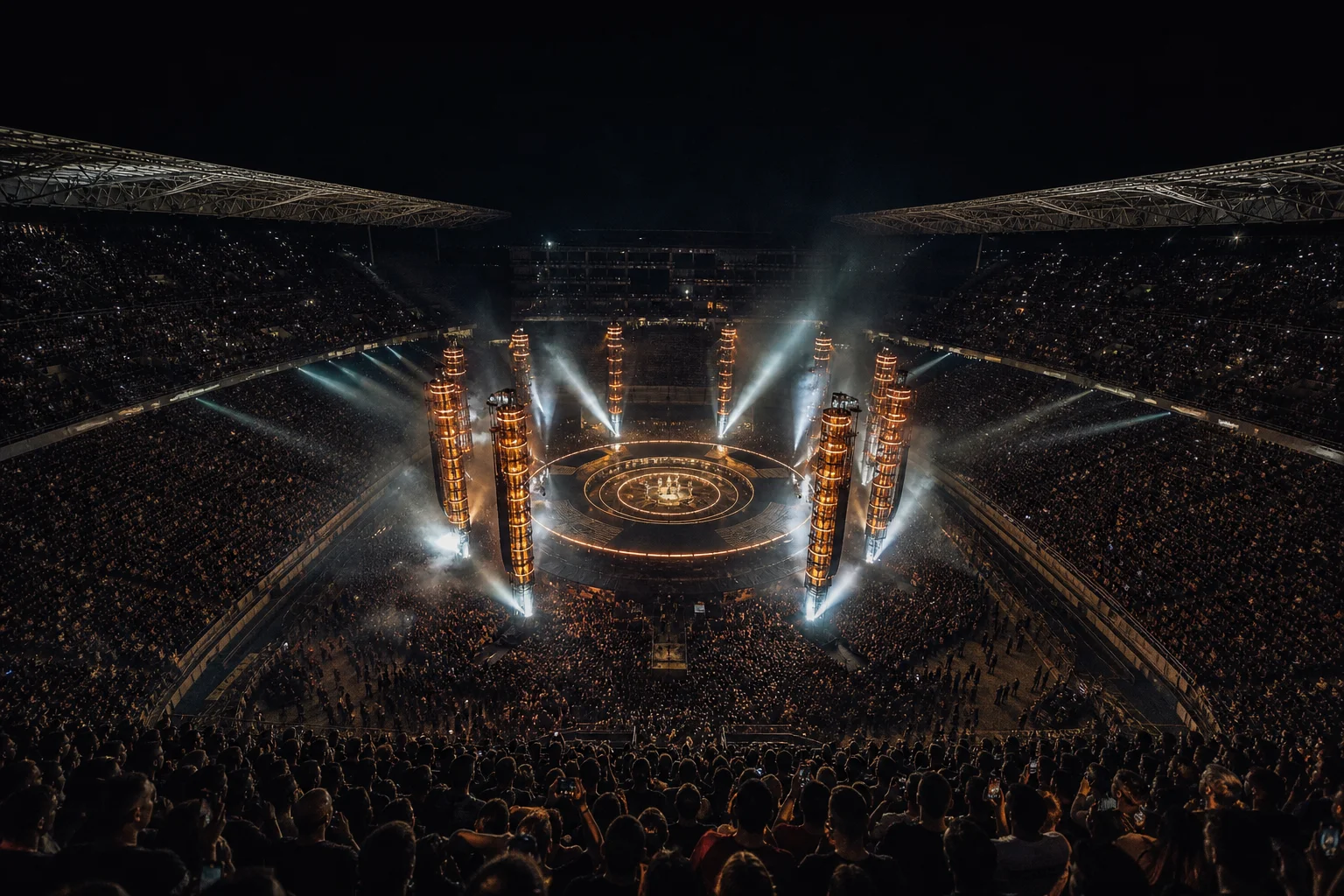
The album era also coincided with Metallica’s induction into the Rock and Roll Hall of Fame in April 2009, a ceremony that honored Cliff Burton and included Jason Newsted. The supporting World Magnetic Tour ran from 2008 to 2010, featuring an in-the-round stage with coffin-shaped lighting rigs hovering above the band, and it ranked among the highest-grossing tours of that period.
How fans view it today
Opinions have settled into a fairly clear consensus: Death Magnetic is a strong, ambitious return to form held back by its master and a tendency toward overlong songs. Many fans rank it above Load, Reload, and St. Anger but below the 1980s classics. Songs like “All Nightmare Long” and “The Day That Never Comes” still appear regularly in setlists, which is perhaps the most practical measure of a modern Metallica album’s staying power.
Practical Listening Tips for Death Magnetic
If you want the best experience with the album today, keep these points in mind:
- Seek out the Guitar Hero mixes: Fan-circulated versions based on the game audio are widely discussed for their improved dynamics, though they are unofficial.
- Use streaming normalization: Platforms that normalize volume make the loud master less fatiguing when shuffled with other albums.
- Start with the highlights: “The Day That Never Comes,” “All Nightmare Long,” “Broken, Beat & Scarred,” and “My Apocalypse” give a strong overview.
- Listen at moderate volume: Because dynamic range is limited, turning it up increases ear fatigue faster than with older Metallica records.
Frequently Asked Questions / FAQs
Why does Death Magnetic sound distorted?
The album was mixed and mastered with extreme compression and limiting, which flattened its dynamic range and produced audible clipping. This loudness-war approach is why many listeners hear harshness, especially on cymbals and guitars.
Was Death Magnetic ever remastered?
Metallica has not issued an official remix or remaster of the standard album addressing the loudness complaints, despite a fan petition in 2008. The less compressed Guitar Hero versions remain the most-cited alternative.
Is Death Magnetic Robert Trujillo’s first Metallica album?
Yes. Trujillo joined in 2003 after St. Anger was recorded, so Death Magnetic is the first studio album featuring his bass playing and songwriting contributions.
What Grammys did Death Magnetic win?
It won Best Metal Performance for “My Apocalypse” and Best Recording Package in 2009, followed by Best Rock Instrumental Performance for “Suicide & Redemption” in 2010.
Final Verdict
Death Magnetic did exactly what Metallica needed in 2008: it reconnected the band with its thrash identity, gave Kirk Hammett his solos back, introduced Robert Trujillo on record, and proved the band could still dominate the charts. Its legacy is double-edged, celebrated as a comeback and studied as a cautionary tale in audio mastering. For anyone tracing Metallica’s evolution from the turbulence of the early 2000s to the confident lineup touring today, it is an essential stop.