Few records define a genre the way Metallica’s third studio album does. Released on March 3, 1986, it turned four young musicians from the Bay Area thrash scene into the most important metal band on the planet, all without a radio hit or a music video. Nearly four decades later, it still sets the standard that heavy music is measured against.
The Master of Puppets album is Metallica’s third studio record, released on March 3, 1986, through Elektra Records and recorded in Copenhagen with producer Flemming Rasmussen. It was bassist Cliff Burton’s final album, and in 2016 it became the first metal recording selected for the U.S. Library of Congress National Recording Registry.
- Recorded at Sweet Silence Studios in Copenhagen, Denmark, between September and December 1985 with producer Flemming Rasmussen.
- It was the last Metallica album featuring Cliff Burton, who died in a tour bus crash in Sweden on September 27, 1986.
- The album reached No. 29 on the Billboard 200 with no singles or videos and has since been certified six times platinum in the U.S.
- In 2016 the Library of Congress added it to the National Recording Registry, the first metal album ever chosen.
- The title track remains one of the most performed songs in Metallica’s entire live history.
Fact 1: It Was Built in Copenhagen, Not Los Angeles
After the success of Ride the Lightning (1984), Metallica returned to Sweet Silence Studios in Copenhagen to work with Danish engineer and producer Flemming Rasmussen. The decision was practical as much as creative: the band trusted Rasmussen’s ear, and drummer Lars Ulrich, born in Denmark, felt at home there.
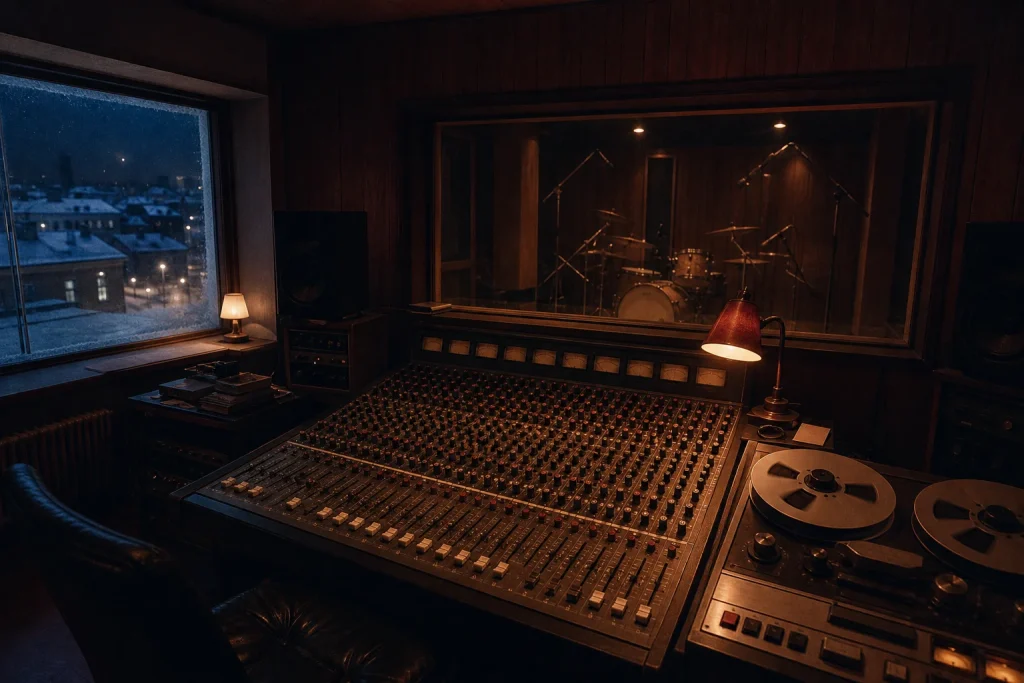
The sessions ran from roughly September to late December 1985. The band arrived with the songs largely written and arranged after months of rehearsal in California, a working method that explains how tightly constructed the record sounds. Rasmussen captured a heavier, fuller guitar tone than on earlier albums, layering James Hetfield’s rhythm parts to create a wall of sound that still impresses modern producers.
Why the production still holds up
- Dynamic range: Unlike many later loudness-war releases, the original mix breathes. Quiet acoustic intros make the heavy sections hit harder.
- Guitar layering: Hetfield’s down-picked rhythms were doubled and tracked with precision, giving the album its signature crunch.
- Audible bass: Cliff Burton’s lines are present in the mix, especially on the instrumental Orion, a contrast with the famously thin bass on the follow-up record.
Fact 2: A Concept Album About Control
While not a strict rock opera, the record is unified by a single theme: manipulation and loss of control. Each song examines a different force that pulls the strings on human beings.
- Master of Puppets tackles drug addiction, with the drug itself speaking to its victim.
- Disposable Heroes follows a young soldier sent to die by commanders who never see the front line.
- Leper Messiah attacks televangelists who exploit faith for money.
- Welcome Home (Sanitarium) draws on the atmosphere of One Flew Over the Cuckoo’s Nest and institutional confinement.
- The Thing That Should Not Be borrows from H.P. Lovecraft’s Cthulhu mythos, where humanity is at the mercy of ancient cosmic beings.
This thematic spine is what elevates the album beyond a collection of fast songs. Listeners who revisit it as adults often notice that the lyrics about addiction, war, and media manipulation feel more relevant now than in 1986.
Fact 3: The Track-by-Track Blueprint
The sequencing of the Master of Puppets album closely mirrors Ride the Lightning: a fast acoustic-intro opener, a long title track, a slow crushing third song, a ballad-like fourth track, and an instrumental in the seventh slot. Fans call it the Metallica template, and it shows how deliberately the band planned the listening experience.
| # | Track | Length | Key Notes |
|---|---|---|---|
| 1 | Battery | 5:13 | Acoustic intro explodes into thrash; a tribute to the Bay Area scene and its fans |
| 2 | Master of Puppets | 8:35 | Epic title track about addiction; melodic interlude featuring Hetfield’s clean lead |
| 3 | The Thing That Should Not Be | 6:36 | Slowest, heaviest song; Lovecraft-inspired lyrics and down-tuned feel |
| 4 | Welcome Home (Sanitarium) | 6:27 | Clean arpeggios build to a furious finale; follows the Fade to Black template |
| 5 | Disposable Heroes | 8:16 | Anti-war epic with relentless galloping riffs |
| 6 | Leper Messiah | 5:40 | Critique of televangelism; mid-tempo groove |
| 7 | Orion | 8:27 | Instrumental showcase for Cliff Burton’s melodic bass |
| 8 | Damage, Inc. | 5:32 | Bass intro with effects leads into the album’s fastest assault |
The total running time sits at about 54 minutes, long for a 1986 metal record, yet the pacing never drags. That is the practical lesson for musicians studying the album: contrast is structure. Every heavy passage earns its impact because a quiet or melodic section came before it.
Fact 4: Cliff Burton’s Final Statement
The Master of Puppets album is inseparable from the story of Cliff Burton. His classical training and love of harmony shaped the record’s most adventurous moments, especially the middle section of the title track and the entirety of Orion.
On September 27, 1986, during the European leg of the Damage, Inc. Tour, the band’s bus skidded off the road near Ljungby, Sweden. Burton, just 24 years old, was thrown from the vehicle and killed. Orion was played at his memorial service, and the song has since become a ritual tribute whenever Metallica performs it.
Burton’s influence is the reason the record sounds less like straight thrash and more like heavy music with a composer’s mind behind it. Remove his contributions and the album loses its depth.
The tragedy froze the album in time. It became both a peak and an ending, which partly explains the emotional weight fans still attach to it. Jason Newsted joined later in 1986, and the band’s next album took a noticeably different, more clinical direction.
Fact 5: Success Without Radio or MTV
In 1986, the conventional path to platinum status ran through radio singles and MTV rotation. Metallica ignored both. No official single was pushed to radio, and no music video was produced for the album.
Instead, the band relied on relentless touring and a fiercely loyal fan network built on tape trading. The Master of Puppets album still reached No. 29 on the Billboard 200 and eventually earned six-times platinum certification from the RIAA. The strategy was reinforced by a high-profile slot opening for Ozzy Osbourne across the United States in 1986, exposing Metallica to arena audiences night after night.
The touring crisis behind the scenes
During that tour, James Hetfield broke his wrist in a skateboarding accident. Guitar technician John Marshall, who later played with Metal Church, filled in on rhythm guitar for several weeks while Hetfield continued to sing. It is a reminder that even a landmark tour was held together with improvisation and grit.
Fact 6: The First Metal Album in the National Recording Registry
In March 2016, the Library of Congress announced that the Master of Puppets album had been selected for preservation in the National Recording Registry. The registry recognizes recordings that are culturally, historically, or aesthetically significant to American life.
It was the first heavy metal recording ever chosen, placing it alongside works by artists ranging from jazz pioneers to classical composers. For a genre that critics once dismissed as noise, this was a formal acknowledgment that metal had produced art worth preserving for future generations.
The album has also consistently appeared on all-time lists compiled by major music publications, frequently ranked as the greatest metal album ever made.
Fact 7: The Album Keeps Finding New Generations
The title track is one of the most frequently played songs in Metallica’s live history, and it rarely leaves the setlist. Its crowd-chanted refrain, with tens of thousands of fans shouting the word Master on cue, is one of the defining rituals of a Metallica concert.
The album has repeatedly been rediscovered by younger listeners. A pivotal 2022 television scene put the title track back on the charts and introduced it to an audience born decades after its release. Meanwhile, the 2017 deluxe remaster gathered demos, rough mixes, and live recordings from the era, giving fans and historians a detailed look at how the songs evolved.
How to listen to it today
- Start with the original mix: Listen front to back, in order, to appreciate the sequencing.
- Compare the remaster: The 2017 version offers clarity while staying faithful to the original character.
- Explore the demos: Early versions reveal how arrangements were tightened before Copenhagen.
- Watch live footage: Performances from the 1986 tour show the songs at their rawest, with Burton on stage.
Why the Master of Puppets Album Still Matters
The record’s legacy rests on three pillars: compositional ambition, uncompromising heaviness, and a thematic depth that ages well. It proved that thrash metal could be long, complex, and melodic without losing aggression. Bands across metalcore, progressive metal, and modern thrash routinely cite it as a foundational influence.
For new listeners, the album is the ideal entry point to classic Metallica. For longtime fans, it remains a benchmark against which every later release is quietly judged.
Frequently Asked Questions / FAQs
When was the Master of Puppets album released?
It was released on March 3, 1986, through Elektra Records in the United States and Music for Nations in the United Kingdom.
Who produced Master of Puppets?
The album was produced by Metallica together with Flemming Rasmussen at Sweet Silence Studios in Copenhagen, Denmark.
Is Master of Puppets Cliff Burton’s last album?
Yes. It was the final studio album to feature Cliff Burton, who died in a tour bus accident in Sweden on September 27, 1986, during the Damage, Inc. Tour.
Did Master of Puppets have any singles or music videos?
No official music video was made, and the album was not promoted through radio singles. Its success came from touring, word of mouth, and the band’s dedicated fan base.