The Metallica M72 World Tour is the band’s most ambitious stadium run to date. It was built around their twelfth studio album, 72 Seasons, which was released in April 2023, and it opened in Amsterdam later that same month. Instead of copying the usual stadium model, Metallica rethought nearly everything. They changed the shape of the stage, the way setlists work, and the way tickets are sold. If you have tickets, are thinking about buying them, or just want to understand why this tour gets talked about so much, this guide covers the facts that matter.
Quick answer: The Metallica M72 World Tour is a multi-year global stadium tour supporting 72 Seasons. Its signature idea is the “No Repeat Weekend”: Metallica plays two nights in each city with two completely different setlists and different opening acts. The band performs on a 360-degree in-the-round stage with a standing fan pit in the middle.
- Most M72 stops are two-night “No Repeat Weekends” with no songs repeated between nights.
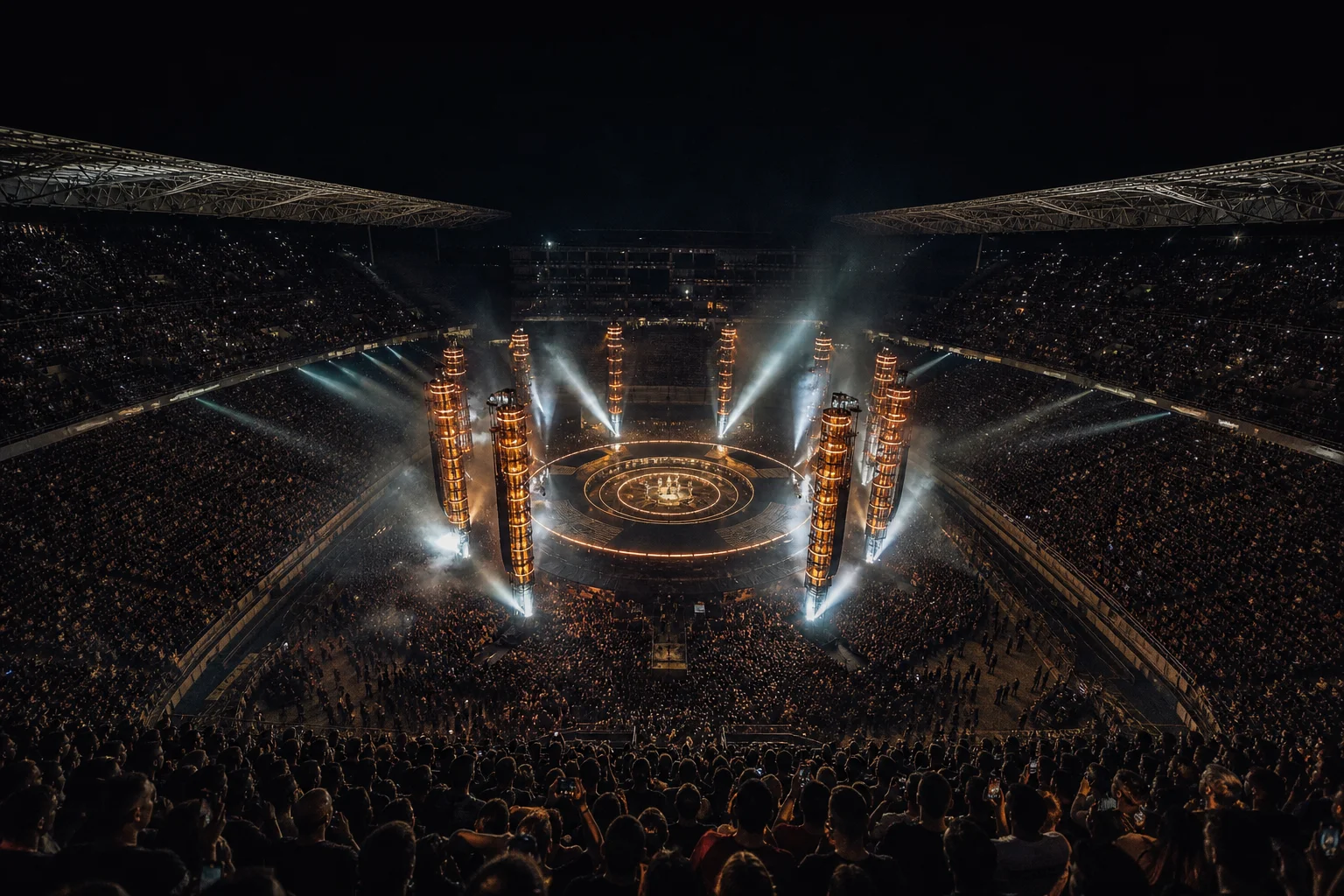
- The stage sits in the center of the stadium, ringed by tall video towers, with a fan pit inside the stage ring.
- Fans can buy a two-night package or a single night, and each night has its own support lineup.
- Setlists mix new 72 Seasons tracks with deep cuts, so the two nights feel like separate shows.
- Official soundboard recordings of shows are typically released through LiveMetallica.
1. The “No Repeat Weekend” Concept Explained
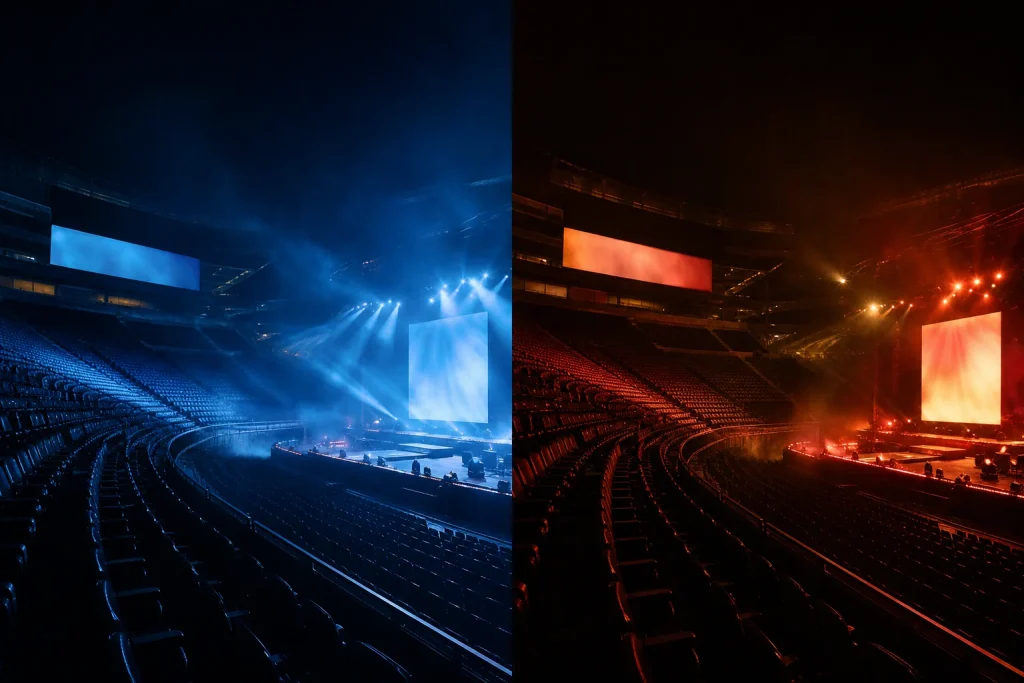
The M72 tour is best known for its No Repeat Weekend format. In most cities, Metallica books the same stadium for two nights, usually on a Friday and Sunday or a similar pairing. They promise that no song played on the first night will be played on the second. Night one might open with “Creeping Death” and include “Master of Puppets” and “One.” Night two might bring “Whiplash,” “Fade to Black,” and “Enter Sandman.” Each night still feels complete, but anyone who attends both hears roughly 30 or more different songs.
This matters for several reasons:
- For dedicated fans: Seeing both nights is not a rerun. It works like a two-part career retrospective.
- For the band: A rotating catalog keeps four veteran musicians sharp and makes each tour leg less repetitive to perform.
- For logistics: Building one stage for two shows in the same city cuts the time and cost of setup and teardown. It also lets the crew construct a much larger production.
A practical point: the setlist split is not announced in advance. If one song matters most to you, such as “Fade to Black” or “Orion,” buying both nights is the only reliable way to raise your odds of hearing it.
2. The In-the-Round Stage Changes Every Seat
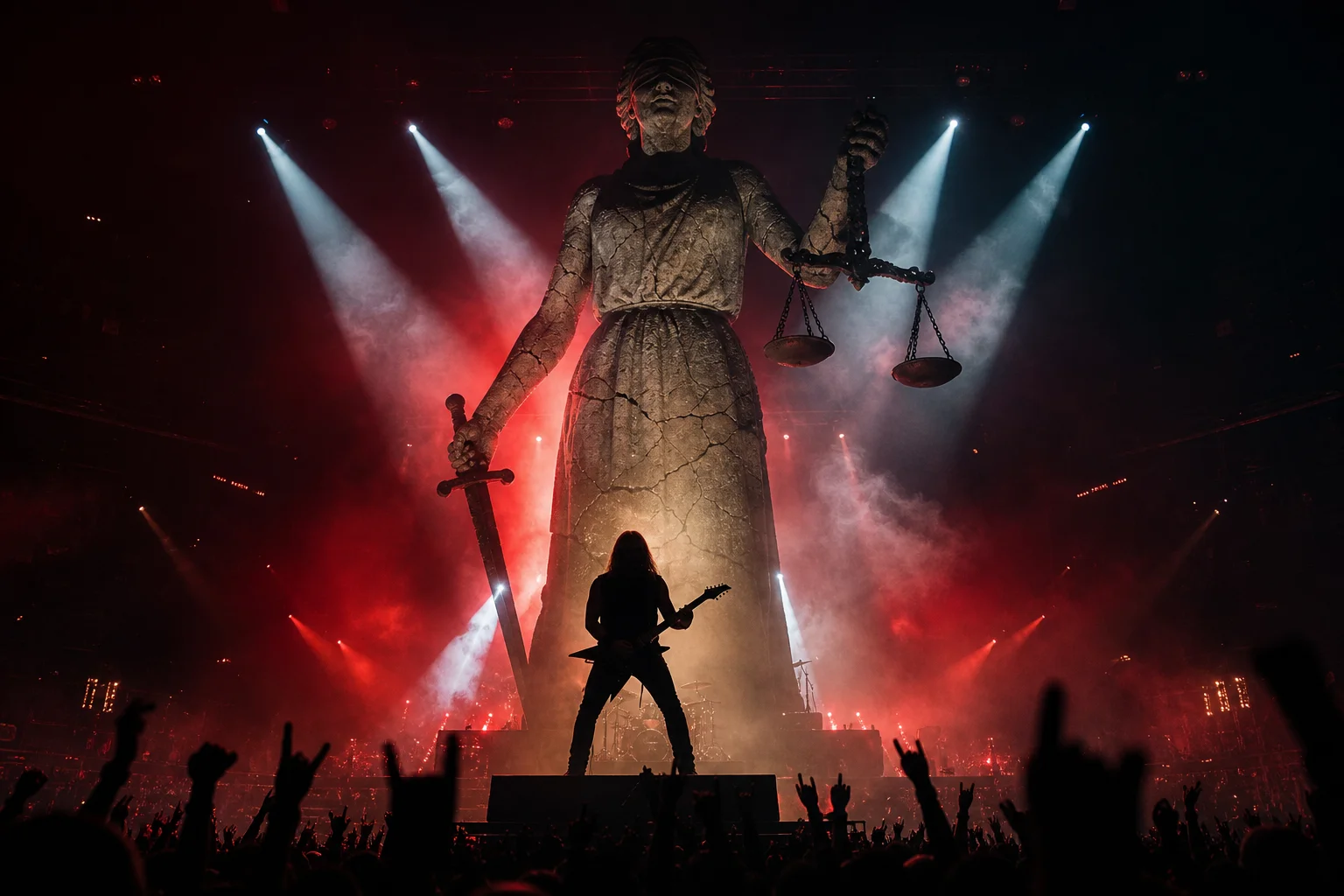
Most stadium tours put the stage at one end of the field. M72 puts it in the middle. The stage forms a large ring. Eight tall cylindrical towers stand around it, carrying video screens, lighting, and pyrotechnics. Drummer Lars Ulrich’s kit sits in the center, and his position rotates between several spots around the stage during the show. James Hetfield, Kirk Hammett, and Robert Trujillo move between microphone positions so every side of the stadium gets time facing the band.
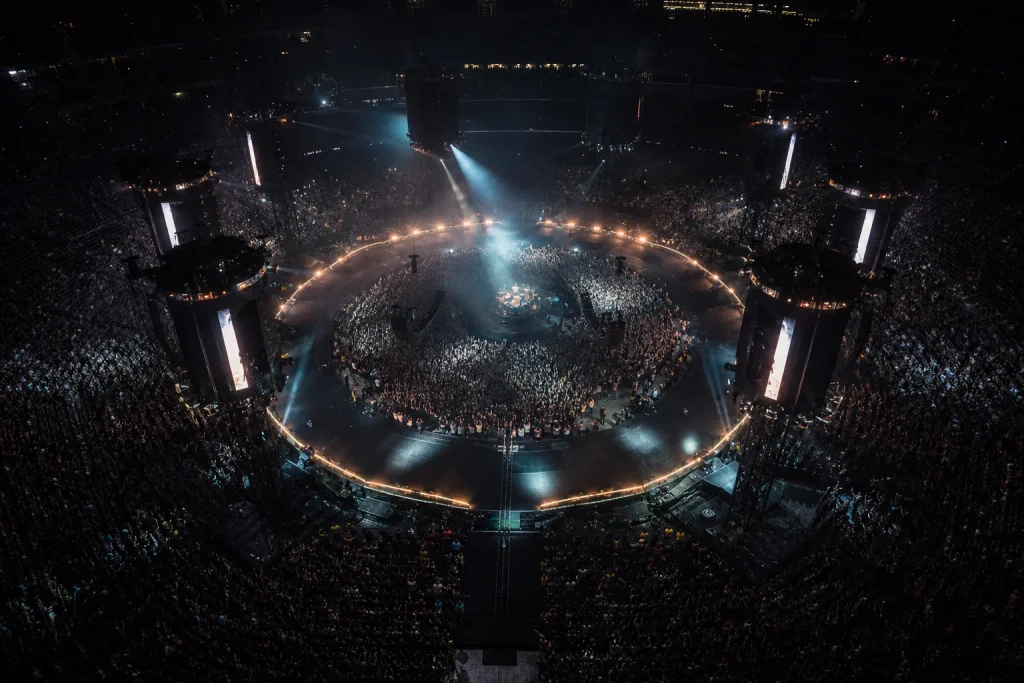
The center of the ring is a standing area for fans. It continues the Snake Pit idea Metallica first used in the early 1990s. Because the stage surrounds this pit, some fans end up closer to the band than they would at almost any other stadium show.
Pros and Cons of the 360-Degree Design
- Pro: No seat sits behind the stage, so far more seats have a usable view.
- Pro: The upper bowl tends to feel closer, because the band is in the middle rather than at one end.
- Con: Your side of the stage will sometimes face a band member’s back. Rotation evens this out over the full show.
- Con: Sound varies more by section than at a traditional end-stage show, especially in older stadiums with heavy echo.
3. Ticket Options: Two-Night Packages vs. Single Nights
Metallica sells M72 tickets in two main ways. The first is a two-night package that guarantees the same seat or area for both shows. The second is a single-night ticket for one show. In past on-sales, Fifth Member fan club members have usually had presale access. Some regions have also used verified-fan systems to limit bots.
The table below compares common choices fans face.
| Option | Best For | Advantages | Trade-offs |
|---|---|---|---|
| Two-Night Package | Die-hard fans and travelers | Hear the full No Repeat setlist range; see both support lineups; locked-in seating | Higher total cost; two nights of travel, hotel, and recovery |
| Single Night | Casual fans and budget-conscious buyers | Lower cost; choose the night with your preferred opening acts | You miss half the songs and cannot predict which ones |
| Snake Pit / Inner Floor | Fans who want maximum intensity | Closest possible view; strongest crowd energy | Standing for hours; limited availability; often bundled with premium packages |
| General Floor (outside ring) | Fans who want to be on the field | Close to the towers and pyro; freedom to move | Views depend heavily on height and how early you arrive |
| Lower Bowl Seats | Comfort with a strong view | Clear sightlines across the stage; elevated view of the pit | Price is often close to floor tickets |
| Upper Bowl Seats | Value seekers and families | Lowest prices; full view of the light and pyro design | The band looks small, so you rely more on the screens |
Practical tip: If you can only afford one night, choose it based on the support lineup, because those lineups are announced in advance. The Metallica setlist is a gamble either way.
4. Two Nights, Two Different Opening Lineups
The No Repeat rule covers support acts as well as songs. Each night in a city usually has its own pair of openers. Across the tour’s legs, these have included Pantera, Five Finger Death Punch, Ice Nine Kills, Mammoth WVH, Architects, Volbeat, and Greta Van Fleet, with lineups changing by region and year.
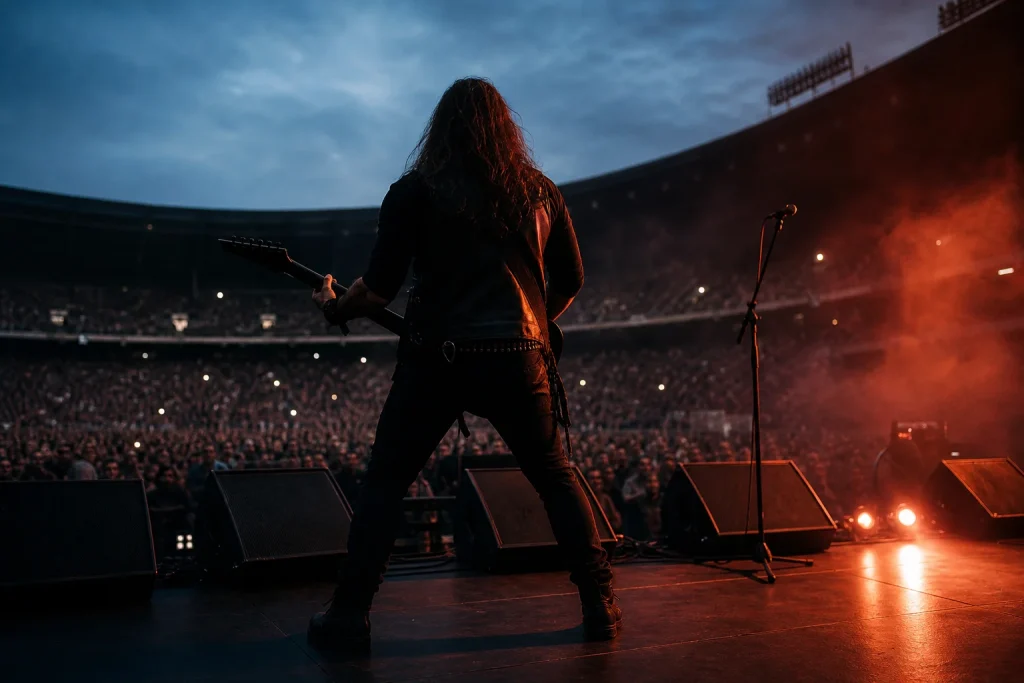
The rotation makes each night a separate event. A thrash and groove-metal fan might pick the Pantera night. A fan of modern metalcore might prefer the night with Ice Nine Kills or Architects. For the band and promoters, two lineups attract two different audiences, which helps fill a stadium twice in one weekend.
5. How the Setlists Balance New and Classic Material
Each M72 show usually includes a solid block of 72 Seasons songs. Tracks like “Lux Æterna,” “Screaming Suicide,” “If Darkness Had a Son,” and the title track “72 Seasons” have appeared often. The rest of the set draws on the band’s full catalog, from Kill ‘Em All through Hardwired… to Self-Destruct.
Because the two nights have to be split, rarer songs show up more often than they did on earlier stadium tours. Fans have reported hearing tracks that Metallica had not played regularly in years. A few patterns stand out:
- Openers rotate: High-energy songs such as “Creeping Death,” “Whiplash,” or “Hit the Lights” often appear early in the set.
- Ballads alternate: “Nothing Else Matters” and “Fade to Black” are often placed on different nights.
- Anchors split: Major songs like “Master of Puppets,” “One,” “Seek & Destroy,” and “Enter Sandman” are usually spread across both nights, so neither night feels thin.
- The “Doodle”: Kirk Hammett and Robert Trujillo often play a short instrumental or vocal tribute to a song by a local artist from the host city or country. Fans across the world have come to love this moment.
If you want to study patterns before your show, fan-run setlist databases log every performance. Look at the most recent shows on the same tour leg, since the band adjusts its rotation as it goes.
6. Every Show Is Recorded and Released
Metallica has been releasing soundboard recordings of its concerts for years through LiveMetallica, its official live archive. M72 continues that practice. Most shows become available to buy or stream as professionally mixed recordings, usually soon after the concert.
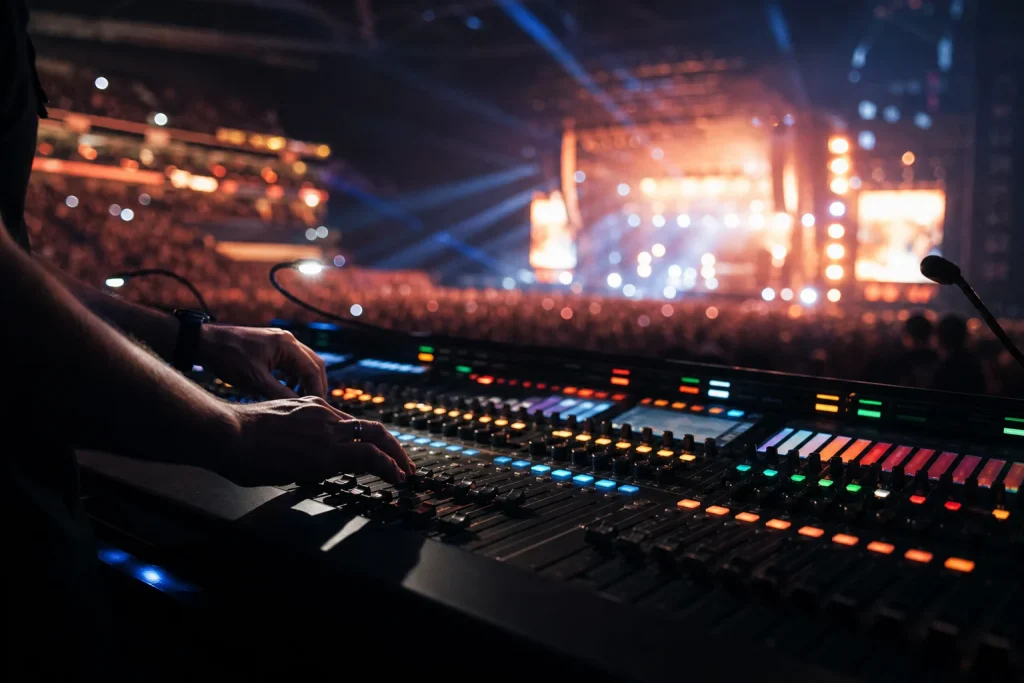
This has a real benefit for attendees. You do not need to film the entire show on your phone to remember it. You can experience the concert in the moment and buy a high-quality recording of your exact night afterward. Some shows have also been livestreamed or screened in cinemas. These include the two-night Arlington, Texas, run in 2023, which was broadcast to theaters worldwide as a special event.
Giving Back on Tour
Metallica’s charity, All Within My Hands, is part of the tour. In many markets, a portion of ticket sales goes to the foundation, and the band often supports local food banks and workforce-education programs in the cities it visits. Fans can usually find donation information at merch stands or through official tour channels.
7. The Tour Keeps Expanding
M72 was planned as a long tour from the start. After opening in Europe in spring 2023, it moved through North America, returned to Europe in 2024, and then added more legs into 2025 and beyond, including stops in regions the band had not played on the original schedule. With No Repeat Weekends, a center-stage production, and steady demand, the tour has become one of the highest-grossing rock tours of its era.
The longer run also shows Metallica’s approach at this stage of their career. Rather than dense back-to-back routing, the band has spaced the legs out with breaks between them. Members have said in interviews that pacing is how they sustain a two-and-a-half-hour stadium show while in their sixties. For fans, this means new dates keep being announced, so missing one leg does not necessarily mean missing the tour.
How to Prepare for Your M72 Show
- Join the fan club early: Fifth Member presales have historically offered the best early access to seats.
- Buy from official sellers only: High demand attracts scalpers and fake listings. Use the primary ticketing partner linked on Metallica’s official site.
- Arrive early for the floor: Floor areas are usually general admission, so arrival time shapes your view.
- Bring ear protection: Stadium pyro and sound volume are intense. High-fidelity earplugs protect your hearing without muffling the music.
- Check stadium bag policies: Many venues enforce clear-bag rules, and these vary from city to city.
Why M72 Matters in Metallica’s Live History
Metallica has experimented with live staging for decades. Examples include the in-the-round arena shows of the early 1990s and orchestral collaborations. M72 brings many of those ideas into the largest venues the band has ever played regularly. The No Repeat format rewards long-time fans, and the 360-degree stage makes stadium shows feel closer. The official recordings preserve every night. Taken together, these choices turn a promotional tour for a new album into a full survey of the band’s 40-plus-year career.
Frequently Asked Questions / FAQs
Do I need tickets for both nights of a Metallica M72 No Repeat Weekend?
No. Each night is a complete concert of roughly two and a half hours. Buying both nights is the only way to hear the full rotating setlist and see both support lineups, but one night is still a full show.
How long is a Metallica M72 concert?
Metallica’s own set usually runs about two to two and a half hours. With two opening acts, plan for the full event to last roughly five to six hours from the first band to the encore.
What is the best seat for the in-the-round stage?
For energy and closeness, the pit inside the stage ring is unmatched. For a balance of comfort and view, lower-bowl seats roughly level with the middle of the stage give clear sightlines over the whole ring.
Can I listen to my exact show after the concert?
Yes, in most cases. Metallica typically releases official soundboard recordings of M72 shows through LiveMetallica, so you can buy or stream the audio of the specific night you attended.