Few records in heavy metal have split a fanbase as sharply as Metallica St. Anger. Released on June 5, 2003, the band’s eighth studio album arrived after the departure of a bassist, a frontman’s stint in rehab, and nearly two years of chaotic, therapist-supervised recording sessions. More than two decades later, the album remains the most argued-about entry in the Metallica catalog.
The short answer: St. Anger is divisive because it deliberately abandoned Metallica’s signature elements: there are no guitar solos, the snare drum has a metallic, ringing tone, and the production is raw and unpolished. It still debuted at No. 1 on the Billboard 200 and won a Grammy, and many listeners now hear it as an honest document of a band rebuilding itself.
- St. Anger was recorded without a permanent bassist; producer Bob Rock played bass on the album, and Robert Trujillo joined only after the tracking was finished.
- The record contains no traditional guitar solos, a conscious choice to keep the songs collective and unfiltered.
- Lars Ulrich’s snare, recorded with the snares off, became the most criticized drum sound in metal history.
- Despite the backlash, the album debuted at No. 1 in the US and the title track won the 2004 Grammy for Best Metal Performance.
- Its creation is documented in the film Some Kind of Monster, which shaped how the album is understood today.
Why St. Anger Still Matters in Metallica News
Every few years, St. Anger resurfaces in Metallica conversations. It happens when the band dusts off a song like “Frantic” for a live set, when anniversary think-pieces appear, or when fans debate which era deserves a deluxe reissue. The album functions as a turning point: the end of the Bob Rock production era that began with the Black Album, the start of Robert Trujillo’s tenure, and the emotional reset that led to the more thrash-oriented Death Magnetic in 2008.
Understanding St. Anger means understanding Metallica as people rather than a machine. Below are seven truths that explain why it sounds the way it does and why its reputation keeps shifting.
Truth 1: It Was Born From a Band in Crisis
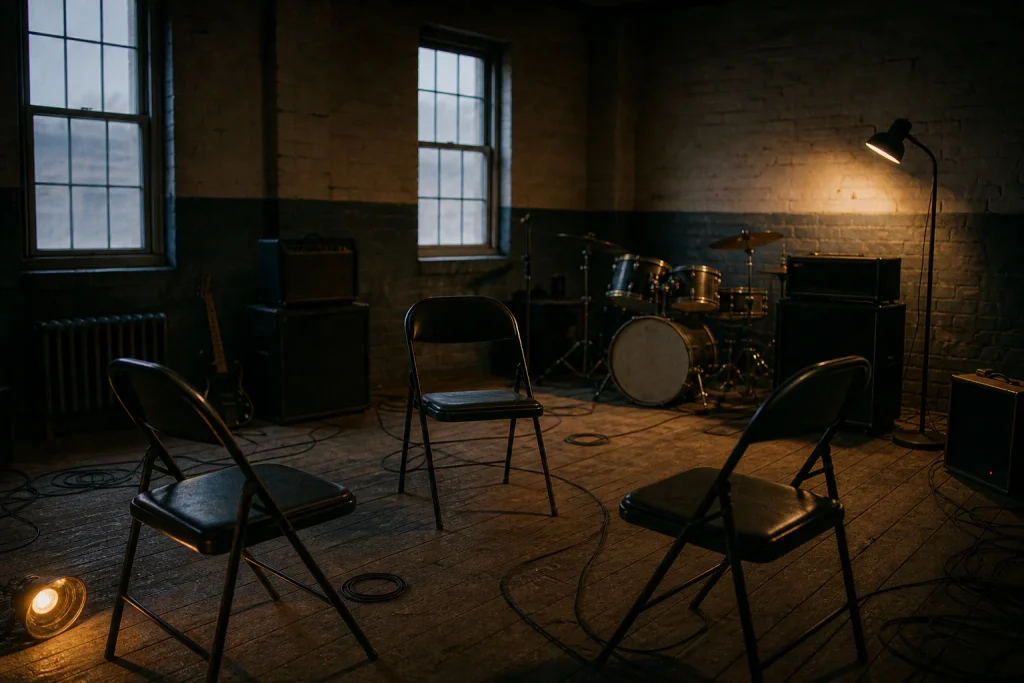
In January 2001, bassist Jason Newsted left Metallica after nearly 15 years, citing personal reasons and frustration with the band’s restrictions on side projects. Rather than immediately auditioning replacements, James Hetfield, Lars Ulrich, and Kirk Hammett began writing in a converted military barracks at the Presidio in San Francisco, with producer Bob Rock covering bass duties.
The band also brought in Phil Towle, a performance-enhancement coach, to help them address years of unresolved tension. Then, in July 2001, Hetfield entered rehabilitation for alcohol and other addictions. Recording stopped for months. When he returned, he set strict limits on his working hours, which forced the others to adapt to a completely new rhythm.
How the Crisis Shaped the Music
- Lyrics became confessional: Songs like “Frantic” and “The Unnamed Feeling” read like pages from a recovery journal, dealing with anxiety, anger, and self-destruction.
- Writing became collective: Instead of Hetfield and Ulrich dominating composition, all members contributed riffs and lyric ideas, often in jam sessions.
- Perfectionism was rejected: The band wanted to capture emotion in the moment rather than polish it away.
Truth 2: Bob Rock Played the Bass
One of the most frequently overlooked facts is that Bob Rock, the producer behind the Black Album, Load, and ReLoad, performed all bass parts on St. Anger. Robert Trujillo, formerly of Suicidal Tendencies and Ozzy Osbourne’s band, was hired in February 2003, after recording had wrapped.
To give fans a sense of the new lineup, the album shipped with a bonus DVD featuring the band, including Trujillo, performing the entire record live in their rehearsal space. For many listeners, those performances revealed the songs’ power more clearly than the studio mix, because Trujillo’s fingerstyle playing added groove the album version lacked.
Truth 3: The Missing Guitar Solos Were Intentional
Kirk Hammett is one of metal’s most recognizable lead guitarists, so the total absence of solos shocked fans. The decision was collaborative: the band felt solos would date the songs and break the raw, unified wall of sound they were chasing. Hammett has since said in interviews that he went along with the idea for the sake of the group, though he has also acknowledged that solos felt dated to the band at the time in a way that may not have aged well.
The practical result is an album built almost entirely on rhythm guitar, often in low, drop tunings. Songs frequently run seven or eight minutes, cycling through riff after riff. Critics argued this made the tracks feel repetitive; defenders say it creates a hypnotic, almost punishing intensity that suits the subject matter.
Truth 4: That Snare Drum Sound Was a Choice, Not a Mistake
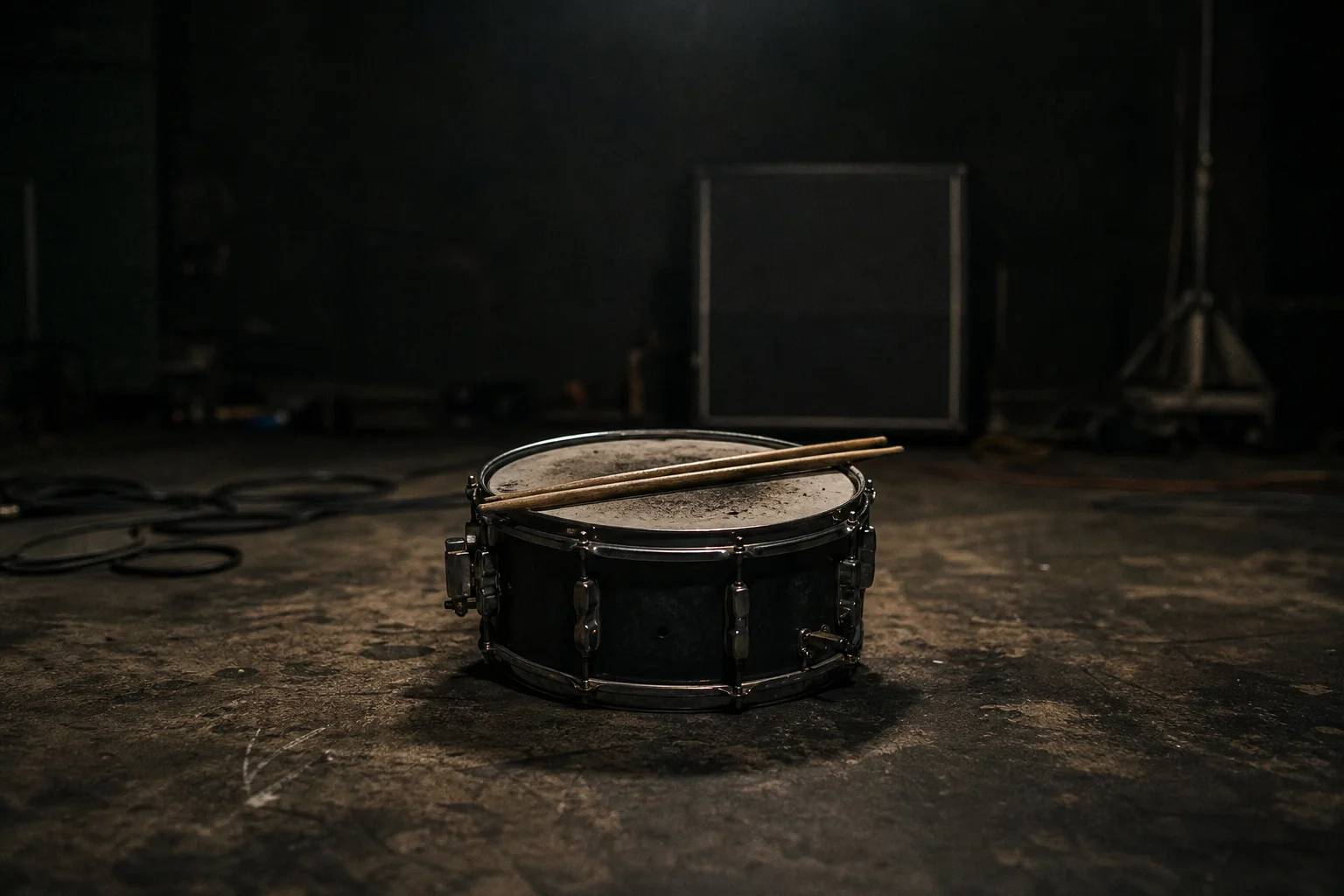
No discussion of Metallica St. Anger is complete without the snare. Lars Ulrich recorded with the snare wires disengaged, producing a resonant, clanging “ping” often compared to a trash can lid or a pot being struck. Ulrich has repeatedly defended it, explaining that he liked the way it sat in the room during the jams and that the band wanted the record to sound like a garage, not a studio.
The decision became a meme long before memes dominated music culture. Yet it reflects a real aesthetic stance: in the early 2000s, nu-metal and heavily compressed rock dominated radio, and Metallica wanted something that sounded unprocessed and confrontational. Whether that worked remains the heart of the debate.
Truth 5: Commercial Success Met Critical Backlash
Despite its reputation, St. Anger was a commercial hit. It debuted at No. 1 on the Billboard 200, selling roughly 418,000 copies in its first week in the United States, and topped charts in numerous countries. The title track won the Grammy Award for Best Metal Performance in 2004. The album was certified platinum in the US.
Reviews were mixed at release, and fan sentiment turned sharply negative over time. Many longtime listeners felt the record was the culmination of a drift away from thrash that began in the 1990s. The table below places St. Anger in context against the albums around it.
| Album | Year | Producer | Bassist on Recording | Guitar Solos | Overall Sound |
|---|---|---|---|---|---|
| ReLoad | 1997 | Bob Rock | Jason Newsted | Yes | Hard rock, blues, polished |
| Garage Inc. | 1998 | Bob Rock | Jason Newsted | Yes | Covers collection, loose and live-feeling |
| St. Anger | 2003 | Bob Rock | Bob Rock | No | Raw, aggressive, unpolished, metallic snare |
| Death Magnetic | 2008 | Rick Rubin | Robert Trujillo | Yes | Return to thrash, heavily compressed mix |
| Hardwired… to Self-Destruct | 2016 | Greg Fidelman | Robert Trujillo | Yes | Modern thrash and groove metal |
Pros and Cons Fans Commonly Cite
- Pros: Emotional honesty, unique sonic identity, intense riffs on “Frantic” and “St. Anger,” a vulnerable Hetfield vocal performance.
- Cons: Excessive song lengths, repetitive structures, no solos, divisive drum tone, thin mix compared with earlier records.
Truth 6: Some Kind of Monster Changed How We Hear It
In 2004, directors Joe Berlinger and Bruce Sinofsky released Some Kind of Monster, a documentary that filmed the St. Anger sessions with startling access. Viewers watched arguments over songwriting, Hetfield’s return from rehab, Ulrich’s tense meeting with former guitarist Dave Mustaine, and group therapy with Phil Towle.
The film reframed the album for many people. Songs that sounded messy on first listen started to feel like artifacts of a band literally fighting to survive. Today, many fans recommend watching the documentary before revisiting the record, because the context transforms the listening experience.
Truth 7: Reappraisal Is Real, and It Is Growing
Over the past decade, St. Anger has undergone a quiet re-evaluation. Several factors drive this shift:
- Distance from the era: Younger listeners who did not experience the 2003 backlash approach the album without expectations, often enjoying its sludgy, hardcore-influenced energy.
- Fan-made remixes: Online communities have produced unofficial remixes with replaced drum sounds and added solos, proving that the underlying riffs hold up.
- Live revivals: When Metallica plays “Frantic” or “St. Anger” in concert, with Trujillo on bass and a conventional snare, crowds respond far more warmly than the album’s reputation would suggest.
- A lasting legacy: The closing track “All Within My Hands” lent its name to the band’s charitable foundation, launched in 2017, giving the record an unexpected afterlife.
St. Anger is less a failed album than a time capsule. It captures the exact moment Metallica chose to keep going instead of breaking apart.
How to Listen to St. Anger Today: A Practical Guide
If you have avoided the album or dismissed it years ago, here is a practical approach to giving it a fair second chance:
- Start with the standouts: “Frantic,” “St. Anger,” “Some Kind of Monster,” and “The Unnamed Feeling” are the strongest entry points.
- Watch the live rehearsal DVD: The Trujillo-era performances show the songs with more groove and a fuller low end.
- Pair it with the documentary: Context from Some Kind of Monster makes the lyrics hit harder.
- Listen on good headphones at moderate volume: The dense rhythm guitars reveal more detail than on laptop speakers.
- Compare with Death Magnetic: Hearing what came next shows how St. Anger cleared the way for the band’s return to thrash.
Câu hỏi thường gặp / FAQs
Why does the snare drum on St. Anger sound so strange?
Lars Ulrich recorded with the snare wires turned off, which removes the usual crisp rattle and leaves a ringing, metallic tone. It was a deliberate creative choice to make the album sound raw and live in a rehearsal room.
Who played bass on Metallica’s St. Anger?
Producer Bob Rock played all bass parts. Robert Trujillo joined Metallica in February 2003 after recording ended, but he appears on the bonus DVD performing the full album live.
Was St. Anger a commercial failure?
No. It debuted at No. 1 on the Billboard 200 with roughly 418,000 first-week US sales, went platinum in the US, and the title track won the 2004 Grammy for Best Metal Performance. Its negative reputation comes from fan and critical reception, not sales.
Does Metallica still play St. Anger songs live?
Rarely, but occasionally. Songs such as “Frantic” and “St. Anger” have appeared in setlists over the years, usually in heavier, more polished live arrangements that many fans prefer to the studio versions.
Final Verdict
Metallica St. Anger will probably never be ranked alongside Master of Puppets or Ride the Lightning, and it was never meant to be. It is a document of survival: a band without a bassist, a frontman in recovery, and a producer filling every gap, all choosing raw honesty over polish. Whether you love it, hate it, or are only now discovering it, the album remains essential to understanding how Metallica became the band it is today. Put on “Frantic,” turn it up, and judge it on its own terms.