Eight years separated Death Magnetic from Metallica’s next studio statement, and when Hardwired…To Self-Destruct finally arrived on November 18, 2016, it reminded the world that the band still had thrash in its blood. The double album bridged the band’s classic speed-metal roots with the groove-heavy songwriting of the 1990s, and it set the stage for everything that followed, from stadium tours to the next new album Metallica fans would wait years for.
Direct answer: Hardwired…To Self-Destruct is Metallica’s tenth studio album, released on November 18, 2016, through the band’s own Blackened Recordings label. Produced by Greg Fidelman with James Hetfield and Lars Ulrich, the 12-track, roughly 77-minute double album debuted at No. 1 on the Billboard 200 and launched the WorldWired Tour.
- Released November 18, 2016, it was Metallica’s first studio album in eight years and its first on its own Blackened Recordings imprint.
- Kirk Hammett has no songwriting credits after losing a phone holding hundreds of riff ideas in 2014.
- Every one of the 12 songs received its own music video, an unusual move for a legacy rock act.
- The album debuted at No. 1 on the Billboard 200 and fueled the multi-year WorldWired Tour.
- Closing track “Spit Out the Bone” has become a fan-favorite thrash epic and a live staple.
Fact 1: An Eight-Year Wait Ended With a Self-Released Double Album
After the World Magnetic cycle wrapped, Metallica kept busy rather than rushing back to the studio. Between 2011 and 2016 the band released the Lulu collaboration with Lou Reed, launched the Orion Music + More festival, filmed Through the Never, played Antarctica, and reacquired control of its master recordings. That last move mattered: Hardwired…To Self-Destruct became the first Metallica studio album issued through Blackened Recordings, the band’s own label.
Owning the release gave Metallica freedom over format, timing, and promotion. The band chose to split 12 songs across two discs, not because the material required a sprawling concept, but because the total runtime of roughly 77 minutes pushed past what many fans prefer on a single CD side and suited a double-vinyl presentation. For listeners who track every Metallica live date and release, the self-release era marked a shift toward direct fan relationships, a strategy reinforced through the band’s official website, its Metallica newsletter, and fan club channels.
Why the timing worked
Metallica announced the album and dropped the title track “Hardwired” on August 18, 2016, giving fans only three months between first single and release day. That compressed campaign created urgency, and it echoed how the band later handled singles for subsequent records.
Fact 2: Kirk Hammett’s Lost Phone Changed the Songwriting
One of the most discussed stories surrounding the record is that lead guitarist Kirk Hammett lost his phone in 2014, reportedly at Copenhagen Airport, along with roughly 250 riff ideas he had recorded. He had not backed them up. As a result, Hammett received no songwriting credits on Hardwired…To Self-Destruct, making it the first Metallica studio album since 1983’s Kill ‘Em All era rearrangements without a Hammett writing contribution.

Most songs are credited to Hetfield and Ulrich, while bassist Robert Trujillo shares credit on “ManUNkind.” Hammett still plays blistering solos throughout, and in interviews he has framed the episode with good humor, but it remains a cautionary tale every musician repeats: back up your ideas.
Practical lesson for musicians
- Sync voice memos and demo files to cloud storage automatically.
- Keep a secondary local backup on an external drive.
- Label riffs with dates and tempo so collaborators can find them quickly.
Fact 3: Greg Fidelman Took Over Production
For Death Magnetic, Rick Rubin had pushed Metallica back toward its 1980s style. This time, Greg Fidelman, who had engineered and mixed under Rubin, moved into the producer’s chair alongside Hetfield and Ulrich. Recording took place largely at the band’s HQ facility in San Rafael, California.
The sonic result was noticeably different from its predecessor. Where Death Magnetic drew heavy criticism for brickwall mastering and clipping, Hardwired…To Self-Destruct was widely praised for a cleaner, punchier, more dynamic mix. Ulrich’s drums sound natural, Hetfield’s rhythm tone is thick but defined, and Trujillo’s bass is audible in a way many fans had long requested.
Fact 4: Every Song Got Its Own Music Video
In an unusual move for a band of Metallica’s stature, the group released a music video for all 12 tracks, plus a video for “Lords of Summer” from the deluxe edition. The videos rolled out on YouTube in the hours surrounding release day, effectively turning the album into a visual event.
The approach let fans engage with deep cuts like “Confusion” and “Am I Savage?” that might otherwise have stayed in the shadows of the singles. It was also a smart streaming-era strategy: each video became a discoverable entry point for younger listeners.
Fact 5: The Track List Balances Thrash, Groove, and Tribute
The album opens with “Hardwired,” a three-minute burst of speed that sounds deliberately like a statement of intent. From there, the record moves through anthemic thrash (“Atlas, Rise!” and “Moth Into Flame”), crushing mid-tempo grooves (“Now That We’re Dead” and “Dream No More”), and the band’s longest song on the record, “Halo on Fire.”
Disc two includes “Murder One,” Hetfield and Ulrich’s tribute to Motörhead frontman Lemmy Kilmister, who died in December 2015. Its lyrics reference Lemmy’s songs and attitude, and the accompanying animated video is packed with nods to his life. The album closes with “Spit Out the Bone,” a seven-minute thrash assault many fans rank among the best Metallica songs of the 21st century.
| Disc | Track | Approx. Length | Notable Detail |
|---|---|---|---|
| 1 | Hardwired | 3:09 | Lead single, released August 18, 2016 |
| 1 | Atlas, Rise! | 6:28 | Harmony guitar lines recalling NWOBHM |
| 1 | Now That We’re Dead | 6:59 | Live version features a drum-circle intro |
| 1 | Moth Into Flame | 5:50 | Lyrics inspired partly by Amy Winehouse’s story |
| 1 | Dream No More | 6:29 | Lovecraftian theme, a nod to Cthulhu lore |
| 1 | Halo on Fire | 8:15 | Longest track on the album |
| 2 | Confusion | 6:41 | Explores PTSD from a soldier’s view |
| 2 | ManUNkind | 6:55 | Robert Trujillo co-write |
| 2 | Here Comes Revenge | 7:17 | Dark, slow-burning groove |
| 2 | Am I Savage? | 6:30 | Jekyll-and-Hyde style lyrics |
| 2 | Murder One | 5:45 | Tribute to Lemmy Kilmister |
| 2 | Spit Out the Bone | 7:09 | Fan-favorite thrash closer |
Fact 6: A No. 1 Debut in the Streaming Era
Hardwired…To Self-Destruct debuted at No. 1 on the US Billboard 200 with roughly 291,000 equivalent album units in its first week, the large majority from traditional album sales. That made Metallica one of very few acts to land six consecutive No. 1 studio albums in the US, a streak stretching back to the Black Album in 1991.
The album also topped charts in numerous countries, including the UK, Germany, Australia, and Canada. Critics responded more warmly than they had in years, frequently calling it the band’s strongest work since the early 1990s, though some reviewers argued the double-disc length diluted its impact.
How it compares to neighboring albums
| Album | Year | Producer | Runtime | US Debut |
|---|---|---|---|---|
| Death Magnetic | 2008 | Rick Rubin | ~75 min | No. 1 |
| Hardwired…To Self-Destruct | 2016 | Greg Fidelman, Hetfield, Ulrich | ~77 min | No. 1 |
| 72 Seasons | 2023 | Greg Fidelman, Hetfield, Ulrich | ~77 min | No. 2 |
The table shows a clear pattern: once Fidelman stepped in, Metallica settled into a stable production team and a consistent long-form album format, which carried directly into its next new album, Metallica’s 2023 release.
Fact 7: The WorldWired Tour Turned the Album Into a Live Event
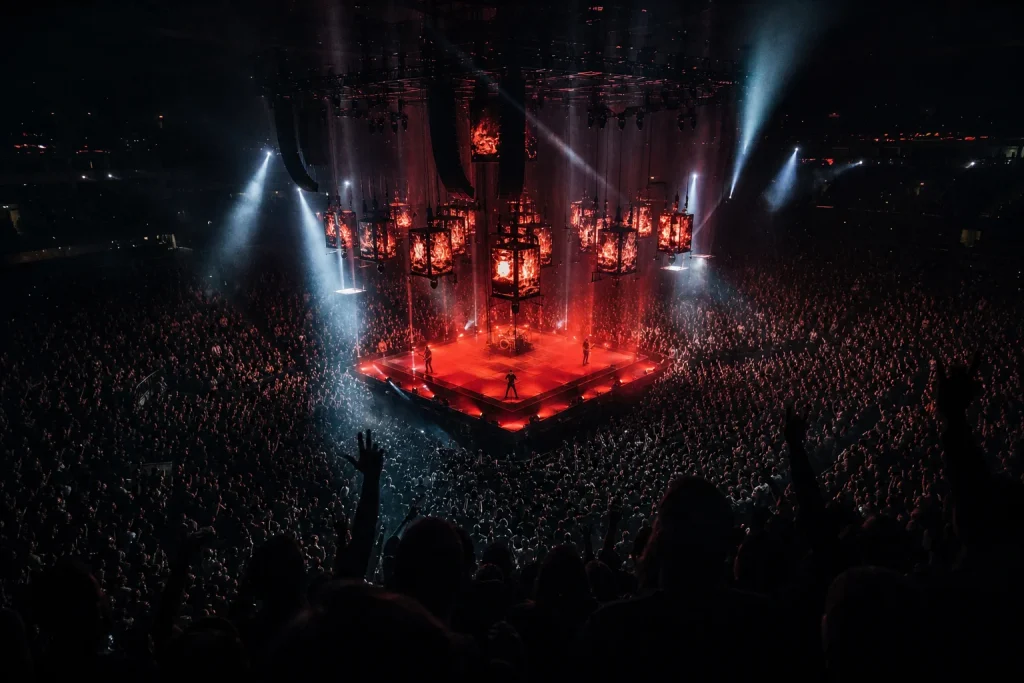
The album launched the WorldWired Tour, which ran from late 2016 into 2019 and covered North America, Europe, Latin America, Asia, and Oceania. Fans scouring Metallica tour dates at the time saw a mix of stadium shows in the US and Europe plus arena runs featuring the band in the round, with a center stage surrounded by fans and a ceiling of drone-like light cubes.
Songs like “Hardwired,” “Atlas, Rise!,” “Moth Into Flame,” “Now That We’re Dead,” and “Spit Out the Bone” became regular setlist entries. The tour ranked among the highest-grossing tours of its period, demonstrating that a decades-old metal band could still pack stadiums with new material rather than nostalgia alone.
Following Metallica concert tour dates today
If you want to see these songs live now, the most reliable approach is to use official channels rather than third-party rumor sites:
- Official website: Metallica.com publishes confirmed Metallica concert tour dates, venues, and support acts.
- Metallica newsletter: Signing up delivers announcements on releases, merch, and shows straight to your inbox.
- Metallica fan club: Membership typically provides early ticket access and exclusive content, often before public on-sale dates.
- Setlist trackers: Community databases help you see which Hardwired-era songs remain in rotation across recent Metallica live dates.
Tip: “Spit Out the Bone” and “Moth Into Flame” appear more frequently than most other Hardwired-era tracks, so they are good bets if you are hoping to hear this album live.
The Deluxe Edition and Bonus Material
The deluxe edition added a third disc, often called Rebel of Babylon, containing “Lords of Summer” (a song first debuted live in 2014), covers including tracks by Deep Purple, Iron Maiden, Ronnie James Dio, and Rainbow, plus live recordings from a 2016 Rasputin Music performance and other shows. For collectors, this bonus material offers context on how the band warmed up for the album cycle.
Why Hardwired…To Self-Destruct Still Matters
Looking back, the album accomplished three things. First, it repaired Metallica’s reputation for production quality after the loudness complaints of 2008. Second, it proved the band could self-release a major record and still dominate charts. Third, it established the creative team and album format that defined the band’s work into the 2020s. Fans debating the next new album Metallica might release often point to Hardwired as the benchmark for what a modern Metallica record should sound like.
Pros and cons at a glance
- Pros: clean, dynamic mix; strong thrash openers and closer; heartfelt Lemmy tribute; excellent live translation.
- Cons: long runtime; some mid-album songs feel overextended; limited Hammett songwriting input.
Frequently Asked Questions / FAQs
When was Hardwired…To Self-Destruct released?
It was released worldwide on November 18, 2016, through Metallica’s own Blackened Recordings label, with the title track arriving as the first single on August 18, 2016.
Why does Kirk Hammett have no writing credits on the album?
Hammett lost a phone containing around 250 unbacked riff ideas in 2014. Without that material, Hetfield and Ulrich wrote most of the songs, with Robert Trujillo co-writing “ManUNkind.” Hammett still plays all lead guitar parts.
Which song on the album is a tribute to Lemmy?
“Murder One” honors Motörhead’s Lemmy Kilmister, who died in December 2015. Its lyrics and animated video include many references to his songs and life.
How can I find out if Metallica will play Hardwired songs near me?
Check official Metallica tour dates on Metallica.com, subscribe to the Metallica newsletter, and consider joining the Metallica fan club for presale access. Setlist databases show which songs appear at recent shows.