Before the stadiums, the orchestras, and the record-breaking world tours, Metallica was four broke young musicians sleeping on a studio floor in upstate New York and recording an album on a shoestring budget. That record became one of the founding documents of thrash metal. Understanding how it came together explains a great deal about the band Metallica would later become.
The Kill ‘Em All album is Metallica’s debut studio record, released on July 25, 1983, through the independent label Megaforce. It was recorded in May 1983 at Music America Studios in Rochester, New York, with producer Paul Curcio, and is widely credited, alongside a handful of other early records, with defining the fast, aggressive sound of thrash metal.
- Kill ‘Em All was recorded in Rochester, New York, in May 1983 and released on July 25, 1983.
- Dave Mustaine was fired weeks before recording, but he still holds co-writing credits on four of the album’s ten songs.
- The original title, Metal Up Your Ass, was rejected by distributors, and the replacement title came from an angry remark about them.
- Kirk Hammett, recruited from Exodus, made his recording debut with Metallica on this album.
- The record introduced fan favorites like “Seek & Destroy” and “Whiplash” that remain in Metallica setlists more than four decades later.
Fact 1: It Was Born From the Bay Area Underground and a Cross-Country Gamble
By late 1982, Metallica had built a devoted following in the San Francisco Bay Area club circuit, largely thanks to the No Life ’til Leather demo, which circulated through the tape-trading underground. That demo reached Jon Zazula, a New Jersey record store owner who ran a shop called Rock ‘n’ Roll Heaven. Zazula was so impressed that he invited the band east to play shows and record.
In early 1983, the band drove across the country in a rented U-Haul truck with their gear. They had little money and nowhere stable to live. For a stretch, they stayed in a rehearsal space in Queens known among fans as the “Music Building,” sharing it with the English band Anthrax at times. This period of hunger and instability shaped the urgency you hear on the record. These were not polished professionals; they were kids betting everything on a single shot.
Why the Tape-Trading Scene Mattered
In the pre-internet era, underground metal spread through mailed cassettes and fanzines. A band could build an international reputation without a record deal. Metallica’s demo became a calling card, and by the time Kill ‘Em All arrived, there was already an audience waiting for it. This grassroots momentum is one reason an independent release on a tiny new label could make such an outsized impact.
Fact 2: Dave Mustaine Was Fired Just Weeks Before Recording
One of the most dramatic chapters in rock history unfolded right before the sessions. In April 1983, shortly after arriving in New York, the band dismissed lead guitarist Dave Mustaine, citing his drinking and volatile behavior. He was put on a bus back to California. Mustaine would go on to form Megadeth, which became one of thrash metal’s “Big Four” alongside Metallica, Slayer, and Anthrax.
Mustaine’s influence on the album is undeniable. He received co-writing credits on four tracks:
- “The Four Horsemen” – originally Mustaine’s song “The Mechanix,” reworked by James Hetfield and Lars Ulrich with a slower middle section and new lyrics.
- “Jump in the Fire” – a mid-tempo track built on a riff dating back to the band’s earliest days.
- “Phantom Lord” – a fast, riff-driven track with a clean interlude.
- “Metal Militia” – the album’s closing anthem.
Mustaine later recorded “The Mechanix” with Megadeth on their 1985 debut, giving fans a rare chance to compare two versions of the same musical idea interpreted by former bandmates.
Fact 3: Kirk Hammett Joined From Exodus With Almost No Preparation
Mustaine’s replacement was Kirk Hammett, the lead guitarist of fellow Bay Area thrash band Exodus. Hammett flew to New York and played his first show with Metallica in April 1983, only a short time before entering the studio. He had to learn the material quickly, and some of his solos on the album follow the melodic shape of the parts Mustaine had played live.
Hammett had studied guitar with Joe Satriani, and his technical, wah-heavy lead style would become a central part of Metallica’s identity. Kill ‘Em All was his recording debut with the band, beginning a tenure that continues to this day.
The Rhythm Foundation: Hetfield and Ulrich
While the guitar lineup changed, the core songwriting partnership was already locked in. James Hetfield’s downpicked rhythm playing set a new standard for speed and precision, and Lars Ulrich’s drumming, inspired by the New Wave of British Heavy Metal, drove the songs with relentless energy. That combination is the engine of the record.
Fact 4: The Original Title Was Rejected, and the New One Came From Frustration
The band originally wanted to call the album Metal Up Your Ass, a phrase already printed on their early merchandise. The proposed cover reportedly showed a hand holding a knife emerging from a toilet. Distributors refused to carry it.
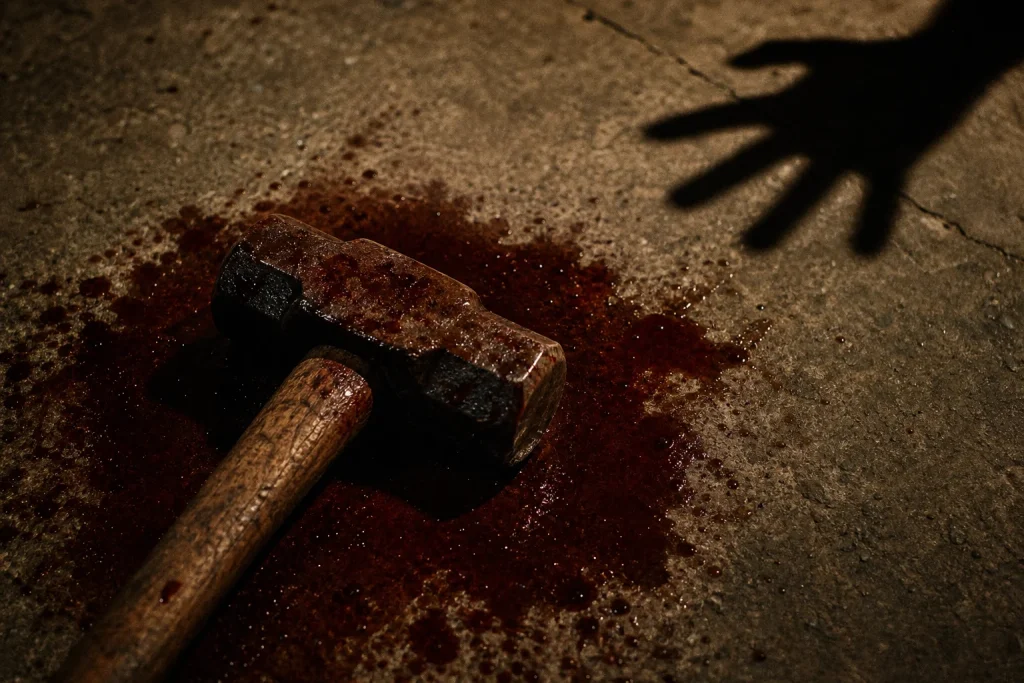
According to band lore, bassist Cliff Burton, frustrated by the distributors’ squeamishness, said something to the effect of “just kill ’em all,” referring to the industry people blocking the release. The phrase stuck and became the album title. The final cover, showing a hammer next to a shadowy pool of blood, delivered a stark, violent image without the crude humor that had alarmed retailers.
Fact 5: It Was Made Fast, Cheap, and Raw
The album was recorded in roughly a few weeks in May 1983 at Music America Studios in Rochester, New York, with Paul Curcio producing. The budget was very modest, commonly reported at around $15,000, which Zazula and his wife Marsha scraped together to launch Megaforce Records as a label specifically to release the record.
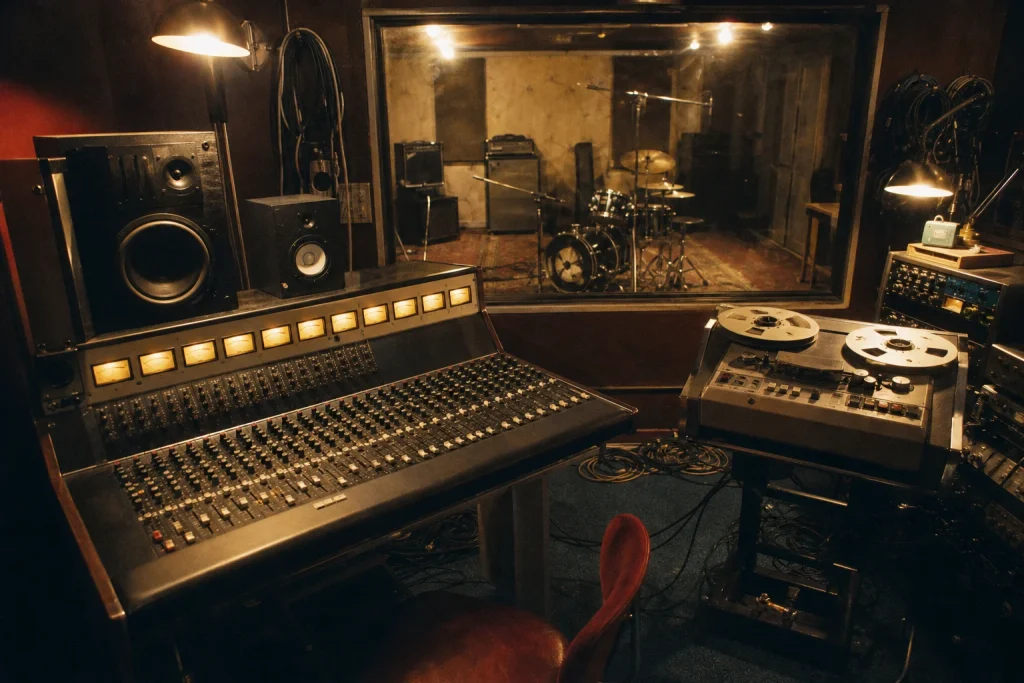
Because of time and money constraints, the production has a raw, live-in-the-room feel. Some listeners find it thin compared with later Metallica records, but many fans argue that the rawness is exactly the point. The album sounds like a young band playing as fast and hard as possible, with no studio polish to soften the edges.
| # | Track | Notable Detail |
|---|---|---|
| 1 | Hit the Lights | Earliest song in the catalog; an earlier version appeared on the 1982 Metal Massacre compilation |
| 2 | The Four Horsemen | Reworked from Mustaine’s “The Mechanix” |
| 3 | Motorbreath | Short, punchy track written by Hetfield |
| 4 | Jump in the Fire | Mustaine co-write; later released as a single |
| 5 | (Anesthesia) – Pulling Teeth | Cliff Burton’s bass solo showcase with drums from Ulrich |
| 6 | Whiplash | Speed anthem; Motörhead’s cover won a Grammy for Best Metal Performance in 2005 |
| 7 | Phantom Lord | Mustaine co-write with a clean mid-section |
| 8 | No Remorse | Multi-part structure hinting at future ambitions |
| 9 | Seek & Destroy | The album’s most enduring live staple |
| 10 | Metal Militia | Fast closer with marching-feet sound effects in the outro |
Fact 6: Cliff Burton’s Bass Solo Was a Statement of Intent
Including a standalone bass solo on a debut metal album was unusual, and “(Anesthesia) – Pulling Teeth” made it clear this band would not follow conventions. Burton used distortion and a wah pedal to make the bass sound like a lead instrument. The track reflects the musical curiosity he brought to the band, including an interest in classical harmony that would become far more prominent on later records.
Burton had joined Metallica only after the band agreed to relocate from Los Angeles to the San Francisco area, where he lived. That move placed Metallica at the heart of the Bay Area thrash scene, a decision that shaped their early identity as much as any single song.
Fact 7: Its Legacy Grew Long After Release
Kill ‘Em All did not dominate the charts in 1983. It sold through the underground, pushed by relentless touring, including the “Kill ‘Em All for One” tour with the British band Raven. Its reputation grew steadily as Metallica’s later albums brought new fans back to the beginning.
In 1988, Elektra Records reissued the album, and some later editions added two covers recorded in 1984, Diamond Head’s “Am I Evil?” and Blitzkrieg’s “Blitzkrieg,” which had first appeared on the “Creeping Death” single. The album was eventually certified multi-platinum by the RIAA in the United States, a remarkable achievement for a record made on such a small budget and released by a label that barely existed when it was recorded.
Pros and Cons of Kill ‘Em All for New Listeners
- Pro: Pure energy and speed; it is the most punk-spirited record in Metallica’s catalog.
- Pro: Several songs, especially “Seek & Destroy” and “Whiplash,” are essential to understanding Metallica live.
- Con: The production is thin by modern standards, with less low end than many contemporary metal fans expect.
- Con: The songwriting is simpler and less structurally ambitious than what followed.
How Kill ‘Em All Shaped Thrash Metal
Kill ‘Em All took the twin-guitar aggression of the New Wave of British Heavy Metal, especially bands like Diamond Head and Motörhead, and combined it with the speed and attitude of hardcore punk. That fusion became the template for thrash. Bands across the United States, Germany, and Brazil absorbed the record, and its influence can be heard throughout the mid-1980s explosion of extreme metal.
Kill ‘Em All is less a polished album than a mission statement: play faster, play heavier, and never apologize for it.
For fans exploring Metallica’s history, the debut is the starting line. Listening to it next to the band’s later catalog reveals how quickly they evolved, adding longer compositions, acoustic textures, and complex arrangements within just a few years. Yet the core DNA of tight downpicked riffs, fierce tempos, and crowd-chanting choruses is already present here.
Practical Tips for Exploring the Album Today
- Start with the essentials: “Seek & Destroy,” “Whiplash,” and “The Four Horsemen” give a fast overview of the album’s range.
- Compare versions: Listen to “The Four Horsemen” back-to-back with Megadeth’s “Mechanix” to hear how one riff took two directions.
- Hear the live evolution: Seek out live recordings of “Seek & Destroy” from different decades to hear how the song became a crowd ritual.
- Check the covers: Track down “Am I Evil?” to understand the NWOBHM influence that shaped the record.
Câu hỏi thường gặp / FAQs
When was Kill ‘Em All released?
Kill ‘Em All was released on July 25, 1983, by Megaforce Records, the independent label founded by Jon and Marsha Zazula.
Did Dave Mustaine play on Kill ‘Em All?
No. Mustaine was fired in April 1983, before recording began, and Kirk Hammett played lead guitar on the album. However, Mustaine is credited as a co-writer on four songs.
Why is the album called Kill ‘Em All?
The band’s preferred title, Metal Up Your Ass, was rejected by distributors. The replacement title is widely attributed to Cliff Burton’s angry suggestion to “kill ’em all,” aimed at the distributors themselves.
Which songs from Kill ‘Em All does Metallica still play live?
“Seek & Destroy” is a near-constant fixture, while “Whiplash,” “The Four Horsemen,” “Hit the Lights,” and “Motorbreath” appear regularly in rotation on major tours.
Four decades later, Kill ‘Em All remains a raw, essential snapshot of a band on the verge of changing heavy music. Whether you are a longtime fan or just discovering Metallica, it is the clearest window into where everything began.