
Most of us will leave behind far more stuff than anyone wants to sort through. Swedish death cleaning offers a calm, practical way to deal with it while you can still make the decisions yourself. It isn’t morbid, and it isn’t a weekend purge. It’s a slow habit of deciding what deserves space in your life and making sure the people you love won’t inherit a mess.
Swedish death cleaning (in Swedish, döstädning) is the practice of gradually decluttering your home so your loved ones aren’t burdened with your belongings after you die. It was popularized by Margareta Magnusson’s 2017 book The Gentle Art of Swedish Death Cleaning. You start with large, low-emotion items, finish with photos and letters, and keep only what is useful or truly meaningful.
- Döstädning combines the Swedish words for “death” (dö) and “cleaning” (städning). It is about consideration for others, not about dying.
- Go from big to small, and from easy to emotional. Closets and furniture come first. Photographs and letters come last.
- Talk openly with family about what they actually want before you give anything away.
- Keep a small “throw-away box” of private keepsakes that only matter to you, labeled to be discarded later.
- It is a long-term habit you can start at any age. Magnusson suggests 65 at the latest, but younger is easier.
What Is Swedish Death Cleaning, Really?
The phrase sounds dramatic in English. In Sweden it’s an ordinary household idea. Magnusson describes herself as somewhere “between 80 and 100.” She has death cleaned several times: after her parents died, after her husband died, and while preparing to move into a smaller apartment. Her central point is simple: if you don’t want something, your family probably won’t either.
It differs from trend-driven decluttering in three ways:
- Who it’s for. Methods like KonMari focus on how your belongings make you feel. Death cleaning also asks how your belongings will affect others one day.
- The pace. It isn’t a one-time transformation. You do it slowly, often over months or years, and keep it up for the rest of your life.
- The emotional honesty. It treats mortality as a normal topic of conversation. Many families say this lowers anxiety rather than raising it.
A 2023 television adaptation, The Gentle Art of Swedish Death Cleaning on Peacock, brought the idea to a much wider audience. The core method is still the low-tech approach from the book.
Why It Matters: The Hidden Cost of Leaving Stuff Behind
Anyone who has cleared out a parent’s house knows the reality. It takes weeks of evenings and weekends, rented dumpsters, storage fees, and painful arguments among siblings over who keeps the china. Estate-clearing professionals regularly describe jobs that take several days and cost thousands of dollars. That bill is often paid by grieving adult children who live hundreds of miles away.
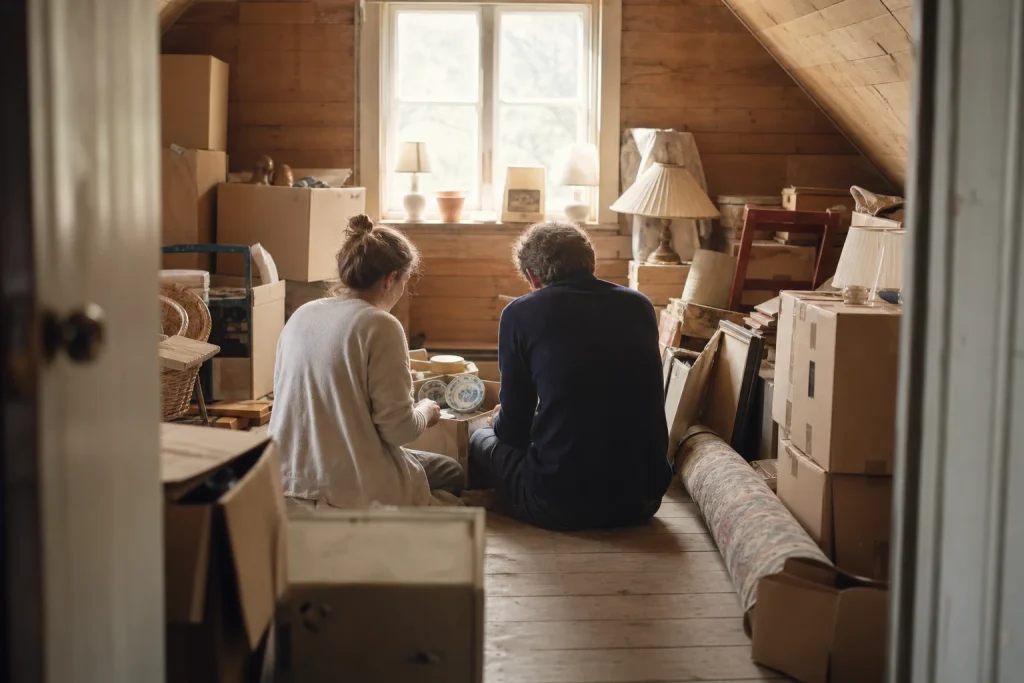
Death cleaning shifts that work to the person best placed to do it: you. You know which papers matter and which ring was your grandmother’s. You also know that the box of cables in the garage connects to nothing. Your heirs don’t.
Done well, it also gives you real benefits now:
- A home that is easier to clean, safer to move around in, and better suited to aging in place
- Less time spent looking for things
- A smoother transition if you ever downsize or move into assisted living
- Meaningful conversations and handovers of family stories while you’re still here to tell them
Swedish Death Cleaning: 7 Steps to Get Started
The sequence below follows Magnusson’s principles and adds practical tactics that work in real homes. Work through the steps in order. Each one builds the decision-making muscles you’ll need for the next.
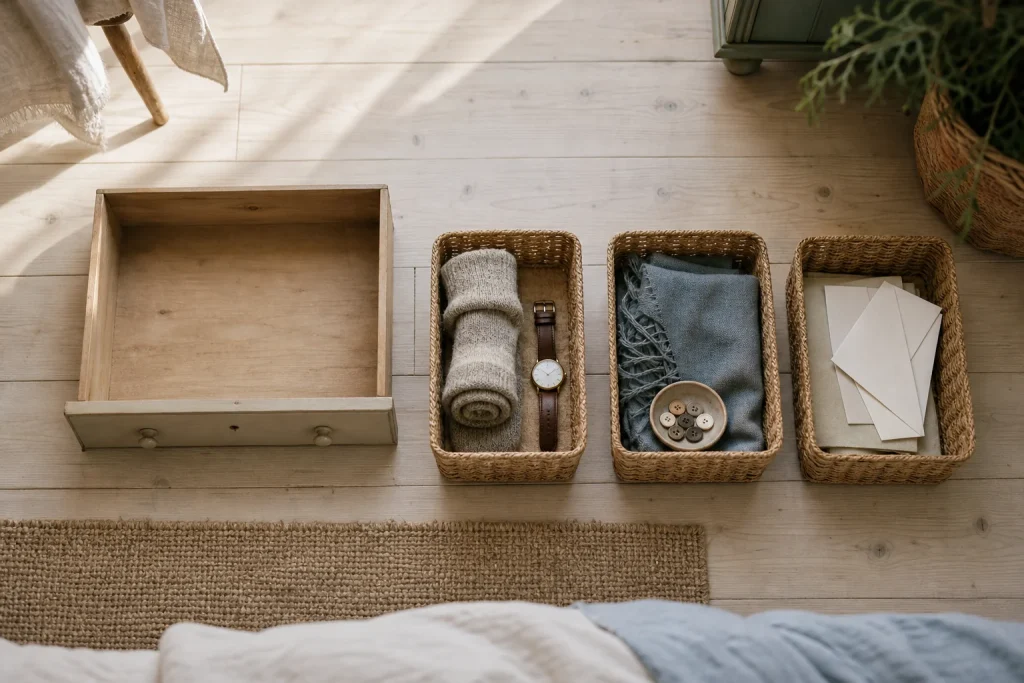
Step 1: Tell Someone You’re Doing It
Announce your intention to your partner, children, or a close friend. This does two things. It makes you accountable, and it opens the door to asking, “Is there anything here you’d actually want?” You’ll often be surprised. The heirloom sideboard you assumed your son wanted may not suit his apartment. Meanwhile your niece may treasure your old recipe cards.
Step 2: Start Big and Low-Emotion
Begin with storage areas and large items that carry little sentiment: the basement, garage, linen closet, and spare-room furniture. Decisions here are quick, the visual progress is dramatic, and early wins build momentum. Magnusson specifically warns against starting with photographs. You’ll get lost in memories and stall.
Step 3: Clear Your Wardrobe
Clothing is the ideal training ground. Most people regularly wear roughly a fifth of what they own. Sort into three piles: keep, donate or sell, and discard (stained, torn, or unusable). Keep things that fit your body and your life today, not a hypothetical future. Clothes are easy to replace, which makes letting go easier to practice.
Step 4: Tackle Kitchens, Books, and Duplicates
Next, move to rooms with moderate attachment. Ask practical questions:
- Do I need three colanders and twelve mugs for a two-person household?
- Will I reread this book, or could a library or a friend give it a better life?
- When did I last use this appliance? If you can’t remember, that’s your answer.
Offer specific items to specific people. A cast-iron pan given with the words “this made every Sunday breakfast” carries far more value than one found in a box later.
Step 5: Organize Documents and Digital Life
This step is often overlooked, but it may matter most. Shred outdated financial statements once you’ve confirmed your local retention rules. Gather essential documents in one clearly labeled place: your will, insurance policies, property deeds, and pension details. Then deal with your digital estate. Make a secure list of accounts, use a password manager with an emergency-access feature, and decide what should happen to your email, cloud photos, and social media profiles.
Step 6: Create Your “Throw-Away Box”
Some things are meaningful only to you: old love letters, a diary, a pressed flower from a first date. Magnusson suggests putting these in one box clearly labeled to be discarded after your death. You keep the comfort of having them, and your family has clear permission to let them go unopened. It’s one of the most loved ideas in the entire method.
Step 7: Save Photos and Letters for Last
By now your decision-making is sharp. Sort photographs into those that tell a story worth passing on and those that don’t: blurry shots, unidentified landscapes, ten nearly identical sunsets. Write names, places, and dates on the backs of the keepers. Your grandchildren can’t ask you later who is in the 1974 beach photo. Consider scanning the best ones and sharing a digital album with the family.
Swedish Death Cleaning vs. Other Decluttering Methods
Death cleaning is often compared with other well-known approaches. The table below shows where it fits.
| Feature | Swedish Death Cleaning | KonMari Method | Minimalism (General) | Professional Estate Clearing |
|---|---|---|---|---|
| Core question | Will anyone be glad to inherit this? | Does this spark joy? | Does this add value to my life? | What can be sold, donated, or discarded? |
| Primary beneficiary | You and your loved ones | You | You | Heirs and executors |
| Pace | Gradual, lifelong | Intensive, one-time “tidying festival” | Varies; often ongoing | Fast, usually days |
| Order of work | Large and impersonal first, sentimental last | By category: clothes, books, papers, komono, sentimental | No fixed order | Room by room |
| Emotional involvement | High but controlled | High | Moderate | Low (owner usually absent) |
| Typical cost | Free to low | Free to low (optional consultants) | Free | Often thousands of dollars |
| Best for | Ages 50+, downsizers, anyone planning ahead | Anyone wanting a fast reset | Lifestyle-focused simplifiers | Families after a death or sudden move |
These methods aren’t mutually exclusive. Many people borrow KonMari’s category-by-category system and apply death cleaning’s other-centered question to every item.
Practical Pros and Cons
Pros
- Reduces future family conflict by making your wishes explicit while you can explain them.
- Lowers physical risk. Fewer objects mean fewer trip hazards, an important safety factor for older adults.
- Creates space for living. Rooms used for storage become usable again.
- Brings closure and calm. Many practitioners describe a sense of relief and control.
Cons and Pitfalls
- Emotional fatigue. Sorting a lifetime of possessions is draining. Short sessions of 30 to 60 minutes work better than marathons.
- Family pushback. Some relatives find the topic upsetting at first. Frame it as organizing, not goodbye.
- Over-purging. Don’t discard legal documents or items with real financial value without checking first.
- Not a substitute for estate planning. You still need a will, powers of attorney, and beneficiary designations.
Real-World Tips From People Who’ve Done It
- Use the “one-in, one-out” rule afterward. Death cleaning only works if you don’t refill the space.
- Gift things at meaningful moments. Give the watch at a graduation or the quilt at a wedding, and enjoy seeing it used.
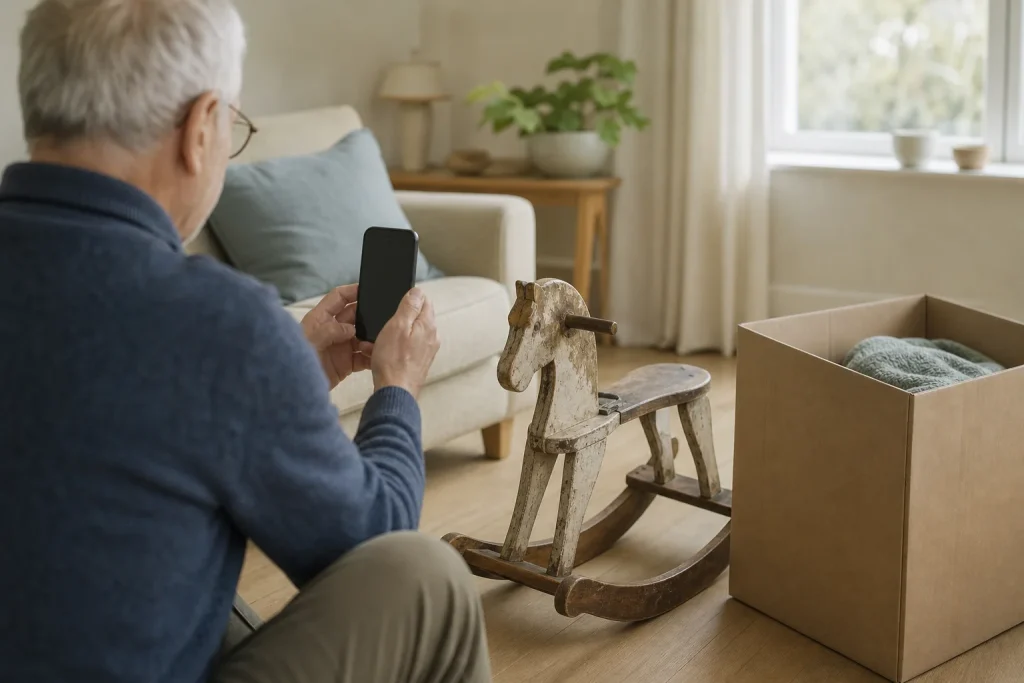
- Photograph objects before letting them go. A photo of your childhood rocking horse keeps the memory without the storage.
- Schedule it. Put a recurring monthly “death cleaning hour” in your calendar. Consistency beats intensity.
- Get help for heavy lifting. Charities often offer free pickup for furniture in good condition. Senior move managers can coordinate bigger projects.
- Be kind to yourself. Magnusson’s whole philosophy is gentle. Keeping a few beloved, “useless” things is perfectly fine.
“Let me help make your loved ones’ memories of you nice instead of awful.” — the spirit of Margareta Magnusson’s approach, paraphrased
How to Start the Family Conversation
For many people the hardest step is talking about it. Try a low-pressure opener: “I’m sorting the house so it’s easier for me now and for you later. Is there anything you’d love to have?” For adult children who want to encourage a parent, lead with curiosity rather than criticism. Ask for the story behind an object, then ask what should happen to it. People open up when they feel respected, not rushed.

Frequently Asked Questions / FAQs
At what age should I start Swedish death cleaning?
Magnusson recommends starting around 65 at the latest, but there is no minimum age. Many people in their 30s and 40s adopt it after clearing out a relative’s home. The earlier you start, the less overwhelming it is.
Is Swedish death cleaning depressing?
Most people find the opposite. The goal is practical kindness, not dwelling on death. Practitioners commonly report feeling lighter, more organized, and more connected to family through the stories shared along the way.
How long does Swedish death cleaning take?
It’s designed to be gradual. Clearing a typical family home often takes several months of regular short sessions. After that it becomes an ongoing maintenance habit rather than a finished project.
What should I never throw away?
Keep wills, deeds, insurance policies, tax records within your local retention period, titles, pension and investment documents, and anything with significant monetary value until it has been reviewed. Store them together and tell a trusted person where they are.
The Bottom Line
Swedish death cleaning is one of the most generous things you can do for the people you’ll one day leave behind. It also improves your life right now. Start small this week with a single drawer or closet shelf, tell one person what you’re doing, and let the habit grow. The aim isn’t an empty house. It’s a home full of things that matter, and a legacy of clarity instead of clutter.